Mariano Barbacid Leads CNIO Breakthrough Triple Therapy That Eliminates Pancreatic Cancer Tumors in Mice

Led by Mariano Barbacid, CNIO researchers eliminate pancreatic cancer tumors in mice using a triple therapy that prevents drug resistance.

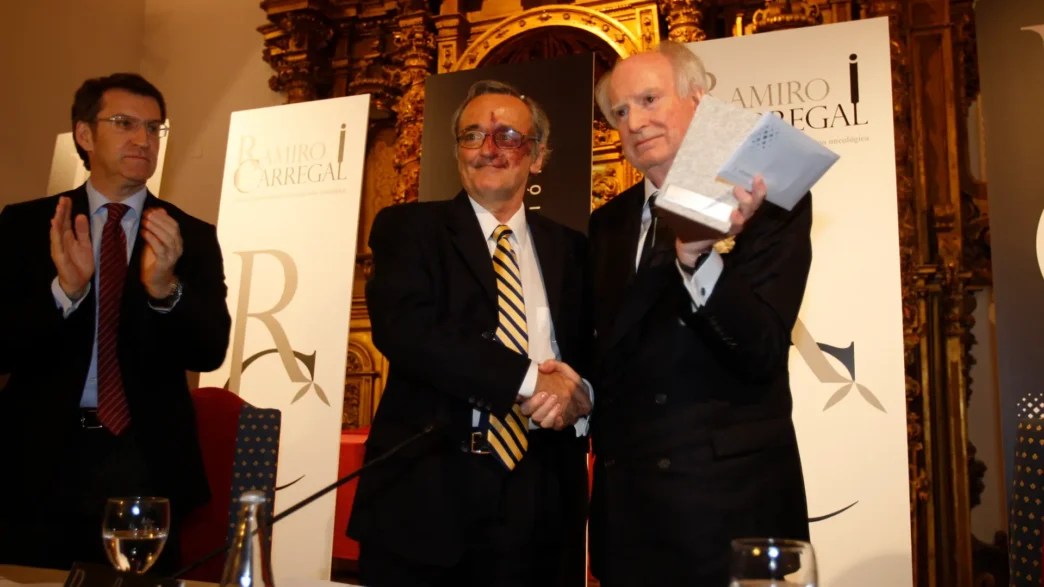
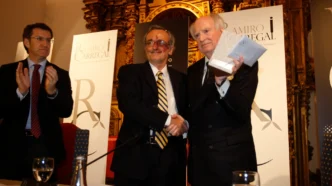
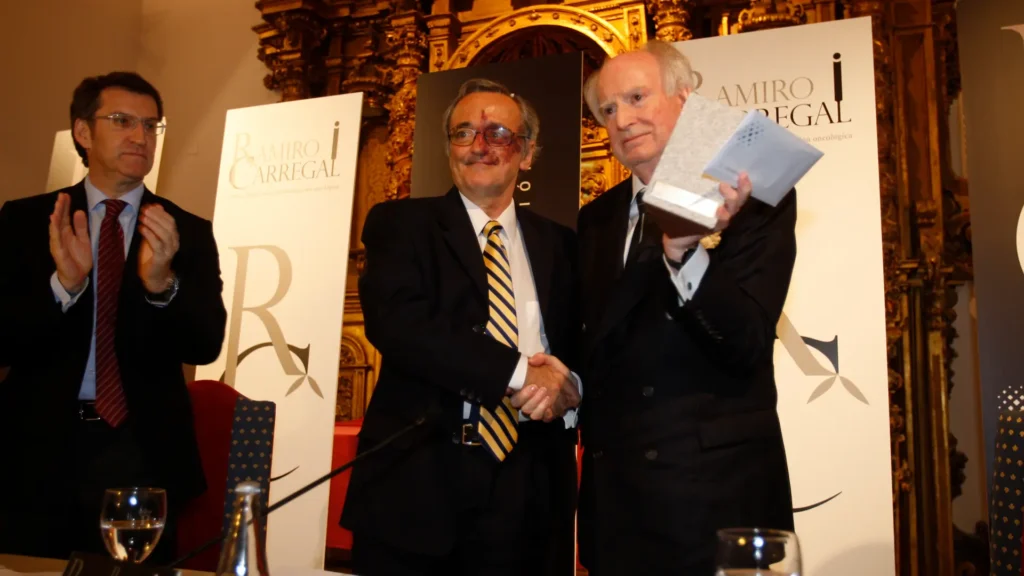
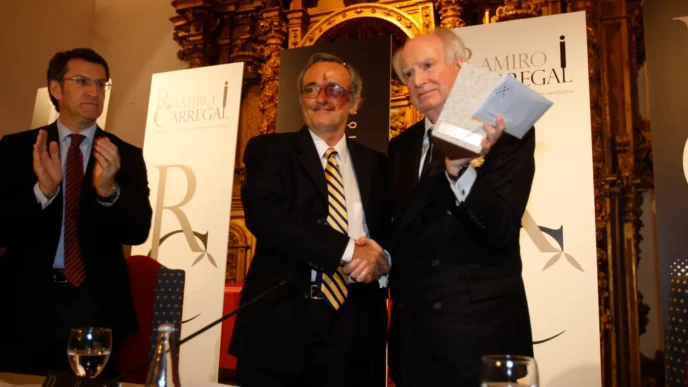
Mariano Barbacid getting a prize Mariano Barbacid getting a prize

Researchers at Spain’s National Cancer Research Centre (CNIO) have achieved a major breakthrough in pancreatic cancer research, one of the deadliest and most treatment-resistant malignancies worldwide. A team led by renowned oncologist Mariano Barbacid has succeeded in completely and durably eliminating pancreatic tumors in mice, without significant side effects and—crucially—without the tumors developing resistance to treatment.

The findings, published in Proceedings of the National Academy of Sciences (PNAS), show for the first time that a rationally designed triple combination therapy can overcome one of the greatest challenges in pancreatic cancer: drug resistance, which often renders current treatments ineffective within months.


Advertisement

“This study opens a path toward the design of new combination therapies that could improve survival in patients with pancreatic ductal adenocarcinoma,” the authors write in PNAS, while emphasizing that clinical application in humans is not yet imminent.

A cancer with grim survival rates

Pancreatic cancer remains among the deadliest cancers worldwide. In Spain alone, more than 10,300 new cases are diagnosed every year. Because the disease is usually detected at advanced stages and treatment options remain limited, fewer than 10% of patients survive five years after diagnosis.

For decades, progress has been painfully slow. Only in 2021 were the first targeted drugs approved for pancreatic cancer, following nearly half a century in which conventional chemotherapy offered minimal improvements. Even these newer therapies have shown modest and short-lived benefits.

“The problem is that tumors adapt,” explains Barbacid, head of the CNIO’s Experimental Oncology Group and a pioneer in KRAS research. “After a few months, the cancer becomes resistant and the drugs stop working.”

Targeting KRAS from multiple angles

At the molecular level, around 90% of pancreatic cancers are driven by mutations in the KRAS oncogene. KRAS acts as a central molecular switch that fuels uncontrolled cell growth, making it an obvious therapeutic target. However, blocking KRAS at a single point has repeatedly failed, as tumors rapidly activate alternative survival pathways.

The CNIO team pursued a different strategy: simultaneously blocking three key nodes in the KRAS signaling pathway.

Barbacid explains it with a simple analogy:

“It’s much harder to break a beam if it’s fixed to the ceiling at three points instead of just one.”
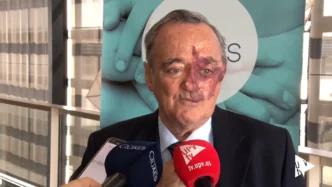
Mariano Barbacid
Renowned Oncologist

Using genetically engineered mouse models, the researchers first demonstrated that eliminating three molecules involved in KRAS signaling led to the permanent disappearance of pancreatic tumors. This genetic proof of concept was then translated into a pharmacological approach.

A triple therapy with durable results

The experimental treatment combines three complementary agents:

  • Daraxonrasib, an investigational KRAS inhibitor
  • Afatinib, an EGFR-targeting drug already approved for certain lung cancers
  • SD36, a protein degrader that interferes with STAT3 signaling

Together, these drugs disrupt KRAS-driven tumor growth at three distinct levels, making it far more difficult for cancer cells to escape treatment.

The therapy was tested in three mouse models of pancreatic ductal adenocarcinoma, the most common form of pancreatic cancer in humans. The results were consistent and striking.

“We observed a significant and durable regression of these experimental tumors without causing relevant toxicities,” the researchers report in PNAS.

In the most advanced models, nine out of twelve mice achieved complete tumor regression and remained disease-free for at least 100 days—an exceptional outcome in pancreatic cancer research.

Equally important, none of the tumors developed resistance, a major limitation of previous targeted therapies.

Mariano Barbacid getting a prize

Cautious optimism about clinical trials

Despite the encouraging results, Barbacid urges caution.

“Although experimental results like these had never been achieved before, we are not yet in a position to launch clinical trials with this triple therapy,”
Mariano Barbacid
Renowned Oncologist

Before the approach can be tested in patients, researchers must optimize the treatment, conduct further safety studies, secure regulatory approval, and obtain substantial funding.

“The path to adapting this triple combination therapy for clinical use will not be easy,” the authors acknowledge in PNAS. Still, they note that the results “could open the door to new therapeutic options” for pancreatic cancer patients in the future.

Some components may reach patients sooner. Daraxonrasib, developed by Revolution Medicines, could receive regulatory authorization as early as 2026 or 2027, potentially accelerating future clinical research.

A collaborative and well-funded effort

The study represents six years of research by a multidisciplinary CNIO team. Carmen Guerra is a co–senior author, with Vasiliki Liaki and Sara Barrambana as first authors.

Funding was provided by multiple public and private institutions, including the CRIS Foundation Against Cancer, the European Research Council (ERC), Spain’s State Research Agency, Next Generation EU funds, CIBERONC, and the Carlos III Health Institute. The CRIS Foundation alone contributed €3.6 million.

Lola Manterola, president of the CRIS Foundation Against Cancer, highlighted the significance of the findings:

“This research represents a turning point after decades of stagnation.”
Lola Manterola
President of the CRIS Foundation Against Cancer

A new paradigm in pancreatic cancer research

While patients will not benefit immediately, this study marks a fundamental shift in pancreatic cancer research. By showing that drug resistance can be prevented through rationally designed combination therapies, Mariano Barbacid and his team have laid the groundwork for a new generation of treatments.

As research continues and the strategy is refined, long-standing pessimism surrounding pancreatic cancer may finally begin to give way to cautious, evidence-based hope.

Information Source:

El grupo de Barbacid en el CNIO elimina tumores de páncreas en ratones por completo y sin que aparezcan resistencias

https://www.rtve.es/noticias

https://www.cnio.es/noticias

Photo Attribution:

Mariano Barbacid receiving the Ramiro Carregal Cancer Research Award in Santiago, Spain. Photo by Certo Xornal, licensed under Creative Commons Attribution-ShareAlike 2.0 (CC BY-SA 2.0) / via Wikimedia Commons. https://w.wiki/HeyZ


Add a comment

Leave a Reply

Your email address will not be published. Required fields are marked *

Keep Up to Date with the Most Important News

By pressing the Subscribe button, you confirm that you have read and are agreeing to our Privacy Policy and Terms of Use
Advertisement