

 English
 Español
Spain’s Royal Household has confirmed that former monarch King Juan Carlos I could return to live permanently in Spain — but only if he re-establishes his tax residency in the country.
The reported condition places tax compliance, transparency, and institutional accountability at the center of renewed discussion about the future of the Spanish monarchy.
According to the newspaper El País, Juan Carlos would need to once again become a Spanish tax resident. This would require declaring his worldwide income in Spain and complying fully with domestic fiscal obligations. The move is widely interpreted as a step aimed at reinforcing public trust and reducing institutional controversy.
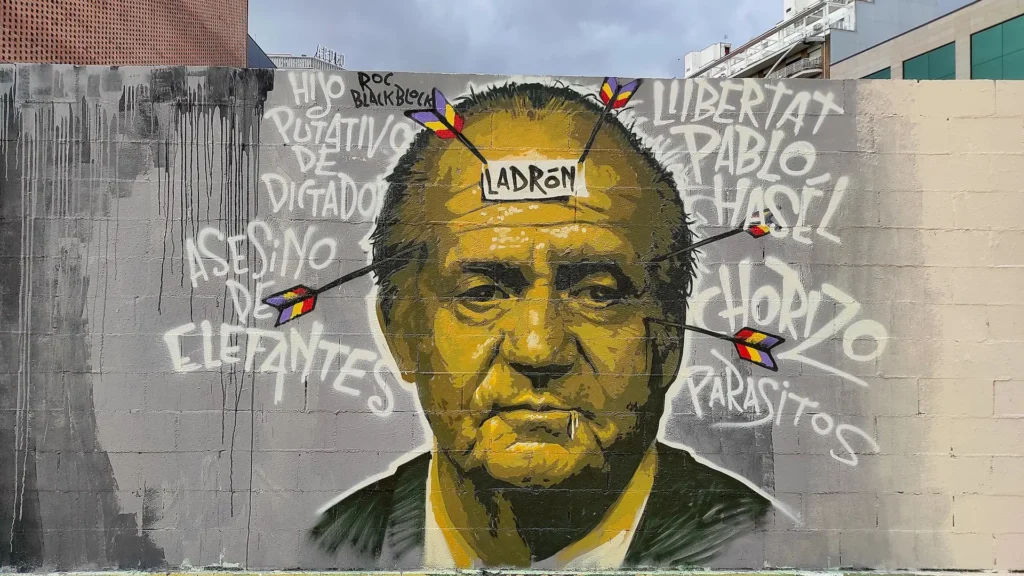
Exile in Abu Dhabi Since 2020
Juan Carlos I, who reigned from 1975 until his abdication in 2014, has lived in the United Arab Emirates since 2020.
His departure followed financial investigations in Spain and Switzerland related to alleged offshore accounts and undisclosed assets. Although Spanish prosecutors later closed the cases — citing insufficient evidence or statutes of limitation — the inquiries generated significant public scrutiny and reputational damage to the monarchy.
While no timeline for a return has been announced, the tax residency requirement suggests that any comeback would depend on clear legal and fiscal compliance.
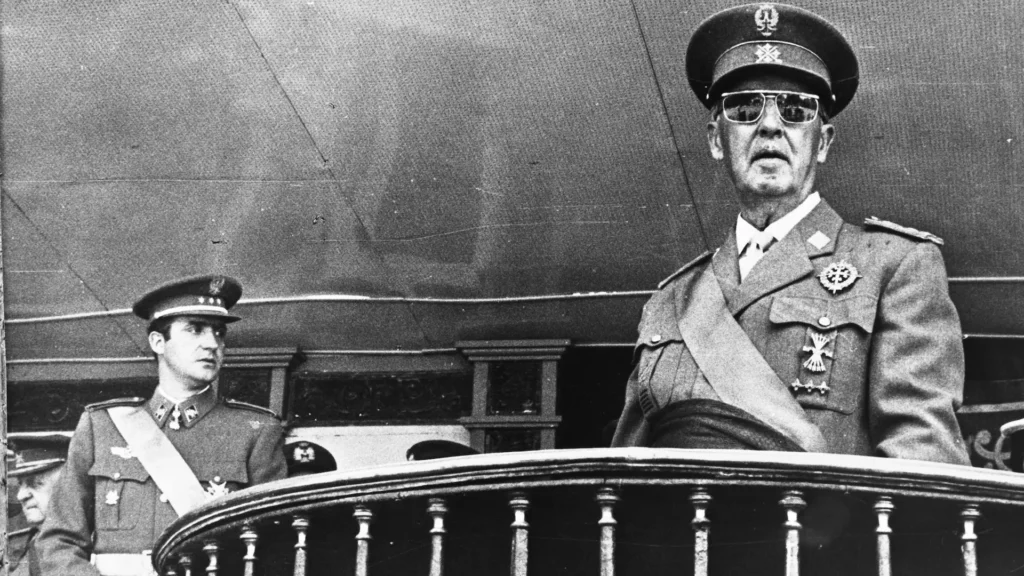
A Legacy Between Democratic History and Financial Controversy
Juan Carlos remains one of the most influential and controversial figures in modern Spain.
Internationally, he is credited with supporting Spain’s transition to democracy after the death of dictator Francisco Franco in 1975. His televised rejection of the attempted coup on 23 February 1981 is widely considered a defining moment in protecting democratic institutions.
For decades, this role shaped his image as a stabilizing force during Spain’s fragile political transition.
However, later financial controversies significantly reduced public trust, particularly among younger voters and segments aligned with republican movements. Support for the monarchy has fluctuated in recent years, reflecting broader political dynamics.
King Felipe VI’s Institutional Reform Efforts
Since becoming head of state, King Felipe VI has taken steps to distance the Crown from the controversies surrounding his father.
He renounced any personal inheritance from Juan Carlos and withdrew his father’s annual public allowance. These measures were widely viewed as part of a broader strategy to strengthen institutional transparency and modernize the monarchy in line with democratic standards.
Spain remains a parliamentary monarchy under the 1978 Constitution, where the king serves primarily as a ceremonial head of state.
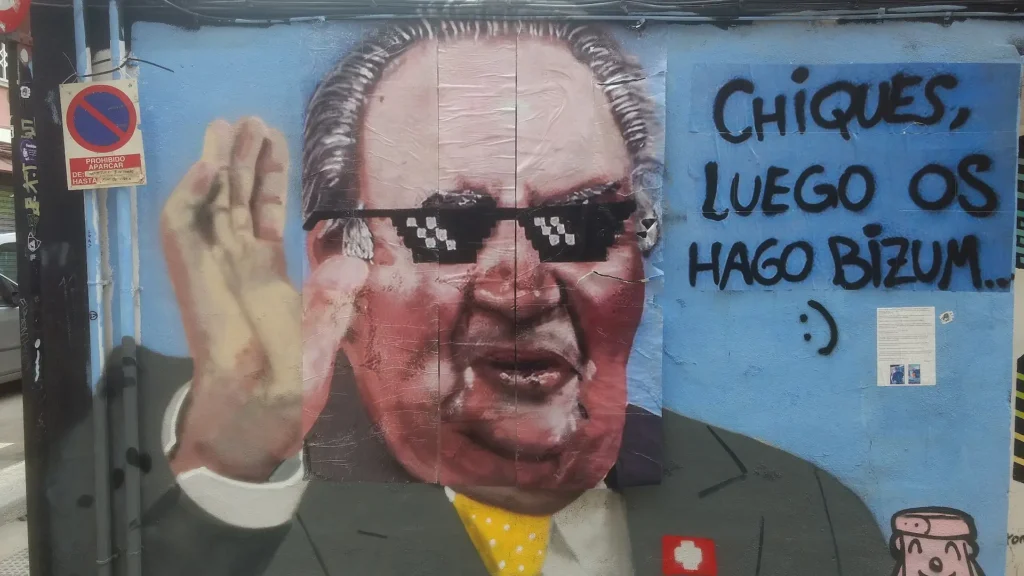
Political Debate Over the Return
The possibility of Juan Carlos’s return has reignited long-standing political divisions.
Conservative voices highlight his historical contribution to democracy. Left-wing parties, meanwhile, have called for increased scrutiny of the monarchy and, in some cases, renewed discussion about its constitutional role.
The Spanish government has avoided taking a direct position, framing the issue as institutional rather than political.
Why Tax Residency Is Symbolically Significant
The emphasis on tax residency in Spain carries strong symbolic value.
In a country shaped by austerity policies, corruption scandals, and heightened sensitivity to inequality, tax fairness is closely linked to public trust.
Requiring the former monarch to meet the same fiscal obligations as other residents may be intended to reinforce the principle of equal treatment under the law.
For many observers, transparency in taxation is not simply administrative — it is central to institutional legitimacy.
Diplomatic and Institutional Implications
Juan Carlos’s residence abroad has occasionally drawn criticism from political groups arguing that his absence complicates institutional normalization.
A return under clearly defined legal and fiscal conditions could help close a complex chapter in Spain’s recent history. However, analysts stress that long-term stability for the monarchy will depend on continued transparency and reform — not symbolism alone.
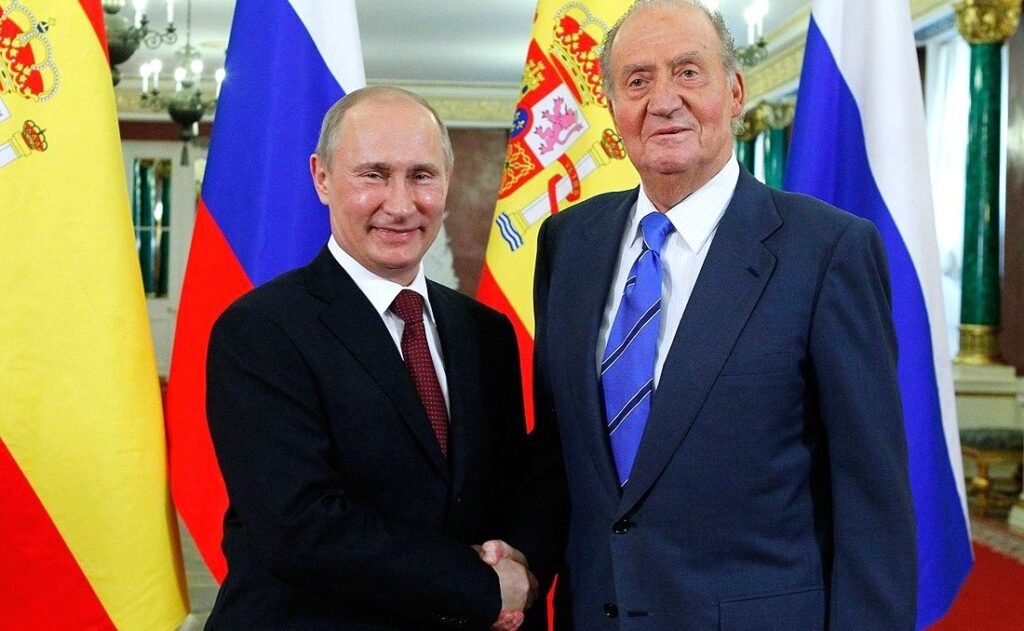
A Debate Beyond One Individual
The discussion surrounding Juan Carlos I’s potential return to Spain reflects broader questions about how modern monarchies adapt to democratic expectations.
Whether his return strengthens or complicates the Spanish monarchy will depend on the framework of accountability surrounding it.
Ultimately, the issue represents Spain’s ongoing balance between historical legacy and contemporary democratic standards, a dynamic that continues to shape the future of the Crown.
Frequently Asked Questions (FAQ)
Why could King Juan Carlos I return to Spain?
According to reports from Spain’s Royal Household, King Juan Carlos I could return to live permanently in Spain if he re-establishes his tax residency in the country. The condition is intended to ensure full compliance with Spanish fiscal regulations and reinforce transparency.
What does the tax residency requirement mean?
If Juan Carlos I becomes a Spanish tax resident again, he would be required to declare his worldwide income in Spain and comply fully with domestic tax laws. This step is widely interpreted as a measure to strengthen accountability and institutional credibility.
Where has King Juan Carlos I lived since leaving Spain?
Since 2020, King Juan Carlos I has lived in the United Arab Emirates, following financial investigations in Spain and Switzerland. Although the legal cases were later closed, the controversy had a significant public and political impact.
What role did Juan Carlos I play in Spain’s democracy?
Juan Carlos I is credited with supporting Spain’s transition to democracy after the death of dictator Francisco Franco in 1975. His public rejection of the attempted coup on 23 February 1981 is considered a key moment in protecting Spain’s democratic institutions.
How has King Felipe VI responded to the controversy?
King Felipe VI has taken steps to distance the monarchy from past controversies, including renouncing any personal inheritance from his father and withdrawing Juan Carlos’s public allowance. These measures were part of broader efforts to modernize and increase transparency within the institution.
Does public opinion support the Spanish monarchy?
Public support for the monarchy in Spain has fluctuated over time. While republican sentiment exists, Spain remains a parliamentary monarchy under the 1978 Constitution, and the king serves primarily as a ceremonial head of state.
Information Source:
https://www.eldiario.es/politica/
Photo Attribution:
Vladimir Putin and King Juan Carlos I of Spain (19 July 2012) — Author: Presidential Press and Information Office / www.kremlin.ru. Licensed under Creative Commons Attribution 4.0 International (CC BY 4.0) via Wikimedia Commons
Mural censurat “Borbó – lladrón” (Barcelona, 7 Feb 2021) — Photographer: Roc Blackblock; licensed under Creative Commons Attribution-ShareAlike 4.0 International (CC BY-SA 4.0) via Wikimedia Commons
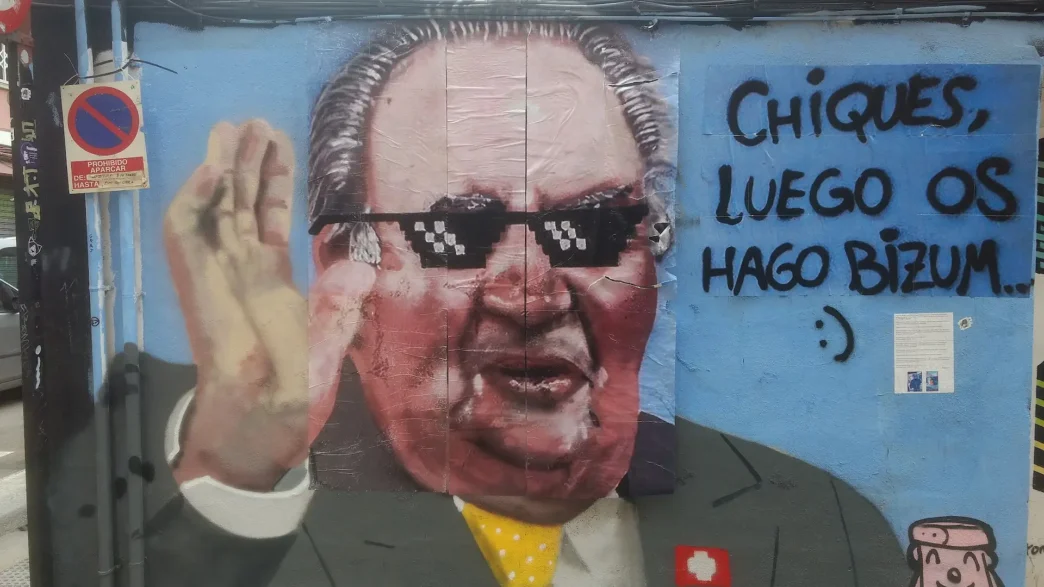
“Juan Carlos Bizum 3.jpg” (mural on Juan Carlos I of Spain) — Author: Francesc Fort. Licensed under Creative Commons Attribution-ShareAlike 4.0 International (CC BY-SA 4.0) via Wikimedia Commons
In Madrid is herdacht dat Franco 30 jaar geleden de burgeroorlog (1936-1939) won – Bestanddeelnr 922-4913 (cropped) — Source: Nationaal Archief / Anefo. Public domain (CC0 1.0 Universal). Available via Wikimedia Commons.