

 English
 Español

Spain is emerging as one of the strongest economies in Europe—at a time when much of the continent is struggling
At a moment when Europe’s largest economies are facing stagnation, persistent inflation, and geopolitical shocks, Spain is quietly positioning itself as an economic outlier.
While countries like Germany grapple with weak industrial output and declining growth forecasts, Spain’s economy continues to expand at a steady pace, surprising analysts and policymakers alike.
So, why is Spain outperforming Europe in 2026? And more importantly, can this growth last?
🇪🇺 Spain vs Europe: a widening economic gap
The contrast between Spain and other European economies is becoming increasingly clear.
Across the eurozone, growth has slowed significantly due to:
- High inflation
- Energy price volatility
- Geopolitical instability
- Weak industrial performance
Yet Spain has managed to maintain stronger GDP growth than many of its peers.
This divergence is particularly striking given that Spain was one of the hardest-hit economies during previous crises, including the 2008 financial crash and the COVID-19 pandemic.
👉 What’s changed?
📊 The key drivers behind Spain’s economic growth
Tourism is booming again
Spain remains one of the world’s top travel destinations, and demand has surged again due to:
- Pent-up travel demand after the pandemic
- Competitive pricing compared to other destinations
- A weaker euro attracting international visitors
Tourism contributes significantly to Spain’s GDP, supporting millions of jobs across hospitality, transport, and services.
👉 In fact, in 2026, tourism is once again acting as a core growth engine, helping offset weaknesses in other sectors.
EU recovery funds are fueling investment
Another crucial factor is the impact of European Union recovery funds.
Spain has been one of the largest beneficiaries of the EU’s NextGenerationEU program, which aims to boost:
- Digital transformation
- Green energy projects
- Infrastructure modernization
These funds have provided a direct injection of capital into the economy, supporting both public and private investment.
👉 As a result, Spain has been able to modernize faster than many European peers, strengthening its long-term growth potential.
A resilient labor market
Spain’s labor market has also shown unexpected strength.
Despite global uncertainty:
- Employment levels have remained stable
- Job creation has continued in key sectors
- Labor reforms have improved contract stability
This has helped sustain consumer spending, which is essential for economic growth.
👉 A stronger labor market means more resilience against external shocks.
⚠️ But risks are rising: inflation, war, and uncertainty
Despite its strong performance, Spain’s economy is not immune to global risks.
The international context is becoming increasingly unstable, particularly due to geopolitical tensions in the Middle East, including conflict involving Iran.
These developments are already having ripple effects:
- Rising energy prices
- Increased inflation pressures
- Higher government spending
According to reports, Spain has even delayed parts of its budget planning due to uncertainty linked to global conflicts.
👉 This highlights a key vulnerability:
Spain remains highly exposed to external shocks, especially energy markets.
🇬🇧 The Brexit effect: an unexpected advantage
Another factor shaping Spain’s economic trajectory is Brexit.
The UK’s departure from the European Union has reshaped trade, investment, and tourism flows across Europe.
In several areas, Spain has benefited from Brexit-related shifts, including:
- Increased tourism from UK visitors
- Relocation of businesses and investment
- Changes in trade dynamics

🏠 Structural weaknesses: the limits of Spain’s growth
Despite strong headline figures, Spain’s economic success remains fragile.
Several structural challenges could undermine long-term growth:
Rising property prices and limited supply are creating affordability issues, especially in major cities.
Dependence on tourism
While tourism is a strength, it also makes the economy vulnerable to:
- Global downturns
- Travel disruptions
- Seasonal fluctuations
Energy dependence
Spain is still exposed to external energy shocks, which directly impact inflation and competitiveness.
👉 These weaknesses raise an important question:
Is Spain’s economic growth sustainable?
❓ FAQs: Spain economy explained
Why is Spain’s economy growing faster than Europe?
Spain’s economy is outperforming due to strong tourism, EU recovery funds, and a resilient labor market, which have helped offset global economic pressures.
Is Spain’s economic growth sustainable?
Growth is promising but not guaranteed. Structural issues like housing shortages and reliance on tourism could limit long-term stability.
How does inflation affect Spain’s economy?
Inflation, driven largely by energy prices and global conflicts, increases costs for households and businesses, potentially slowing growth.
Has Brexit helped Spain’s economy?
Yes, in some areas. Spain has benefited from increased tourism, redirected investment, and business relocation linked to Brexit.
What are the biggest risks for Spain’s economy in 2026?
The main risks include:
- Energy price volatility
- Geopolitical instability
- Housing constraints
- Overdependence on tourism
🧭 Spain as Europe’s economic outlier
Spain’s current performance tells a broader story about the changing economic landscape in Europe.
Growth is no longer evenly distributed. Instead:
- Some economies are stagnating
- Others, like Spain, are adapting and expanding
👉 Spain’s economy is outperforming Europe—but this success is conditional.
If the country can:
- Diversify beyond tourism
- Address housing challenges
- Reduce energy dependence
…it could consolidate its position as one of Europe’s leading growth engines.
🔚 Conclusion: strong momentum, uncertain future
Spain’s economic resurgence is real—and significant.
But it is also fragile, complex, and deeply tied to global dynamics.
👉 The key question is no longer why Spain is growing
👉 but whether it can sustain that growth in an increasingly unstable world
Information Source:
https://www.caixabank.es/particular/nuevos-residentes/
Photo Attribution:
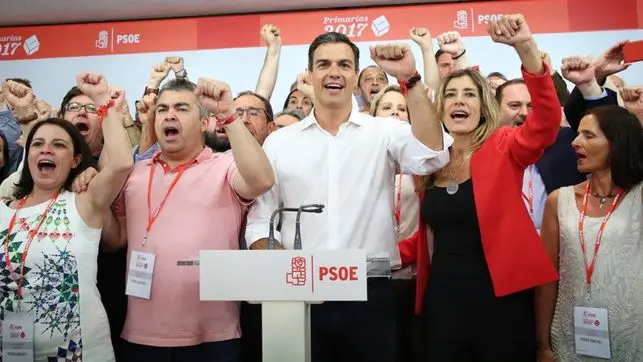
Photo: Pedro Sánchez after winning the PSOE primaries, singing “La Internacional” (21 May 2017). By Marta Jara / eldiario.es. Licensed under CC BY-SA 3.0 Spain.
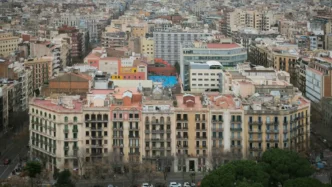
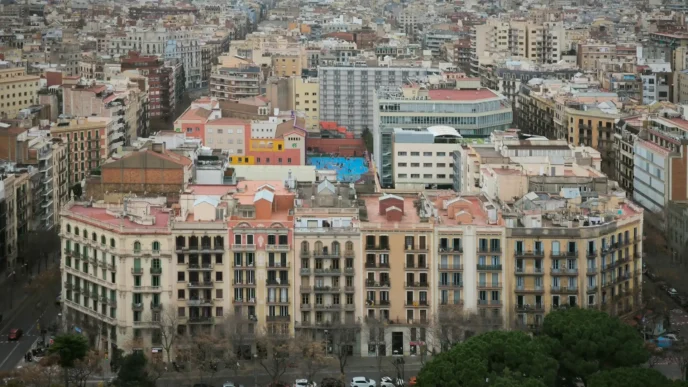
Plaça Sagrada Família, house 1 to 7 Barcelona, Spain, by Reda Kerbouche, Creative Commons Attribution-Share Alike 4.0 International license, Wikimedia Commons https://w.wiki/KCz9
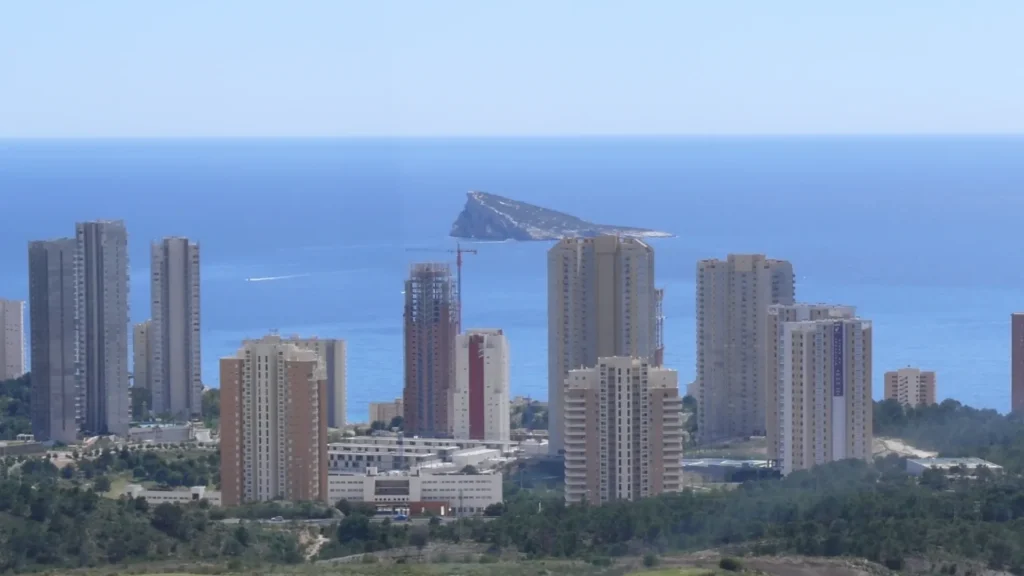
Skyline of Benidorm by Ad Meskens, via Wikimedia Commons, licensed under CC BY-SA 3.0.
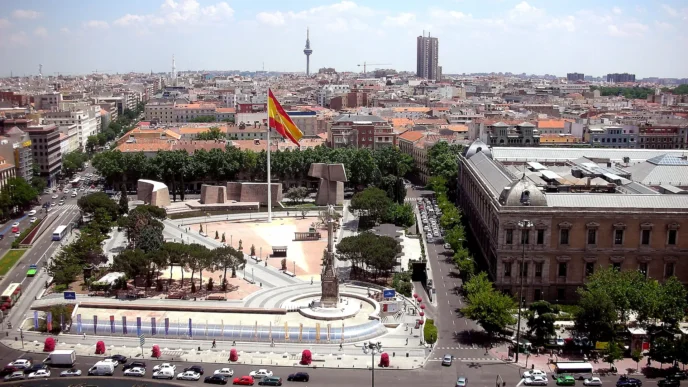
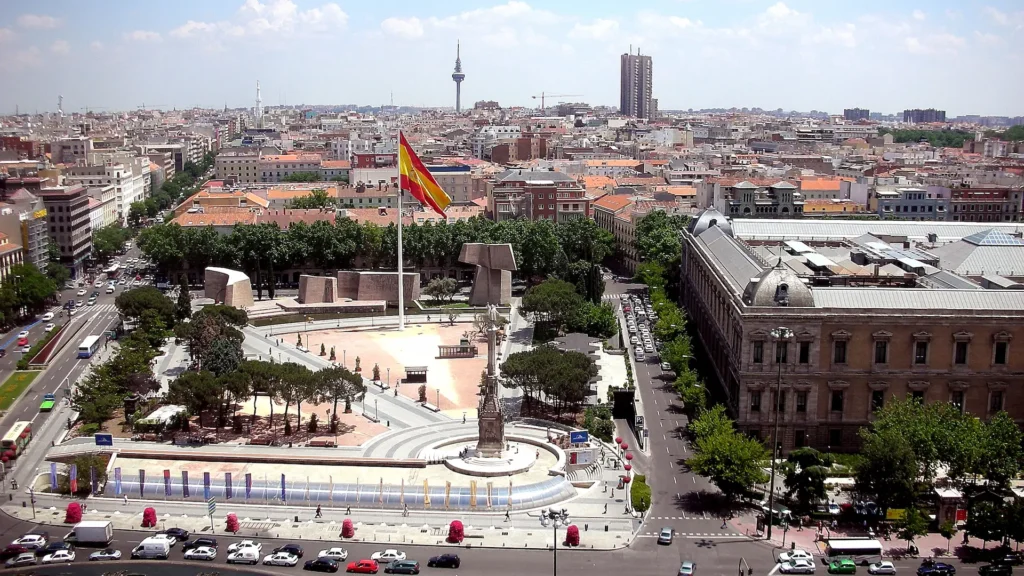
Plaza de Colón, by Enrique Dans, Creative Commons Attribution 2.0 Generic, Wikimedia Commons: https://w.wiki/JGMs