

 English
 Español
Spain prepares for a key global summit in November 2026
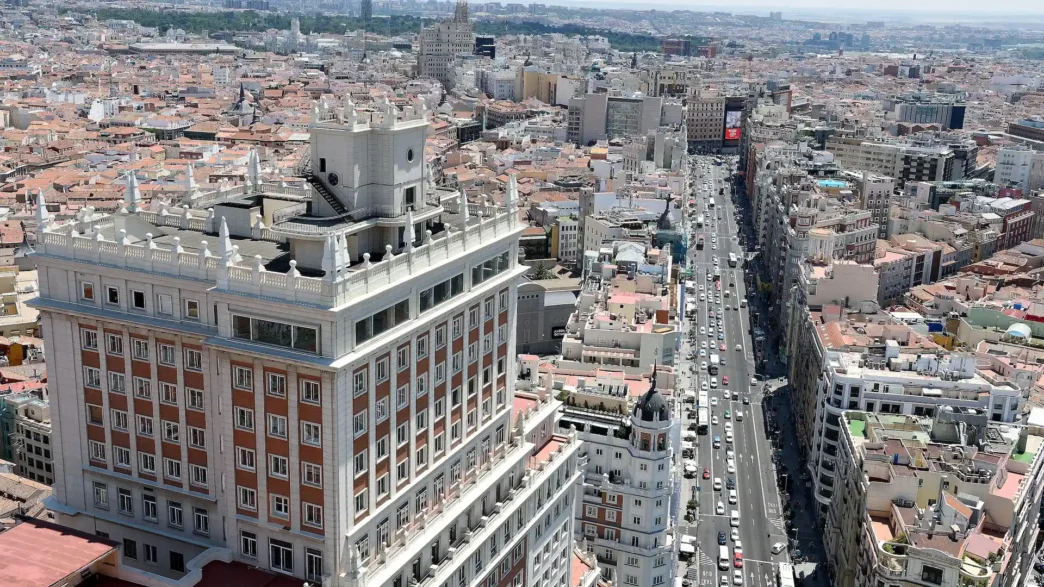
Spain is set to take a leading role on the global stage as Madrid hosts the Ibero-American Summit on 4 and 5 November 2026, a major diplomatic event bringing together leaders from 22 countries across Latin America, Europe, and the Iberian Peninsula.
The Ibero-American Summit 2026 in Madrid is expected to become one of the most important international meetings of the decade for Spain. However, it will take place amid ongoing diplomatic tensions with Mexico and a rapidly evolving global landscape shaped by artificial intelligence, disinformation, and geopolitical uncertainty.
For Spain, the summit represents both an opportunity and a challenge: to strengthen its global influence while managing complex regional relationships.
What is the Ibero-American Summit and why it matters
The Ibero-American Summit is a high-level forum that connects Spanish- and Portuguese-speaking nations, including Spain, Portugal, Brazil, Mexico, and Argentina.
Originally focused on cultural and historical ties, the summit has evolved into a platform for addressing global political and economic challenges.
For the Madrid 2026 summit, key topics will include:
- Artificial intelligence (AI) governance
- Disinformation and democratic stability
- Global cooperation and digital transformation
- Promotion of Spanish and Portuguese languages
These issues place Spain at the center of debates shaping the future of technology, democracy, and international cooperation.
Madrid 2026: Symbolism, timing and global visibility
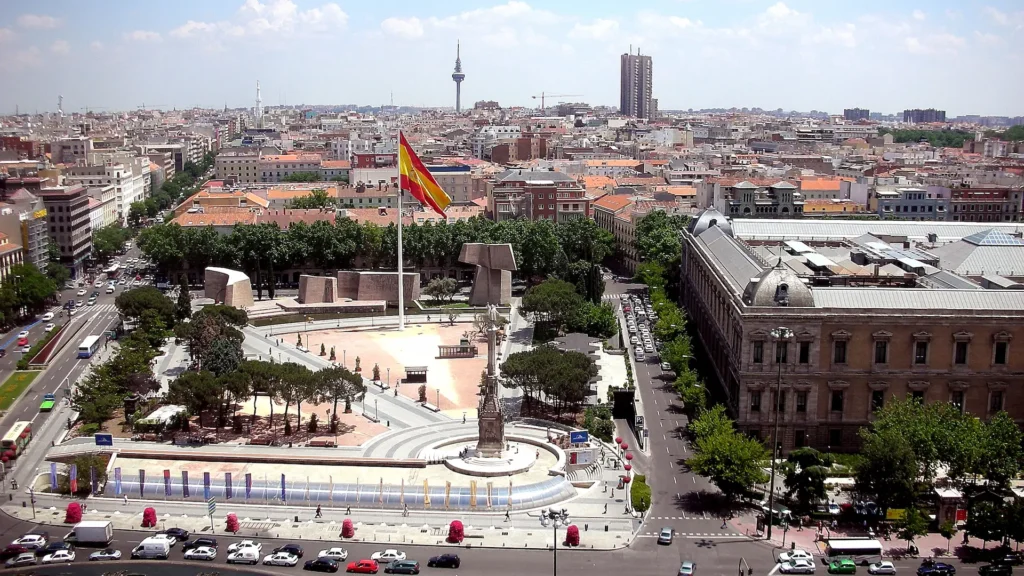
The summit will take place on 4–5 November 2026, marking a significant moment for Spain’s international agenda.
Madrid previously hosted the summit in 1992, a symbolic year that marked Spain’s emergence as a modern global actor. More than three decades later, hosting the event again reflects the country’s ambition to reinforce its role as a bridge between Europe and Latin America.
With its strong diplomatic infrastructure and global connectivity, Madrid is well positioned to host leaders and delegations from across the world.
Spain–Mexico relations: a key diplomatic challenge
The dispute dates back to March 2019, when Mexican president Andrés Manuel López Obrador sent a formal letter to Spain and the Vatican requesting an apology for abuses committed during the Spanish conquest of the Americas.
Spain rejected the request, stating that historical events should be interpreted within their historical context and emphasizing the importance of future cooperation over revisiting past grievances.
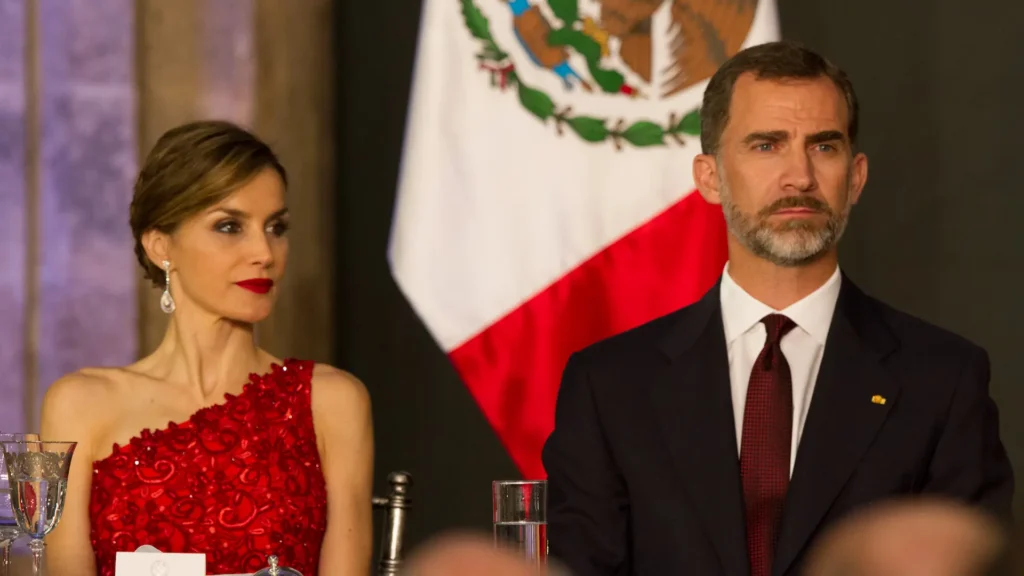
Tensions escalated further in 2021, when Mexico did not invite King Felipe VI to the country’s independence anniversary celebrations.
Since then:
- Diplomatic relations have remained cool but stable
- Economic ties have continued to grow
- Political rhetoric around colonial history has persisted
King Felipe VI has repeatedly stressed the importance of shared history, cultural ties, and mutual respect, avoiding direct confrontation while promoting a forward-looking relationship.
Spain’s diplomatic balancing act in Latin America
The Madrid summit in November 2026 will test Spain’s ability to manage a diverse and sometimes divided Ibero-American community.
Key countries—including Mexico, Brazil, and Argentina—have differing political priorities and internal challenges. Ensuring high-level attendance and meaningful agreements will be essential.
Spain is expected to focus on:
- Economic partnerships
- Digital cooperation
- Multilateral dialogue
Analysts believe Spain will position itself as a neutral diplomatic bridge, capable of facilitating dialogue despite political differences.

Artificial intelligence and disinformation take center stage
Governments worldwide are struggling to:
- Regulate AI technologies responsibly
- Prevent the spread of misinformation
- Protect democratic institutions
By prioritizing these issues, Spain is aligning the summit with global policy debates, increasing its relevance beyond the Ibero-American region.
Economic and strategic impact for Spain
Hosting the Ibero-American Summit 2026 in Madrid is expected to deliver both economic and strategic benefits.
Economic impact
- Increased international tourism
- Growth in hospitality and logistics sectors
- New investment and business opportunities
Global influence
- Strengthening Spain’s soft power
- Expanding the global role of the Spanish language
- Reinforcing Spain’s diplomatic leadership
The summit offers Spain a platform to present itself as a modern, globally engaged economy.
A crucial moment for Spain’s foreign policy
The summit comes at a time when Spain is seeking to strengthen its role in an increasingly complex international environment.
With global tensions rising and alliances shifting, Spain aims to position itself as a reliable diplomatic actor capable of addressing shared challenges.
For international audiences, the event highlights how mid-sized powers like Spain are shaping global diplomacy.
What to expect ahead of November 2026
As preparations continue, key questions remain:
- Will Mexico fully engage despite diplomatic tensions?
- Can Spain secure meaningful agreements on AI and global cooperation?
- Will the summit deliver concrete outcomes or remain symbolic?
The answers will define the success of the Madrid summit on 4–5 November 2026.
Conclusion: a defining test for Spain’s global role
The Ibero-American Summit 2026 in Madrid represents a defining moment for Spain.
On one hand, it offers a chance to strengthen its role as a bridge between continents and a leader in global discussions. On the other, it exposes the country to complex diplomatic tensions—particularly with Mexico.
The outcome will depend on Spain’s ability to turn dialogue into real cooperation in a world increasingly shaped by division and uncertainty.
👉 What is certain is that, in November 2026, Madrid will become a focal point of global diplomacy—and Spain will be under international scrutiny.
Information Source:
https://www.latimes.com/world-nation
https://english.elpais.com/international/
Photo Attribution:
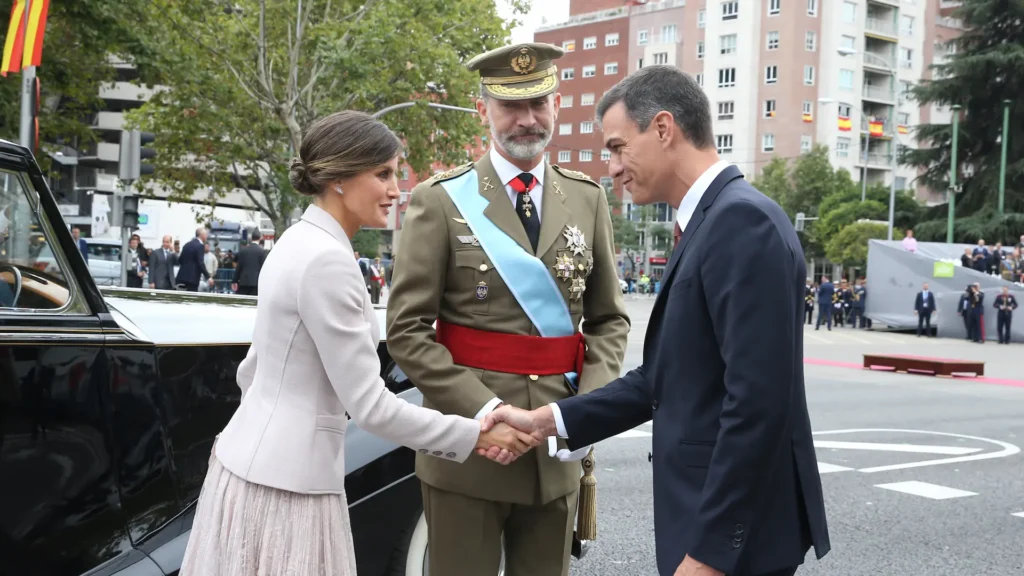
President Pedro Sánchez greets King Felipe VI and Queen Letizia of Spain at the National Day celebrations in Madrid (12 October 2018). © Ministry of the Presidency, Government of Spain / Fernando Calvo, licensed for reuse with attribution via Wikimedia Commons. https://w.wiki/J5PV
The King and the Queen of Spain (2015), by Presidencia de la República Mexicana, Creative Commons Attribution 2.0 Generic license. Wikimedia Commons https://w.wiki/KQyh
BBVA Colombia – Sede en Bogotá, by BBVA Creative Commons Attribution-Share Alike 2.0 Generic license. Wikimedia Commons https://w.wiki/Jze5
Photo credit: President Pedro Sánchez greets King Felipe VI and Queen Letizia of Spain at the National Day celebrations in Madrid (12 October 2018). © Ministry of the Presidency, Government of Spain / Fernando Calvo, licensed for reuse with attribution via Wikimedia Commons. https://w.wiki/J5PV
A screengrab from an AI-generated video on TikTok. Illustration: TikTok