

 English
 Español
Spain’s Interior Ministry has launched an internal disciplinary investigation after leaked audio recordings allegedly captured a senior police officer threatening and harassing a female subordinate.
The incident has sparked widespread public debate and renewed scrutiny of police accountability in Spain.
The recordings, first reported by El País, reportedly contain explicit threats and intimidating language directed at an officer during an overseas deployment. The audio has circulated widely in Spanish media and across social platforms, drawing criticism from political leaders and civil society groups.
Authorities have confirmed that a formal investigation is underway. The officer involved has not issued a public statement. Officials emphasised that the process remains ongoing. The Spanish National Police declined to comment in detail, citing confidentiality rules governing internal inquiries.
🚨ESCÁNDALO POLICIAL: Los audios que estamos conociendo —como este, el del DAO y los que vendrán— no son anécdotas aisladas. Son el síntoma de una enfermedad estructural que llevamos años denunciando: un modelo policial sin cultura de liderazgo, sin meritocracia real y colonizado… pic.twitter.com/DeePR7T7PT
— Policía S.XXI (@PoliciaSXXI) February 27, 2026
Political Response and Institutional Position
The Interior Ministry described the alleged conduct as “incompatible with the values of public service” and reiterated its commitment to zero tolerance for harassment within public institutions.
Government representatives stated that, if misconduct is confirmed, the case could lead to disciplinary action or potentially criminal proceedings, depending on the findings.
Opposition parties have called for greater transparency and parliamentary oversight. Several lawmakers argue that institutions must demonstrate accountability, particularly when allegations involve senior officials.
Feminist organisations and police unions have also responded, urging stronger protections for victims of workplace harassment and enhanced safeguards for whistleblowers in hierarchical environments.
🔊 'PÓDCAST' #HoyEnELPAÍS | Los audios del comisario de policía Emilio de la Calle a una subalterna: “Tienes que ser más puta”. Escúchalo completo aquí
— EL PAÍS (@el_pais) February 27, 2026
https://t.co/cSzZQqqrOW pic.twitter.com/gCi8erabHS
Gender Equality and Institutional Culture
Over the past decade, Spain has strengthened its gender equality legislation, introducing reforms to combat workplace discrimination and gender-based violence.
However, critics argue that institutional culture — particularly in traditionally male-dominated sectors such as law enforcement — has not always progressed at the same pace as legal reforms.
Experts note that hierarchical organisations may face unique challenges in handling harassment complaints. Power imbalances, professional dependence, and fear of retaliation can discourage reporting, even where formal mechanisms exist.
Observers say that cultural change within institutions is often as important as legislative reform.
Public Reaction and Social Media Debate
The leaked recordings have been widely shared online, generating significant discussion. Many commentators have focused on the tone of the alleged remarks, describing them as inconsistent with modern standards of public service.
Police unions have urged respect for due process, warning against what they call “trial by media.” At the same time, union representatives acknowledge that any confirmed misconduct should carry appropriate consequences.
What began as an internal disciplinary matter has evolved into a broader national debate about transparency, institutional trust, and public accountability.
Legal and Reputational Implications
If the investigation confirms wrongdoing, potential outcomes could include suspension, dismissal, or criminal charges, depending on severity.
Spanish labour law and criminal law both provide mechanisms to address workplace harassment, including within public administration.
Beyond individual accountability, analysts suggest the reputational impact on the National Police of Spain could be significant. While public trust in law enforcement remains relatively stable compared to some European countries, high-profile cases can influence perceptions quickly.
Internationally, Spain frequently promotes its democratic institutions as examples of post-authoritarian reform. Transparent handling of this investigation may therefore be viewed as a test of institutional credibility.
Investigation Ongoing
Officials stress that the inquiry remains in its early stages. No conclusions have been reached, and disciplinary proceedings will follow established internal protocols.
The Interior Ministry has reaffirmed its commitment to maintaining professional standards and ensuring that any confirmed misconduct is addressed appropriately.
As the investigation continues, the case highlights the ongoing challenge of aligning legal equality frameworks with institutional culture, particularly in structured and hierarchical organisations.
The outcome in the coming weeks may shape not only the resolution of this case but also broader public confidence in Spain’s security institutions.
Frequently Asked Questions
What triggered the investigation in Spain’s National Police?
Leaked audio recordings allegedly capturing a senior officer making threatening remarks prompted an internal disciplinary investigation by Spain’s Interior Ministry.
What could happen if misconduct is confirmed?
Possible outcomes include disciplinary sanctions such as suspension or dismissal, and potentially criminal charges depending on the findings.
What has the Interior Ministry said?
The ministry described the alleged behaviour as incompatible with public service values and reiterated its zero-tolerance policy toward harassment.
Why is this case significant?
Beyond the individual allegations, the case has sparked national debate about police accountability, institutional transparency, and workplace culture within hierarchical organisations.
Information Source:
https://elpais.com/espana/2026-03-01
https://www.ondacero.es/noticias/sociedad
Photo Attribution:
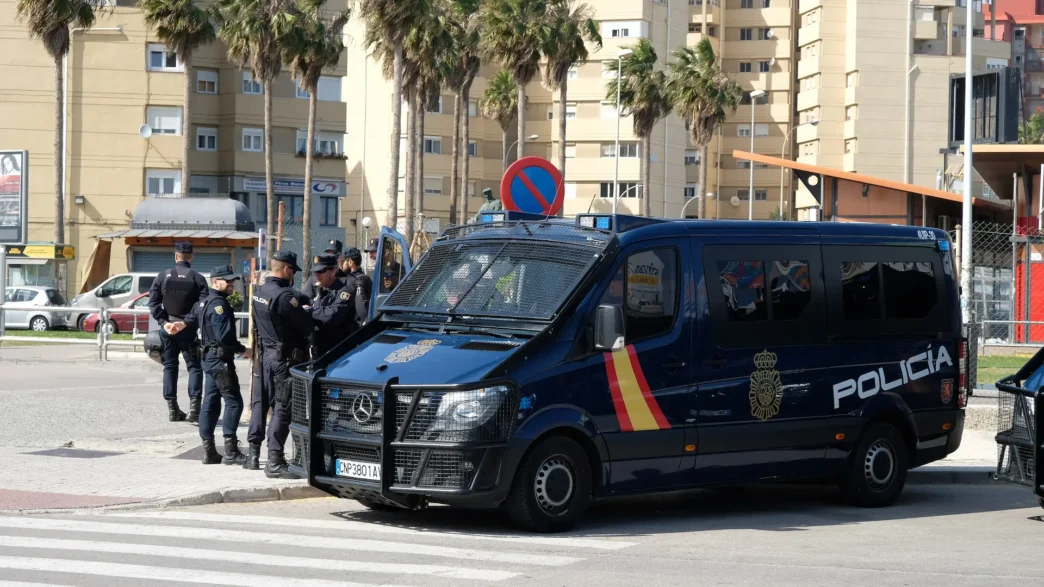
Photo: Cuerpo nacional de Policía La Línea 2019 — Author Muerte en Hawaii — Creative Commons Attribution-Share Alike 4.0 International — Source: Wikimedia Commons https://w.wiki/J4H$