

 English
 Español
Spain Moves to Protect Minors with Social Media Restrictions
Spanish Prime Minister Pedro Sánchez has announced a landmark digital safety initiative aimed at curbing abuses by major social media platforms and protecting minors online. Speaking at the World Government Summit in Dubai, Sánchez described social media as a “failed state” where laws are ignored and criminal activity thrives unchecked.
1. Social Media Ban for Under-16s
As part of a five-point digital protection plan, Sánchez confirmed that children under 16 will be banned from accessing social media platforms. Companies will be required to implement robust age verification systems, a move that aligns with Spain’s pending legislation on protecting minors in digital environments and mirrors policies recently introduced in Portugal and France.
“We will protect them from the digital Wild West,” Sánchez emphasized.
2. Legal Accountability for Platform Executives
In a groundbreaking step, Sánchez stated that CEOs and executives of social media companies will face criminal liability if they fail to remove illegal or harmful content, including hate speech.
Under the EU’s Digital Services Act (DSA), platforms are already held responsible for the content they host, leading to fines such as the €120 million penalty imposed on X for transparency violations. Sánchez’s approach goes further, targeting direct executive accountability, though he did not provide specific legislative details.
3. Criminalizing Algorithm Manipulation and Hate Amplification
The plan will also make it a criminal offense to manipulate algorithms or amplify illegal content. Sánchez said:
“We will investigate actors who create, promote, and distribute harmful content, as well as the platforms whose algorithms amplify misinformation for profit. No more hiding behind code and claiming technology is neutral.”
The government also plans to implement a “Hate and Polarization Footprint”, a tool designed to track, quantify, and expose how social media platforms contribute to division and the spread of online hate. This system will support future legal, economic, and ethical sanctions against platforms.
4. Investigations into Grok, TikTok, and Instagram
Sánchez confirmed collaboration with the Public Prosecutor’s Office to investigate potential violations by Grok AI, TikTok, and Instagram, defending Spain’s digital sovereignty. A recent Ministry of Youth and Childhood report highlighted the circulation of over three million sexualized images of women—including minors—via Grok AI, prompting a European Commission investigation.
5. International Cooperation on Digital Regulation
Acknowledging the cross-border nature of social media, Spain has joined five other European countries in the “Coalition of the Digitally Willing”, aiming for stricter, faster, and more effective enforcement of social media regulations. Sánchez said:
“We face the convergence of two failures: a digital space without accountability and a global order under external pressures. Both require governance, not resignation.”
Political Reactions and Legislative Context
The announcement has sparked political debate. The opposition People’s Party (PP) reminded the government that leader Alberto Núñez Feijóo had already proposed a Digital Protection Plan for Minors, advocating parental involvement and stricter oversight. The PP called on the PSOE not to block existing legislation and to consider amendments such as setting the minimum social media age at 16, with children over 14 allowed access only with explicit parental consent and digital curfews.
The Ministry of Youth and Childhood confirmed that the current bill under discussion would raise the minimum registration age from 14 to 16 and require device manufacturers to provide free parental control systems.
Towards a Safer, More Democratic Digital Space
Concluding his speech, Sánchez emphasized that the overarching goal is to restore social media as a safe and democratic space:
“Moments like these define generations, and our generation will shape the future of the next.”
Spain’s plan marks a major step in digital safety, ensuring greater accountability for platforms, protecting minors, and tackling the challenges posed by online hate, algorithmic manipulation, and misinformation.
Information Source:
https://elpais.com/sociedad/2026-02-03
https://www.rtve.es/noticias/20260203/
Photo Attribution:
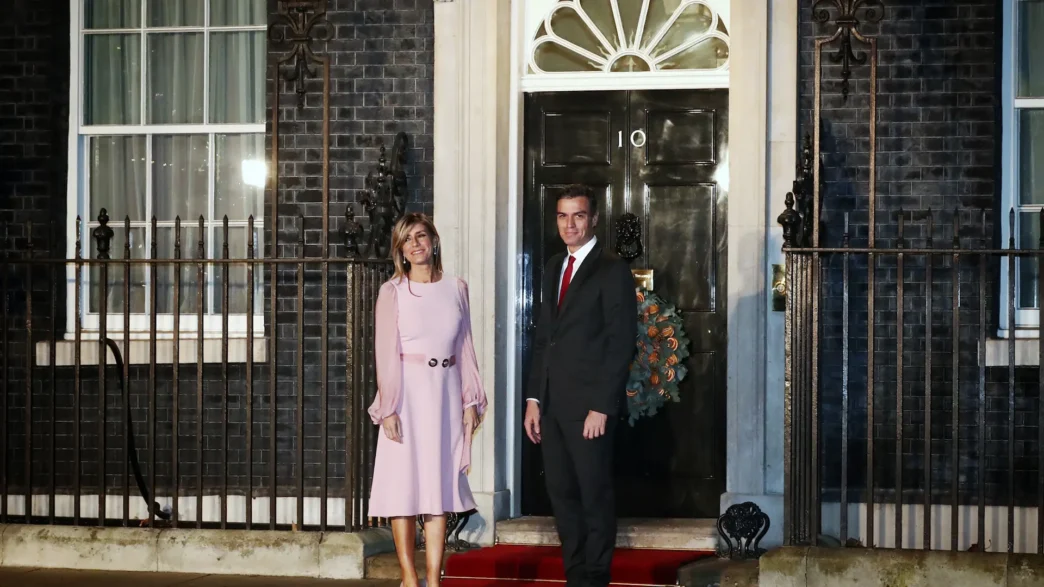
Photo: Pedro Sánchez and Begoña Gómez at Number 10 for NATO leaders meeting (3 Dec 2019) by Ministry of the Presidency, Government of Spain / La Moncloa. Licensed under the Government of Spain’s legal notice (free use with attribution and date, no distortion).
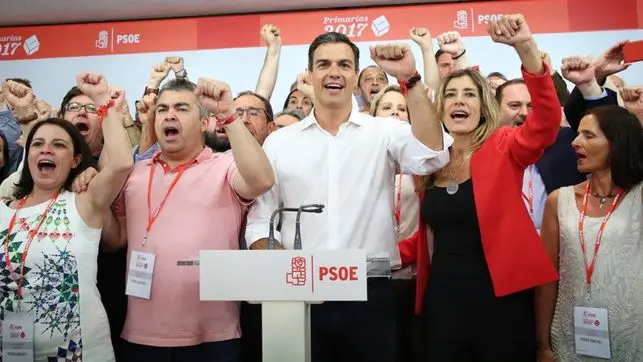
Photo: Pedro Sánchez after winning the PSOE primaries, singing “La Internacional” (21 May 2017). By Marta Jara / eldiario.es. Licensed under CC BY-SA 3.0 Spain.
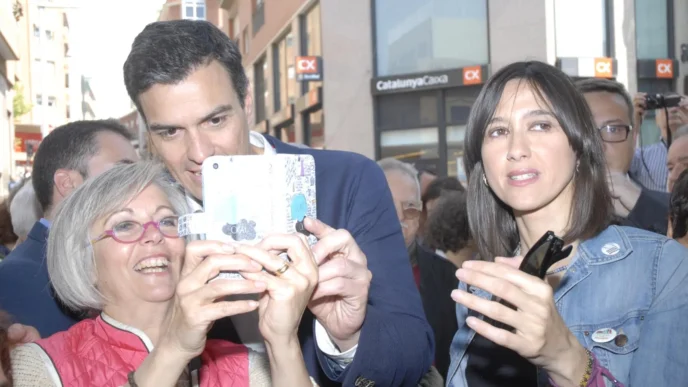
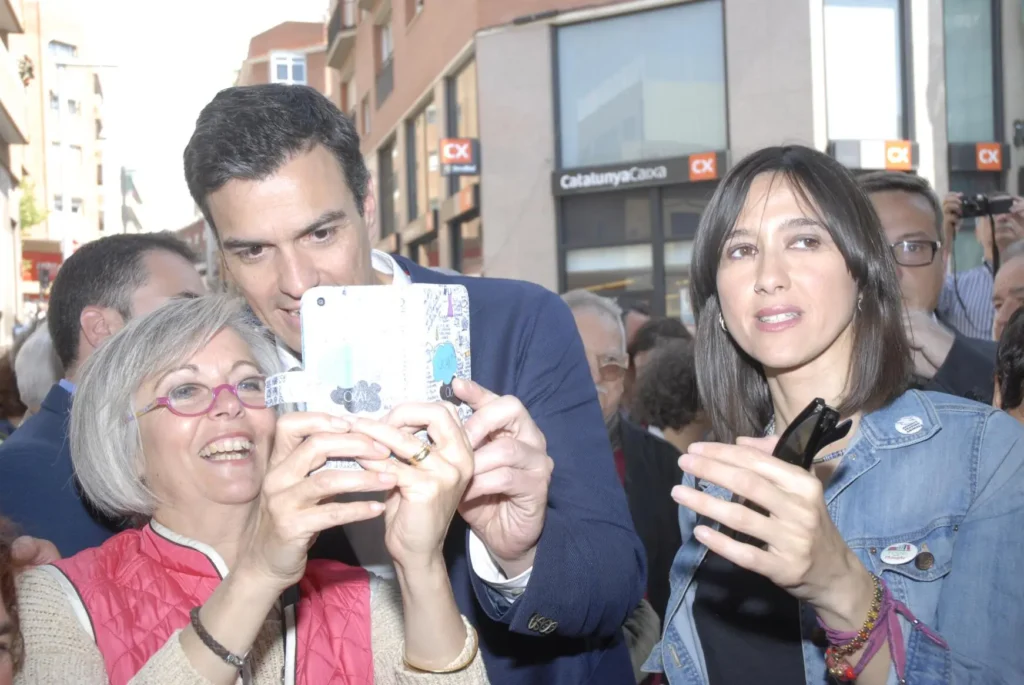
Visita de Pedro Sánchez. Núria Parlon Gil / Flickr / Wikimedia Commons (CC BY 2.0)