

 English
 Español
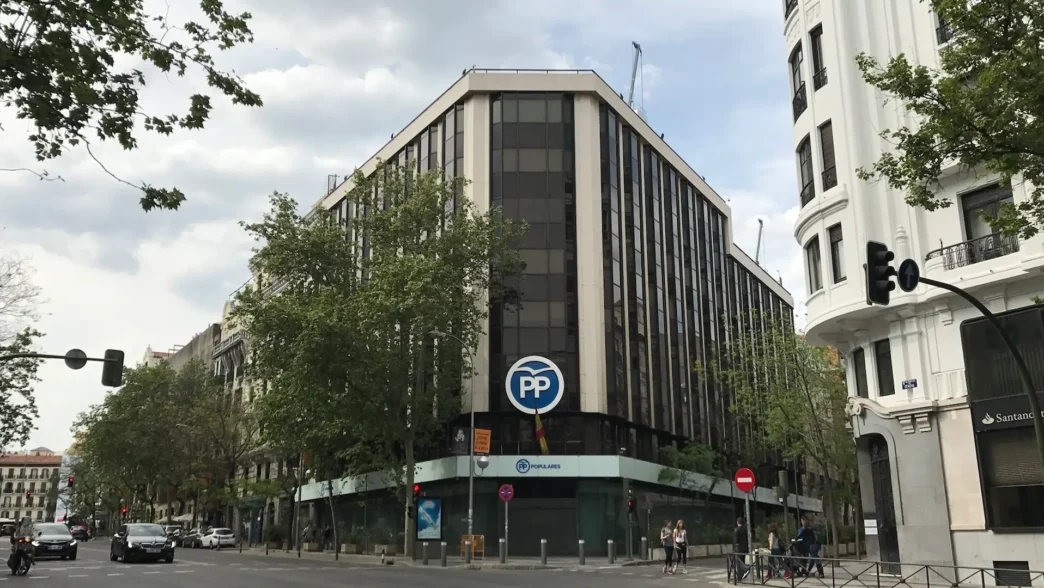
The People’s Party (PP) has won the latest Castilla y León regional election, strengthening its political dominance in one of Spain’s most conservative regions while slowing the rise of the far-right Vox.
The Castilla y León election results also brought a modest recovery for the Spanish Socialist Workers’ Party (PSOE), suggesting a partial return to Spain’s traditional two-party political dynamic after years of fragmentation.
Despite improving its results, the PP fell short of an absolute majority in the regional parliament. That means incumbent regional president Alfonso Fernández Mañueco will likely need support from Vox to secure another term in office.
At the same time, the right-wing bloc strengthened its dominance. Together, the PP and Vox captured more than 54% of the vote, marking the highest combined conservative vote share in Castilla y León’s modern political history.
Castilla y León Election Results at a Glance
Here are the key results of the latest regional election in Castilla y León:
- People’s Party (PP): 35% of the vote – 33 seats (+2 seats compared with 2022)
- Spanish Socialist Workers’ Party (PSOE): about 30% of the vote – around 30 seats (+2 seats)
- Vox: 18.9% of the vote – 14 seats (+1 seat)
- Union of the Leonese People (UPL): 3 seats (unchanged)
- Soria Ya: 1 seat (down from 3)
- Other parties: no representation in the regional parliament
Key takeaway:
- The PP wins the election and strengthens its lead.
- Vox grows slightly but remains below expectations.
- The PSOE stabilizes and recovers some support.
Total seats in the Cortes of Castilla y León: 82
Majority needed to govern: 42 seats
Mañueco Declares Victory in Key Spain Regional Election
Celebrations began early among PP supporters on election night.
Around 9:30 p.m., Fernández Mañueco arrived at a hotel in his hometown of Salamanca and addressed journalists before the vote count was fully completed, speaking confidently as the clear winner of the Castilla y León election.
After two terms leading the regional government, the 60-year-old politician not only secured reelection but also improved the PP’s vote share.
Key figures from the Castilla y León election results include:
- PP vote share: about 35%
- Vote increase: roughly 54,000 votes
- Parliament seats: 33 out of 82
That represents four percentage points more support than in the previous election.
Crucially, the result also slowed the expansion of Vox, which had been gaining momentum among conservative voters in recent years.
“We will have to talk, but we have already said with whom we will not make agreements,” Mañueco said after the results became clear.
“Castilla y León will remain free of ‘Sanchismo,’” he added, referring to the national government led by Prime Minister Pedro Sánchez.
Later, addressing cheering supporters, Mañueco highlighted the scale of his party’s advantage:
“We have doubled Vox’s votes.”
However, negotiations will now be necessary, as the PP still requires Vox’s backing to govern.
Vox Vote Growth Slows in Castilla y León Election
For Vox, the Castilla y León election results delivered a mixed outcome.
The party achieved its best result in a regional election, winning 18.9% of the vote and increasing its representation from 13 to 14 seats.
But the outcome fell short of expectations.
Many opinion polls predicted Vox could surpass the 20% threshold and win up to 17 seats in the regional parliament.
Instead, the party recorded only modest growth of just over one percentage point.
Political analysts suggest that the PP’s extensive local political network, which governs around 70% of municipalities in the region, helped contain Vox’s expansion.
Nevertheless, Vox leader Santiago Abascal rejected suggestions that the party had reached its electoral ceiling.
“There is no limit for Vox,” Abascal said in a video message from party headquarters in Madrid.
He also predicted that agreements with the PP would likely be reached not only in Castilla y León but also in Extremadura and Aragon, where recent regional elections produced similar political balances.
“We will negotiate measure by measure, with guarantees and timelines,” Abascal said.
PSOE Recovers Ground in Castilla y León
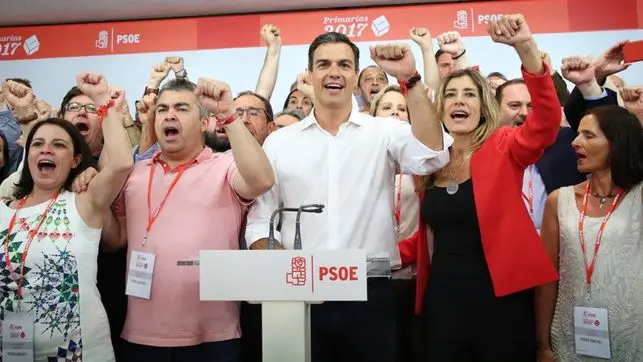
For the PSOE, the Castilla y León regional election offered a rare moment of relief after several difficult contests.
The party slightly increased both its vote share and parliamentary representation, gaining two additional seats.
Although the gains were modest—around 14,000 more votes than in 2022—they halted the party’s recent electoral decline.
The PSOE performed particularly well in Soria and León, where it emerged as the most-voted party.
In Soria, the strong result was driven by socialist candidate Carlos Martínez, who has served as mayor of the provincial capital for nearly two decades.
His popularity helped the party regain support previously lost to the regionalist movement Soria Ya.
Meanwhile, smaller left-wing parties failed to win representation after running separately rather than forming a unified coalition.
The alliance Unidas Podemos, which previously held a seat, disappeared from the regional parliament.
Another coalition, En Común, which includes Izquierda Unida, Sumar, and the Green Party (Spain), secured just over 2% of the vote, far below the threshold required to enter parliament.
Regionalist Parties Lose Influence
The Castilla y León election results also revealed a decline in regionalist parties, which had surged in the previous election.
The biggest setback came for Soria Ya, which lost more than half of its votes and dropped from three seats to one.
Meanwhile, the Union of the Leonese People (UPL) maintained three seats, but failed to reach its goal of forming its own parliamentary group.
Overall, the new parliament will be less politically diverse, with power concentrated primarily among PP, PSOE and Vox.
Castilla y León Remains a Conservative Stronghold
The Castilla y León election results confirm the region’s long-standing reputation as a conservative stronghold in Spanish politics.
Since 1987, when the conservative People’s Alliance—the predecessor of today’s PP—won power under José María Aznar, the right has governed the region almost continuously.
The PSOE has won the regional vote only twice, most recently in 2019, when it emerged as the largest party but failed to form a government after the PP reached a coalition agreement with the now-defunct Citizens (Spanish political party).
Next Political Test: Andalusia
The Castilla y León election is the third regional vote held in Spain in less than three months, following contests in Extremadura and Aragon.
The next major political battleground is expected to be Andalusia, where regional elections are likely later this year.
For the PP, the challenge will be maintaining momentum and potentially governing without relying on Vox.
For the PSOE, the goal will be building on its modest recovery and regaining political ground ahead of future national elections.
Meanwhile, negotiations between the PP and Vox will determine the future of the Castilla y León regional government, a partnership that continues to shape Spain’s evolving right-wing political landscape.
Information Source:
https://elpais.com/espana/elecciones-castilla-y-leon/
https://www.rtve.es/noticias/20260316/
Photo Attribution:
Photo: Pedro Sánchez after winning the PSOE primaries, singing “La Internacional” (21 May 2017). By Marta Jara / eldiario.es. Licensed under CC BY-SA 3.0 Spain.
Sede del Partido Popular, by Triplecaña, Creative Commons Attribution-Share Alike 4.0 International, Wikimedia Commons: https://w.wiki/Jo66