

 English
 Español
A diplomatic dispute has erupted between Washington and Madrid after the White House claimed that Spain had agreed to cooperate with the United States in operations related to Iran. The Spanish government has firmly rejected that assertion, stating that its position has not changed.
The disagreement comes amid the broader escalation of the war in Iran, rising tensions between NATO allies, and renewed pressure from U.S. President Donald Trump regarding military base access and defense spending.
White House Claims Spain Agreed to Cooperate
White House Press Secretary Karoline Leavitt told reporters that Spain had “in recent hours shown agreement to cooperate with the U.S. military.”
According to the U.S. administration, this alleged shift followed threats from President Trump of potential economic retaliation after Madrid refused to allow U.S. forces to use Spanish military bases for operations targeting Iran.
U.S. Treasury Secretary Scott Bessent also accused Spain of putting American lives at risk and emphasized expectations that European NATO allies should support Washington’s objectives in the region.
President Trump has repeatedly called for stronger European involvement in confronting the Iranian regime, arguing that Tehran poses a threat to the United States and its allies.
He also criticized Spain as a “terrible partner” and hinted at possible trade consequences. However, Spain’s membership in the European Union makes unilateral U.S. trade measures legally and politically complex.
White House Press Secretary Karoline Leavitt:
— Global Portal News (@GPNenglish) March 4, 2026
"Spain has agreed to cooperate militarily in recent hours" "It is unacceptable that Spain has been so uncooperative this weekend regarding US bases"#Iraq #Cyprus #Iran #MiddleEast #USIranWar #starmer #Sánchez pic.twitter.com/XFcP8BfGEf
Madrid Reaffirms Its “No to War” Policy
Within minutes of the White House statement, Foreign Minister José Manuel Albares categorically denied any change in Spain’s position.
Speaking on Cadena SER, Albares said Spain’s stance “has not changed by a single comma.”
He emphasized that no military cooperation will occur outside the framework of existing bilateral agreements and international law.
“There is an agreement. Outside that agreement, there will be no use of Spanish sovereign bases,” Albares stated, referring to the long-standing defense pact governing Morón Air Base and Naval Station Rota.
Prime Minister Pedro Sánchez has summarized Spain’s Middle East policy in four words: “No to war.”
🇪🇸 Spain Foreign Minister José Manuel Albares to Karoline Leavitt:
— Global Portal News (@GPNenglish) March 4, 2026
“She may be the White House spokesperson, but I am Spain’s Minister of Foreign Affairs, and I can assure you that our position remains unchanged.”#Iran #MiddleEast #USIranWar #Sánchez pic.twitter.com/dlKjWnWUTn
Strategic Bases and NATO Context
Spain hosts key U.S. military installations under a decades-old bilateral defense agreement. The bases in Morón and Rota play an important role in NATO operations and U.S. deployments in Europe and North Africa.
Spanish officials stress that these facilities can only be used within the limits of the existing agreement.
The conflicting public statements have raised questions about whether the issue stems from miscommunication, differing legal interpretations, or broader political tensions.
The dispute unfolds in parallel with ongoing debates inside NATO over defense spending, burden-sharing, and strategic autonomy.
Spain remains one of the few alliance members resisting U.S. pressure to raise military expenditure to higher levels of GDP. Madrid maintains that it fulfills its NATO commitments and will determine defense spending domestically.
Connection to the Iraq War and Spain’s Foreign Policy Doctrine
Prime Minister Sánchez has repeatedly referenced the 2003 Iraq War, warning against repeating past military interventions in the Middle East.
Spain’s participation in the Iraq invasion under former Prime Minister José María Aznar remains a politically sensitive issue domestically.
The government argues that the Iraq conflict contributed to regional instability, increased security threats, and long-term political consequences.
This historical experience strongly shapes Spain’s current approach to the Iran crisis: prioritize diplomacy, multilateralism, and legal frameworks over military escalation.
Spain Activates Crisis Cabinet Amid Regional Escalation
As tensions in the Middle East intensify, Spain has reportedly activated emergency coordination mechanisms to protect its citizens and interests in the region.
According to government sources, Spain is closely monitoring developments to ensure the safety of nationals and diplomatic personnel.
This broader response aligns with Spain’s position in the international debate over the war in Iran and reinforces its diplomatic stance.
(For further context, see our related coverage on Pedro Sánchez’s rejection of U.S. strikes on Iran and Spain’s crisis response measures.)
Implications for U.S.–Spain Relations
Despite the public disagreement, no formal diplomatic rupture has occurred.
Spain and the United States continue to cooperate within NATO structures and maintain long-standing defense ties.
However, the exchange of statements represents one of the most visible tensions between the two governments in recent years.
Spain maintains that it is not participating in offensive military operations against Iran and will not authorize any use of its sovereign territory outside legal agreements.
The White House continues to expect broader allied cooperation in its approach to Tehran.
Observers will now watch closely to determine whether this episode remains a temporary diplomatic dispute or signals a deeper strategic divergence between Washington and Madrid.
❓ FAQ U.S.–Spain
1. Did Spain agree to cooperate with the U.S. on Iran?
No. The Spanish government has officially denied agreeing to cooperate in military operations related to Iran and says its policy remains unchanged.
2. Can the U.S. use Spanish military bases for strikes on Iran?
Spain states that U.S. access to bases such as Morón and Rota is governed by a bilateral agreement and cannot be used for operations outside that framework.
3. What is Spain’s position on the war in Iran?
Prime Minister Pedro Sánchez has reiterated a policy of “No to war”, emphasizing diplomacy, international law, and United Nations authorization.
4. Why did the White House say Spain agreed to cooperate?
The White House claimed Spain had shown willingness to cooperate with U.S. military efforts, but Madrid quickly rejected that interpretation.
5. How does this dispute affect NATO relations?
While tensions have increased, Spain and the United States continue to cooperate within NATO. The disagreement reflects broader debates about defense spending and alliance responsibilities.
Information Source:
https://elpais.com/internacional/
Photo Attribution:
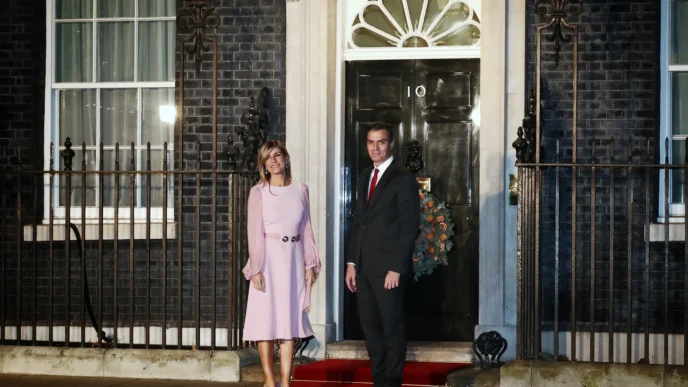
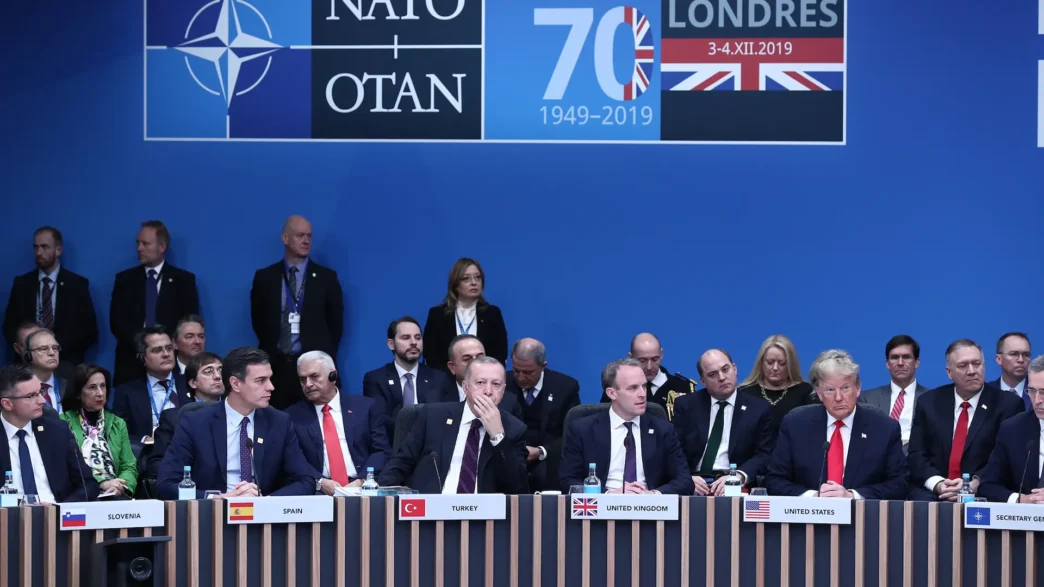
Image: Spanish Prime Minister Pedro Sánchez attending the 2019 NATO summit in London, United Kingdom, on 4 December 2019. Photo by Pool Moncloa/Fernando Calvo, published by the Ministry of the Presidency of the Government of Spain. Used under an attribution-only license; redistribution and reuse permitted with proper credit. Source: Wikimedia Commons / Ministry of the Presidency, Government of Spain. https://w.wiki/JBWu
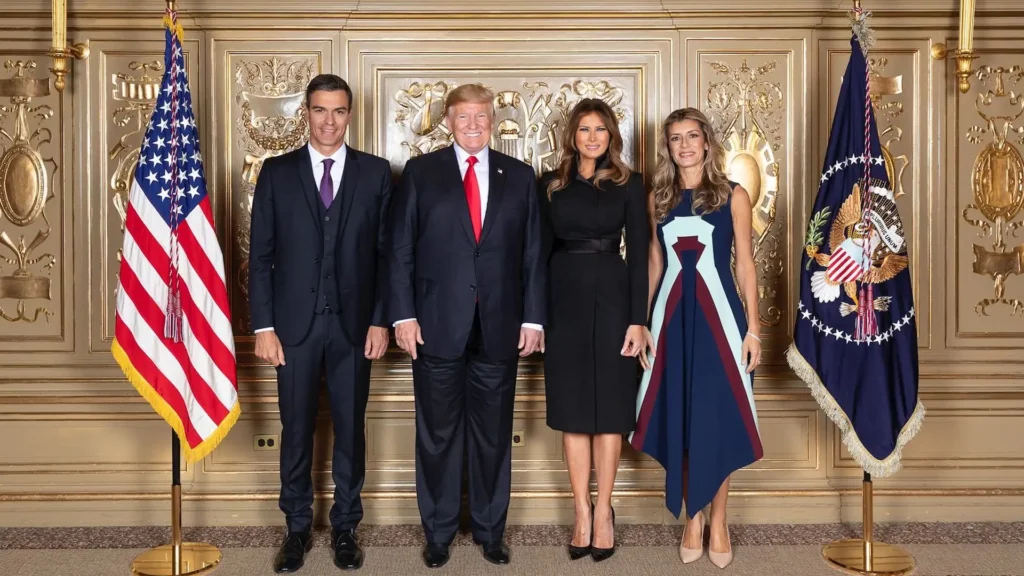
Photo credit: Official White House photo by Andrea Hanks, showing Presidents Donald J. Trump and Pedro Sánchez at the United Nations General Assembly, 25 September 2018. Public domain. Source: Wikimedia Commons (file President_Donald_Trump_and_Pedro_Sánchez.jpg). https://w.wiki/J9zG