

 English
 Español
Spain has cautiously welcomed the Iran ceasefire agreement between the United States and Iran, but Prime Minister Pedro Sánchez has made clear that Madrid will not soften its criticism of Washington’s role in the conflict.
Following the announcement by Donald Trump of a two-week ceasefire, Sánchez described the development as “good news”, while warning it represents only temporary relief in a conflict that has already destabilized the Middle East.
The statement—widely seen as a direct rebuke of Trump—highlights Spain’s firm diplomatic stance and growing willingness to challenge its allies over the Iran war escalation.
Los alto al fuego siempre son una buena noticia. Sobre todo si conducen a una paz justa y duradera. Pero el alivio momentáneo no puede hacernos olvidar el caos, la destrucción y las vidas perdidas.
— Pedro Sánchez (@sanchezcastejon) April 8, 2026
El Gobierno de España no aplaudirá a quienes incendian el mundo porque se…
A fragile Iran ceasefire amid rising Middle East tensions
The US-Iran ceasefire comes after weeks of escalating military strikes targeting Iranian positions. The conflict, driven by tensions over nuclear policy and regional power struggles, has raised fears of a wider Middle East war.
While the truce offers a temporary pause, Spanish officials have warned that the situation remains highly unstable.
“This momentary relief must not make us forget the chaos, destruction, and lives lost,” Sánchez emphasized.
Spain’s concerns are shared across Europe, particularly given ongoing disagreements involving regional actors such as Israel and the risk of the conflict expanding further.
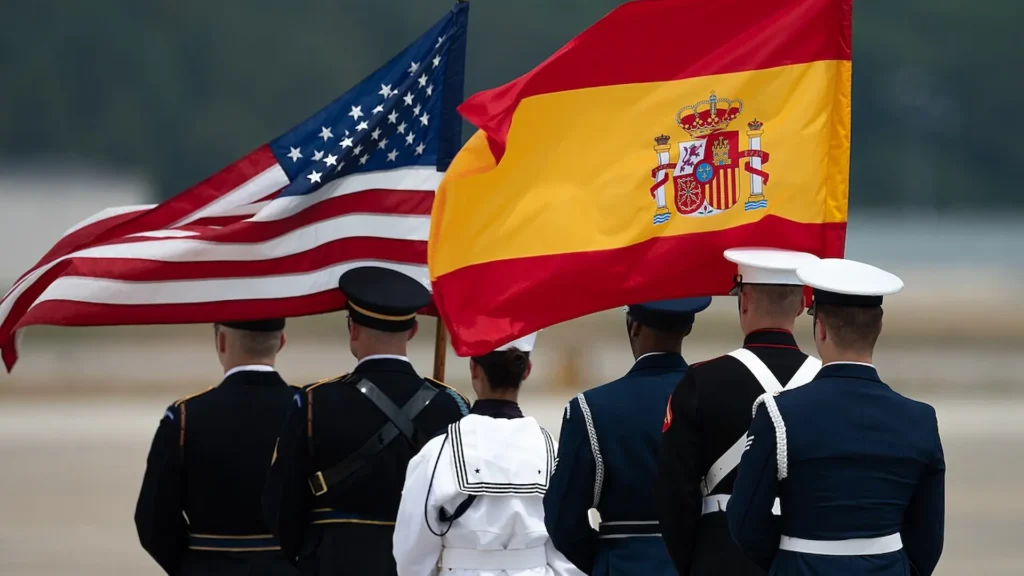
Spain’s Iran war stance: diplomacy over escalation
The Spanish government has consistently defended a strategy based on diplomacy, international law, and conflict de-escalation.
Madrid has openly criticized recent military actions against Iran, describing them as violations of international norms—a position explored in the editorial “Pedro Sánchez Rejects Trump’s Iran Strikes and Revives Spain’s ‘No to War’ Doctrine.”
This approach reflects Spain’s broader foreign policy identity: supporting multilateral solutions while avoiding direct military involvement.
José Manuel Albares: “A day of hope—but uncertainty remains”
Foreign Minister José Manuel Albares described the ceasefire as a “day of hope”, while cautioning that its success is far from guaranteed.
“After 40 days of war, we are finally seeing a light,” Albares said.
However, he warned of early disagreements that could derail negotiations—particularly over whether the ceasefire should extend to Lebanon, a point of contention between Iran and Israel.
“All fronts must cease,” Albares stressed, calling for a complete halt to missile and drone attacks across the region.
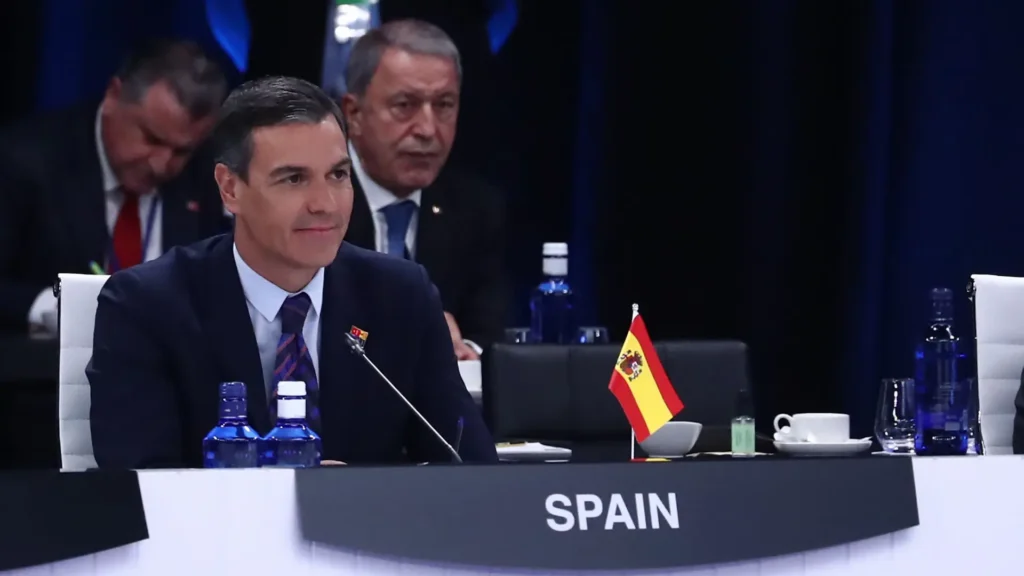
Strait of Hormuz crisis raises global economic risks
Spain has also warned about the strategic importance of the Strait of Hormuz, a critical route for global oil shipments.
Any disruption to this corridor could trigger serious economic consequences worldwide, particularly in energy markets.
Albares stressed that the strait must remain open, secure, and accessible, as tensions with Iran have previously threatened shipping routes.
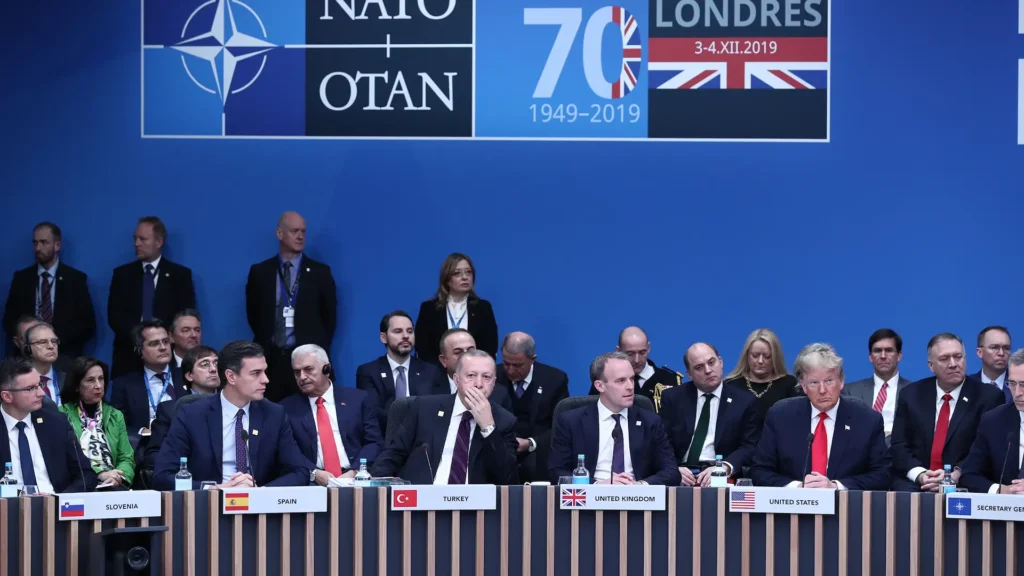
Spain balances NATO ties with independent foreign policy
Spain’s response to the Iran conflict reflects a broader effort to balance its role within Western alliances while maintaining an independent diplomatic voice.
This strategy is explored in:
- “Spain’s Iran war stance: Pedro Sánchez warns the conflict could be worse than Iraq”
- “Why Spain Closed Its Airspace to U.S. Military Flights Amid the Iran War”
These analyses highlight how Spain is actively limiting military involvement while pushing for diplomatic solutions.
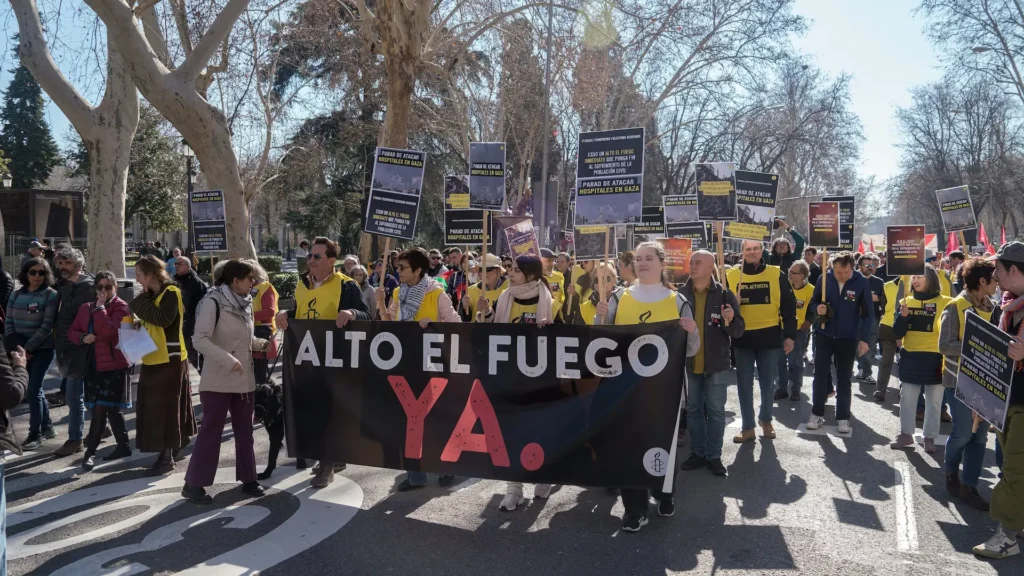
Public opinion in Spain turns against Trump
Domestic sentiment is also influencing policy. A recent survey, analyzed in “Donald Trump Seen as Biggest Global Threat in Spain, Surpassing Putin, New Poll Reveals”, shows a growing perception of Trump as a major global risk.
This shift reflects broader concerns about the consequences of US foreign policy in the Middle East.
For Sánchez, aligning with public opinion strengthens his government’s anti-escalation narrative.
International mediation efforts gain urgency
Spain has welcomed mediation efforts aimed at turning the temporary ceasefire into a lasting agreement, particularly initiatives led by Pakistan.
“We will spare no effort to ensure diplomacy prevails,” Albares said.
However, with only a two-week negotiation window, the risk of renewed conflict remains high.
A decisive moment for global diplomacy
The Iran ceasefire represents a critical test for international diplomacy.
While it offers a rare chance to de-escalate tensions, its success will depend on whether global powers prioritize negotiation over confrontation.
Spain has positioned itself as a strong advocate for diplomacy—while continuing to criticize actions it sees as destabilizing, even from allies like the United States.
Temporary relief, not lasting peace
Spain’s response to the Iran ceasefire combines cautious optimism with firm criticism.
While welcoming the pause in violence, Sánchez has made clear that lasting peace requires more than short-term agreements.
As tensions persist, the coming weeks will determine whether diplomacy can succeed—or whether the Middle East risks sliding back into conflict.
👉 Spain’s message is clear: a ceasefire is only the beginning—not the solution.
Information Source:
https://www.eldiario.es/internacional/
https://www.publico.es/politica/
Photo Attribution:
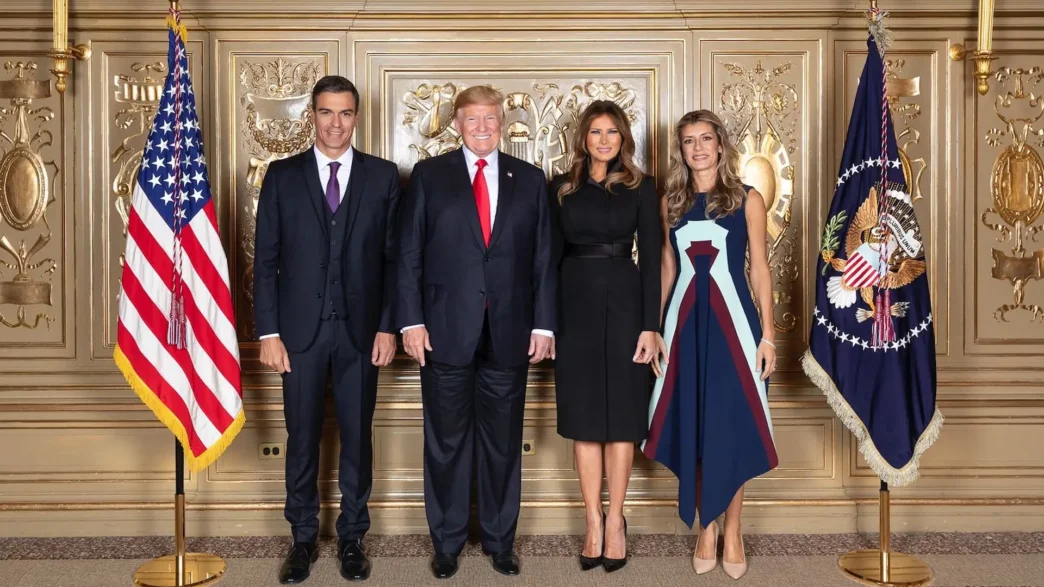
Photo credit: Official White House photo by Andrea Hanks, showing Presidents Donald J. Trump and Pedro Sánchez at the United Nations General Assembly, 25 September 2018. Public domain. Source: Wikimedia Commons (file President_Donald_Trump_and_Pedro_Sánchez.jpg). https://w.wiki/J9zG
2024-02-17-Manifestacion propalestina-01, by Nemo, Creative Commons Attribution-Share Alike 4.0 International, https://w.wiki/JjQR
Photo: Staff Sgt. Alex Broome / U.S. Air Force, public domain, via Wikimedia Commons. https://w.wiki/JCjJ
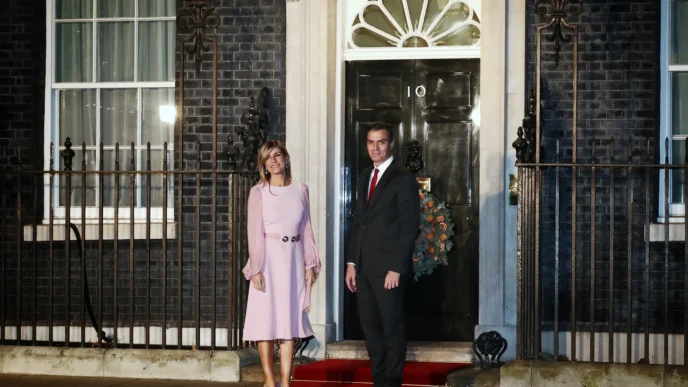
Image: Spanish Prime Minister Pedro Sánchez attending the 2019 NATO summit in London, United Kingdom, on 4 December 2019. Photo by Pool Moncloa/Fernando Calvo, published by the Ministry of the Presidency of the Government of Spain. Used under an attribution-only license; redistribution and reuse permitted with proper credit. Source: Wikimedia Commons / Ministry of the Presidency, Government of Spain. https://w.wiki/JBWu
Photo: Pedro Sánchez at the NATO Summit (June 29, 2022)
Source: La Moncloa (Government of Spain)
Author: Pool Moncloa / Fernando Calvo Rollán
License: Government of Spain – free use with attribution https://w.wiki/KZVv