

 English
 Español
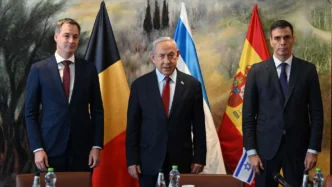

Spain has strongly condemned the US-Israel strike on Iran, calling it a violation of international law and a dangerous escalation in the growing Middle East crisis. In response, the Spanish government has activated a high-level crisis cabinet to coordinate the protection of approximately 30,000 Spanish citizens currently residing across the region.
The military offensive has triggered significant diplomatic repercussions worldwide, placing Spain at the center of renewed European debate over how to respond to escalating tensions between Iran, Israel, and the United States.
Spain PM @sanchezcastejon is only real man in this entire world. He said @netanyahu and @realDonaldTrump are breaking international law. pic.twitter.com/PUZJbkYMQb
— KRK (@kamaalrkhan) March 2, 2026
Prime Minister Pedro Sánchez and Foreign Minister José Manuel Albares publicly rejected the military action while also condemning human rights abuses by the Iranian regime. The position reflects a calculated diplomatic balance: opposing unilateral military escalation while maintaining firm criticism of Tehran’s internal repression.
Spanish FM Albares tells #EuropeToday that US and Israel's "unilateral attack" on Iran isn't backed by UN Charter or int'l law.
— Mared Gwyn (@MaredGwyn) March 2, 2026
🇪🇸 has openly criticised the attack, with Albares saying "few countries" can say they are as "consistent" on foreign policy. https://t.co/7drjvzxVTX
Spain Calls for De-escalation and Diplomatic Dialogue
Prime Minister Sánchez described the strike as a breach of international law, warning that it contributes to “a more uncertain and hostile international order.” He stressed that the region cannot afford “another prolonged and devastating war in the Middle East.”
His remarks reinforce Spain’s long-standing foreign policy principles:
- Defense of multilateralism
- Respect for international legal frameworks
- Preference for diplomatic solutions over armed confrontation
During a public appearance in Madrid, Sánchez emphasized that escalation would only deepen instability, urging immediate de-escalation and renewed international dialogue.
Spain’s response aligns with its broader diplomatic strategy in previous conflicts involving Gaza and Ukraine, where Madrid has consistently advocated negotiated resolutions.
30,000 Spanish Citizens in the Middle East Under Protection Plans
The Spain crisis cabinet has prioritized the safety of Spanish citizens abroad, particularly those in Iran, Israel, Lebanon, Qatar, Kuwait, Saudi Arabia, and the United Arab Emirates.
Spain’s Ministry of Foreign Affairs confirmed that no Spanish citizens have been killed or seriously injured following the Iran attack. However, authorities remain on high alert due to:
- Regional airspace closures
- Widespread flight cancellations
- Escalating security risks
Foreign Minister Albares stated clearly:
“The safety of Spanish citizens is our priority.”
Embassies across the Middle East remain operational and have evacuation contingency plans prepared should the security situation deteriorate further.
Because airspace restrictions limit commercial evacuation options, Spanish authorities are reviewing alternative routes, including potential overland evacuation scenarios if required.
Spanish Troops in Lebanon Raise Security Alert
Approximately 700 Spanish peacekeeping troops deployed in Lebanon have raised their security alert level as a precautionary measure.
While there have been no direct confrontations involving Spanish forces, defense officials stress that heightened readiness is essential given the unpredictable evolution of the Iran conflict.
Albares clarified that Spanish military bases were not used in the offensive operations, describing the crisis as “a war of unpredictable consequences.”
European Union Divisions Over Iran Response
Spain’s firm condemnation contrasts with the more cautious tone adopted by some European Union member states.
Madrid reportedly pushed for stronger language in a joint EU declaration, but faced resistance from countries preferring a more measured diplomatic approach.
European Commission President Ursula von der Leyen urged restraint from all parties, warning against actions that could destabilize the region or undermine global non-proliferation efforts.
The situation highlights ongoing EU divisions over Middle East policy and the broader strategic relationship with both the United States and Israel.
Spain’s Diplomatic Balancing Act
Spain’s foreign policy response attempts to balance three priorities:
- Protecting Spanish citizens in the Middle East
- Defending international law
- Maintaining diplomatic credibility within the EU and NATO
Domestically, political reactions have been mixed. While the government emphasizes de-escalation and crisis management, opposition parties argue that stronger measures may be necessary to confront authoritarian regimes.
The debate reflects a larger conversation about Spain’s strategic role in global security, particularly as geopolitical tensions continue to reshape alliances and regional stability.
What Happens Next?
As tensions in the Middle East continue to evolve, Spain’s crisis cabinet will remain active, closely monitoring developments and coordinating diplomatic, military, and consular measures.
For the 30,000 Spanish citizens in the region, the immediate focus remains on:
- Safety and communication with embassies
- Preparedness for evacuation if necessary
- Monitoring official travel advisories
The unfolding Iran crisis underscores the complexity of modern geopolitics — where diplomacy, military risk, and citizen protection intersect in real time.
❓ Frequently Asked Questions (FAQ)
Why did Spain condemn the US-Israel strike on Iran?
Spain described the attack as a violation of international law and warned that it could escalate instability in the Middle East.
How many Spanish citizens are in the Middle East?
Approximately 30,000 Spanish citizens are currently residing across countries in the region.
What is Spain’s crisis cabinet?
It is a high-level coordination body activated during international emergencies to protect Spanish nationals abroad.
Are Spanish troops involved in the conflict?
No. However, around 700 Spanish peacekeeping troops in Lebanon have increased security precautions.
Has the European Union taken a unified stance?
Not entirely. Spain pushed for stronger condemnation, but other EU members favored more cautious diplomatic language.
Information Source:
Photo Attribution:
Viaje del presidente del Gobierno a Israel (Noviembre 2023) / Gobierno de España / Wikimedia Commons (CC BY 4.0)
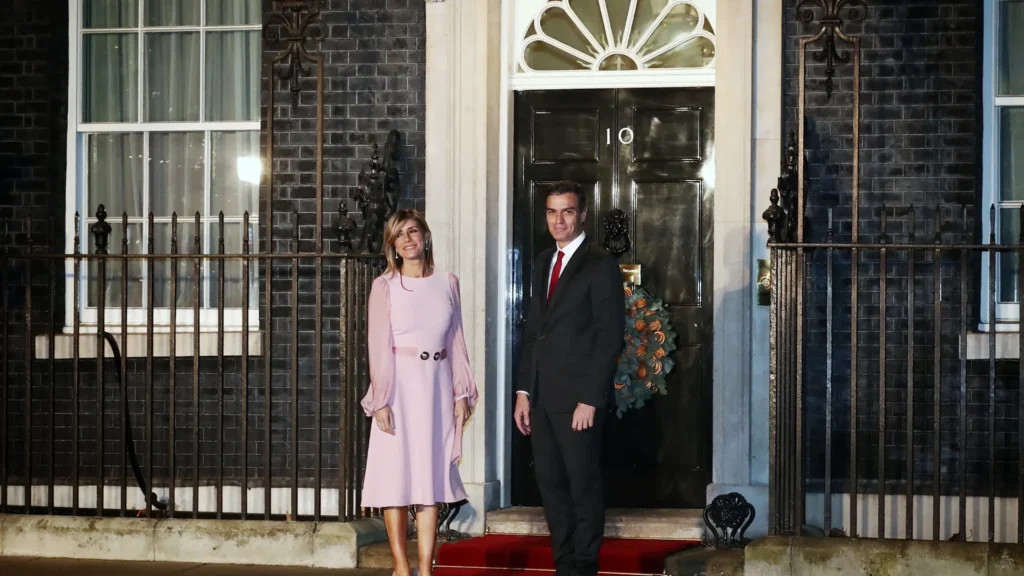
Photo: Pedro Sánchez and Begoña Gómez at Number 10 for NATO leaders meeting (3 Dec 2019) by Ministry of the Presidency, Government of Spain / La Moncloa. Licensed under the Government of Spain’s legal notice (free use with attribution and date, no distortion).