Spain Reopens Embassy in Tehran Amid Ceasefire, Sparks Fierce Israel Backlash

Spain reopens its embassy in Tehran during a fragile ceasefire.
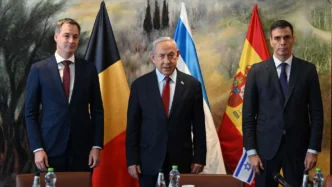
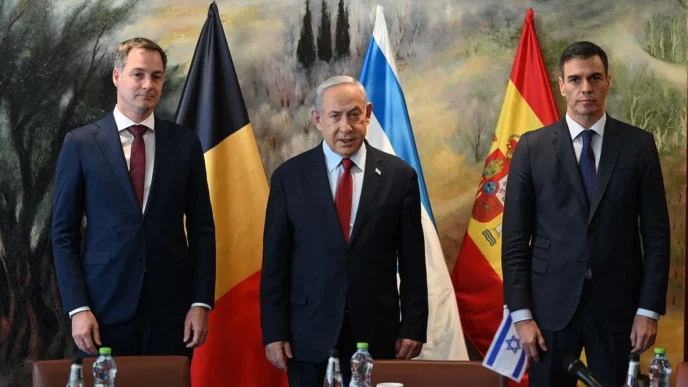
Pedro Sanchez and Benjamín Netanyahu in Israel Pedro Sanchez and Benjamín Netanyahu in Israel

Spain has announced the reopening of its embassy in Tehran, positioning the move as a diplomatic push to support a fragile ceasefire—while drawing sharp criticism from Israel and deepening Middle East tensions.

The decision comes at a critical moment for Spain’s foreign policy in the Iran conflict, as explored in related coverage such as Pedro Sánchez Welcomes Iran Ceasefire but Slams Trump, Warning of Wider Middle East War, where the Spanish prime minister warns of escalating regional instability.

Foreign Minister José Manuel Albares confirmed that Spain’s ambassador to Iran, Antonio Sánchez-Benedito, will return to Tehran to resume diplomatic operations. The embassy had been closed on March 7 following US and Israeli airstrikes on Iran.

The reopening is directly linked to a two-week ceasefire between the United States and Iran, which Spain sees as a key opportunity to advance diplomatic negotiations and de-escalation efforts.

“We have two weeks ahead of us in which we hope all parties will commit to negotiation”
José Manuel Albares
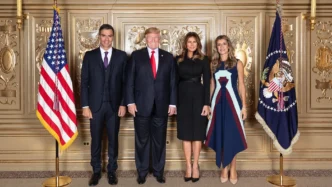
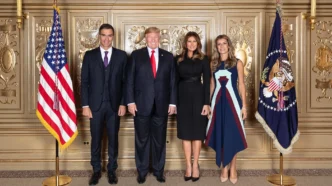
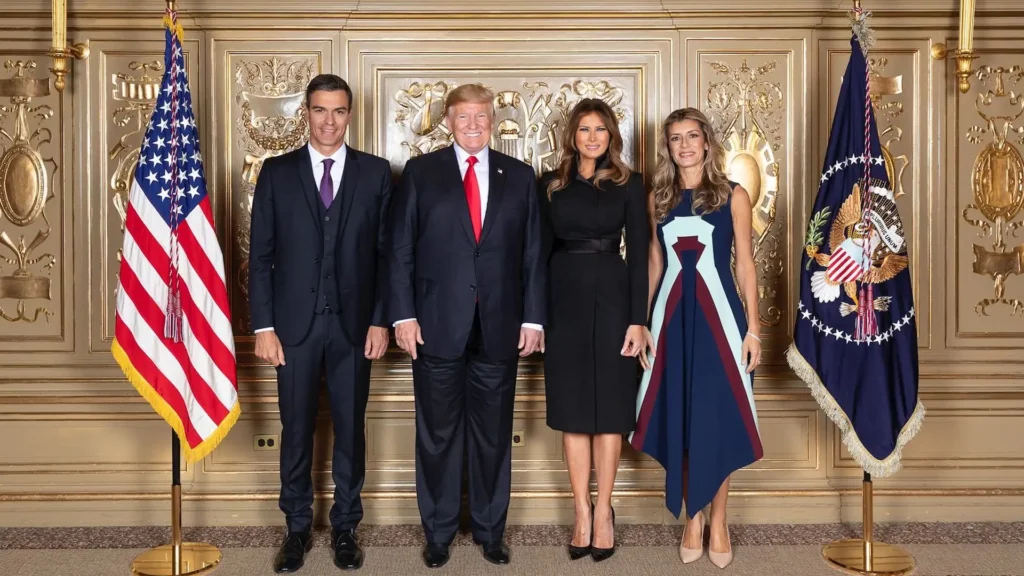
Presidents @sanchezcastejon and @realDonaldTrump met again today at a reception for Heads of State at the #UNGA, hosted by President Trump (Official @WhiteHouse Photo by Andrea Hanks)

Spain’s Diplomatic Strategy: A Push for De-escalation

Reopening the Spain embassy in Tehran reflects a broader effort to prioritize diplomacy over military escalation, a position that aligns with Spain’s wider stance during the crisis.

This approach is further detailed in Spain’s Iran war stance: Pedro Sánchez warns the conflict could be worse than Iraq,” highlighting concerns within the Spanish government about the long-term consequences of the conflict.

The Spanish government had previously evacuated diplomatic staff and assisted nationals wishing to leave Iran. However, around 130 Spanish citizens remain in the country, underscoring the ongoing risks.

Albares also held talks with Iranian Foreign Minister Abbas Araghchi, urging Iran to:

  • Respect the ceasefire agreement
  • Promote regional stability
  • Guarantee safe navigation through the Strait of Hormuz

The Strait of Hormuz, a vital global shipping route, remains affected by disruptions, raising concerns about energy security and international trade.

Spain has also intensified diplomatic outreach to countries including Pakistan, Oman, Qatar, Bahrain, Kuwait, and Lebanon, reinforcing a multilateral diplomatic strategy.

Israel Reacts: “An Eternal Disgrace”

The Spain-Israel diplomatic rift widened quickly after the announcement.

Israeli Foreign Minister Gideon Saar condemned the decision, linking it to Iran’s domestic policies.

“Spain reopens its embassy in Tehran. Hand in hand. Without shame. An eternal disgrace,” Saar wrote.

The criticism reflects broader tensions also examined in Pedro Sánchez Rejects Trump’s Iran Strikes and Revives Spain’s ‘No to War’ Doctrine,” which outlines Spain’s opposition to military intervention.

In response, Albares defended the move:

“This is a commitment to peace—one that should be supported everywhere.”
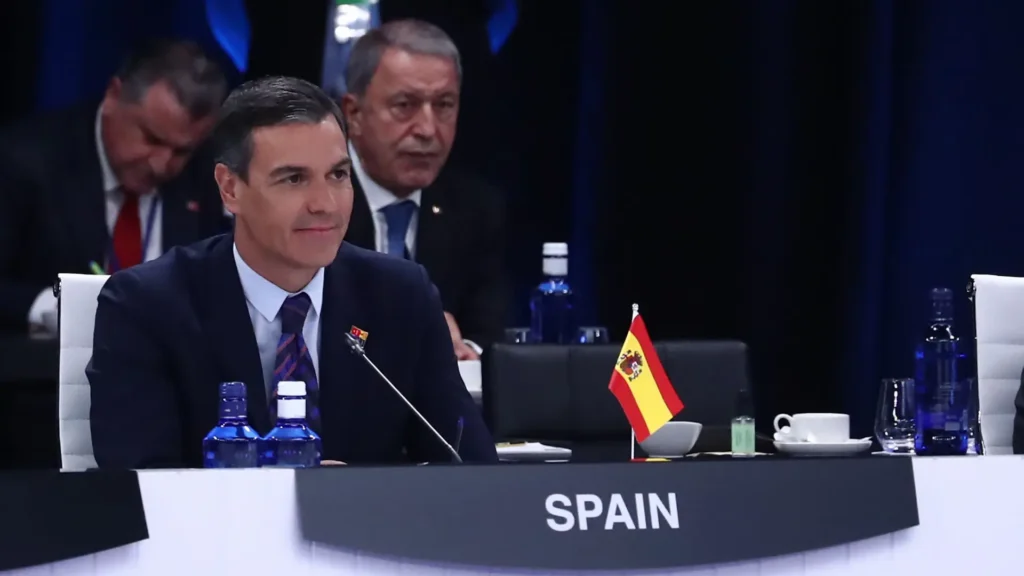
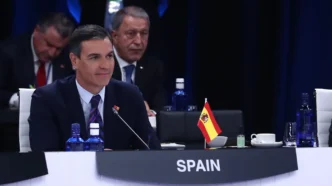
Pedro Sánchez participates in the NATO Summit (first day)

Spain’s Position on the Middle East Conflict

Spain has taken a firm stance against the escalation of the Middle East conflict, particularly regarding:

  • Israel’s military operations in Lebanon
  • The humanitarian crisis in Gaza
  • Potential violations of international law

Albares described the situation in Lebanon as:

“A disgrace to the conscience of humanity.”

According to Spanish estimates, recent violence has resulted in:

  • At least 1,750 deaths
  • Thousands of injuries

He emphasized that Lebanese civilians are bearing the brunt of the conflict, which involves Israel and Hezbollah.

Spain’s broader geopolitical positioning is also linked to decisions such as those explained in Why Spain Closed Its Airspace to U.S. Military Flights Amid the Iran War,” highlighting how Madrid has sought to distance itself from military escalation.

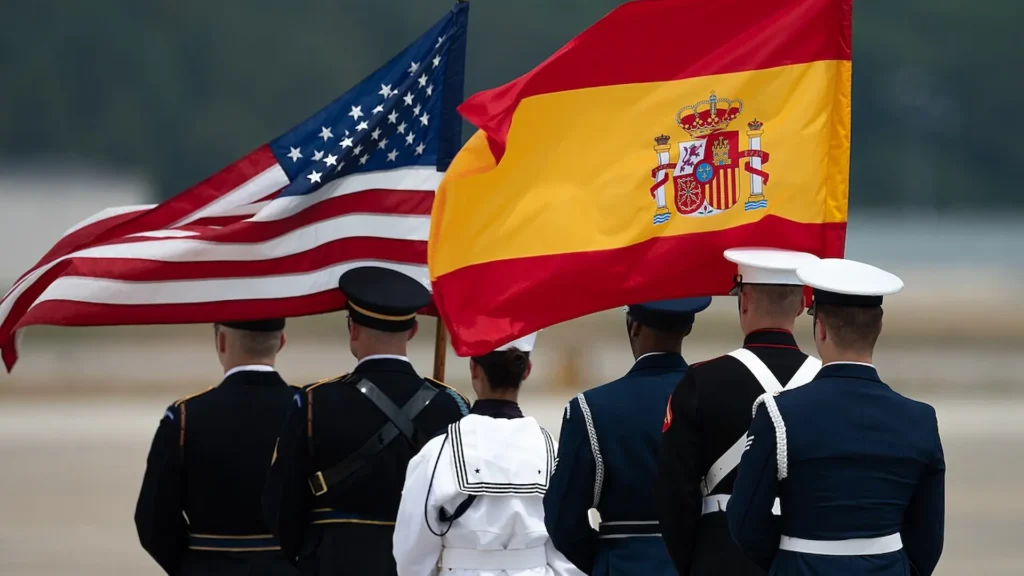
The Joint Armed Forces Color Guard carry the American and Spanish flags at Joint Base Andrews, Md., July 9, 2024. The color guard awaited Spanish Prime Minister Pedro Sánchez’s arrival for the 2024 NATO Summit in Washington, D.C. (U.S.

Rising Military Tensions and UN Concerns

The crisis has also raised concerns about international peacekeeping operations in Lebanon.

Spain’s Defense Minister Margarita Robles condemned what she described as “aggressive and violent behavior” by Israeli forces after a Spanish UN peacekeeper was briefly detained.

“Out of respect for our soldiers, this situation should not be trivialized,” she said.

Recent developments include:

  • The detention of a Spanish peacekeeper
  • The deaths of three Indonesian UN soldiers
  • Increasing risks for UNIFIL forces in southern Lebanon

These incidents highlight the growing danger for international troops amid escalating hostilities.

A Critical Window for Diplomacy

Spain’s decision to reopen its embassy in Iran underscores the delicate balance between diplomacy and security in a volatile region.

While the ceasefire offers a temporary pause, the situation remains fragile.

Spain is betting on:

  • Diplomatic engagement with Iran
  • Support for ceasefire negotiations
  • Preventing a wider regional war

However, uncertainty remains high.

As highlighted in Pedro Sánchez Welcomes Iran Ceasefire but Slams Trump, Warning of Wider Middle East War,” Spanish leadership fears the conflict could expand beyond current borders if diplomacy fails.

Information Source:

https://www.lavanguardia.com/politica/

https://elpais.com/espana/2026-04-09/

Photo Attribution:

Viaje del presidente del Gobierno a Israel (Noviembre 2023) / Gobierno de España / Wikimedia Commons (CC BY 4.0)

Photo credit: Official White House photo by Andrea Hanks, showing Presidents Donald J. Trump and Pedro Sánchez at the United Nations General Assembly, 25 September 2018. Public domain. Source: Wikimedia Commons (file President_Donald_Trump_and_Pedro_Sánchez.jpg). https://w.wiki/J9zG

Photo: Staff Sgt. Alex Broome / U.S. Air Force, public domain, via Wikimedia Commons. https://w.wiki/JCjJ

Photo: Pedro Sánchez at the NATO Summit (June 29, 2022)
Source: La Moncloa (Government of Spain)
Author: Pool Moncloa / Fernando Calvo Rollán
License: Government of Spain – free use with attribution https://w.wiki/KZVv