


 English
 Español
Spanish Prime Minister Pedro Sánchez has taken one of the most openly assertive positions in Europe against US President Donald Trump, rejecting pressure related to the Iran war and warning against the use of trade threats as diplomatic leverage.
The dispute intensified after Trump signaled possible trade consequences for Spain, following Madrid’s refusal to allow jointly operated military facilities in southern Spain to support operations linked to strikes on Iran.
Donald Trump very angry with Spain and his President Pedro Sánchez.#Iraq #Cyprus #Iran #MiddleEast #USIranWar pic.twitter.com/uO9yHjabc7
— Global Portal News (@GPNenglish) March 3, 2026
In response, Sánchez delivered a nationally televised address reaffirming that Spain’s decisions on military matters must comply with international law, democratic oversight, and national sovereignty.
Rather than presenting the issue purely as a diplomatic disagreement, Sánchez framed it as a broader question of leadership, accountability, and economic responsibility.
Leadership, Democracy, and National Interests
During his speech, Sánchez criticized political narratives that rely on external conflict to justify domestic shortcomings.
He argued that governments must prioritize citizens’ welfare, economic stability, and public services rather than escalating international tensions.
According to Sánchez, true democratic leadership cannot depend on fear, coercion, or external pressure.
His comments were widely interpreted as a direct response to Trump’s trade threats and broader approach to foreign policy negotiations.
Full video here 👇
— Global Portal News (@GPNenglish) March 5, 2026
In Spain, opposition party, PP, spread a misleading clip claiming Defense Minister Margarita Robles said:
“I’m with Trump."
The real words? “I’m comfortable.”
The video included false subtitles.#Trump #PedroSánchez #Iran #MiddleEast pic.twitter.com/AB81DIFfy7
Political Reactions in Spain
The opposition responded swiftly.
The conservative People’s Party (PP) warned that the government’s stance could weaken Spain’s strategic relationship with the United States.
The far-right Vox party, which maintains a pro-Trump position, accused Sánchez of prioritizing ideology over national interest.
Despite domestic criticism, the prime minister’s position reflects his broader foreign policy priorities:
- Support for multilateral diplomacy
- Defense of international institutions
- Opposition to unilateral military action
- Emphasis on international law
Spain has consistently advocated diplomatic solutions in global conflicts and has promoted cooperation in areas such as migration and international development.
Europe’s Divided Response to Trump and the Iran Conflict
While Sánchez has adopted a confrontational tone, other European leaders have taken more cautious approaches.
In France, President Emmanuel Macron has expressed concern about the legal dimensions of recent strikes in Iran while also emphasizing Iran’s nuclear activities and regional role. France has reinforced defensive capabilities in the eastern Mediterranean but continues to call for de-escalation.
In Germany, Chancellor Friedrich Merz has prioritized pragmatic diplomacy, avoiding direct public confrontation with Washington while managing economic pressures and security concerns.
In Italy, Prime Minister Giorgia Meloni has sought to maintain balanced relations between the United States and European partners, stressing that Rome is not directly involved in the conflict and would carefully evaluate any cooperation request.
These differences highlight varying domestic pressures, electoral considerations, and strategic priorities across Europe.
Trade Policy Meets Security Policy
Trump’s warning about potential trade restrictions added an economic layer to the dispute.
For Spain, the issue became not only diplomatic but also one of sovereignty and decision-making autonomy.
Spanish officials have reaffirmed that the country’s military infrastructure will not be used for operations it does not endorse.
The episode demonstrates how trade negotiations, security commitments, and geopolitical alliances are increasingly interconnected in transatlantic relations.
Implications for the European Union
Sánchez’s position raises broader questions for the EU:
- How should Europe respond when US policy diverges from international legal interpretations?
- Can NATO unity remain stable under political pressure?
- How can the EU balance energy security, trade dependence, and strategic autonomy?
- Is European foreign policy becoming more fragmented?
While transatlantic cooperation remains a cornerstone of European security, differences in tone suggest that coordination could become more complex in future crises.
Domestic Support and Historical Context
Within Spain, public opinion appears broadly supportive of diplomatic restraint.
Polling suggests relatively low favorability toward Trump among Spanish voters, reinforcing Sánchez’s domestic standing.
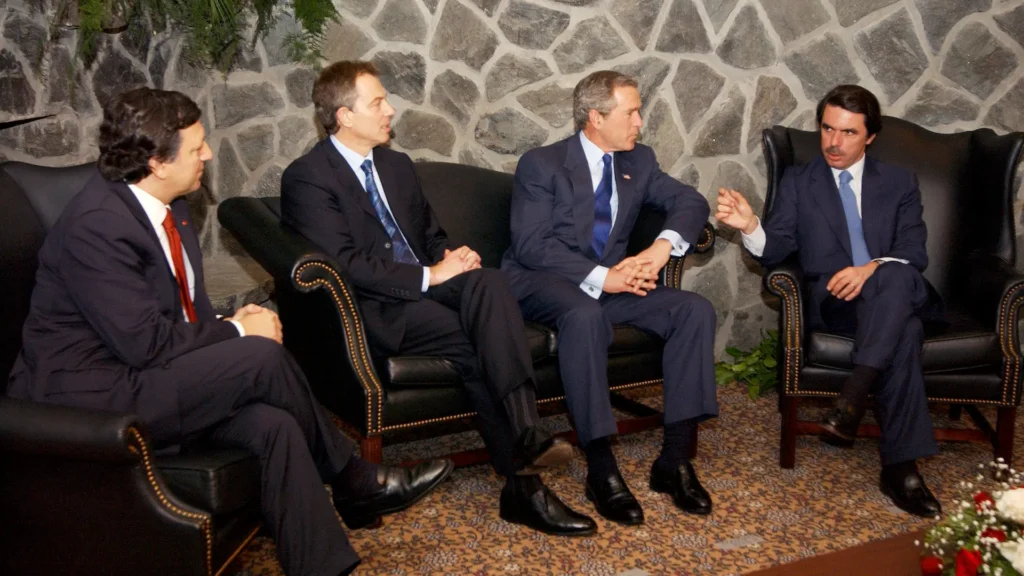
The debate also resonates with Spain’s political memory, particularly its participation in the 2003 Iraq War, which remains a reference point in discussions about foreign military involvement.
Sánchez’s government continues to advocate negotiation over escalation, emphasizing that long-term stability depends on diplomatic engagement.
What Comes Next?
Whether Spain’s position will influence other European capitals remains unclear.
For now, Spain stands out as one of the few European governments openly challenging Trump’s demands in a sustained and public manner.
The situation underscores a delicate balance within Europe:
- Maintaining cooperation with Washington
- Defending national sovereignty
- Preserving EU unity
- Managing geopolitical tensions in the Middle East
As global tensions persist, Spain’s stance may become part of a larger debate about Europe’s geopolitical autonomy and its role in an increasingly polarized international environment.
❓ FAQ
1. Why is Pedro Sánchez opposing Trump over the Iran war?
Sánchez argues that Spain will not support military operations that do not comply with international law and emphasizes national sovereignty and diplomatic solutions.
2. What trade threats did Trump make against Spain?
Trump suggested possible trade consequences after Spain refused to allow its jointly operated military facilities to support strikes related to Iran.
3. Is Spain participating in the Iran conflict?
Spain has stated that it is not participating in offensive operations and will not allow its bases to be used for actions it does not approve.
4. Are other European leaders taking the same position as Spain?
Most European leaders have adopted more cautious or pragmatic tones, balancing diplomatic concerns with transatlantic relations.
5. Could this dispute affect EU–US relations?
While strong transatlantic ties remain, the disagreement highlights growing debates about trade policy, security cooperation, and European strategic autonomy.
Photo Attribution:
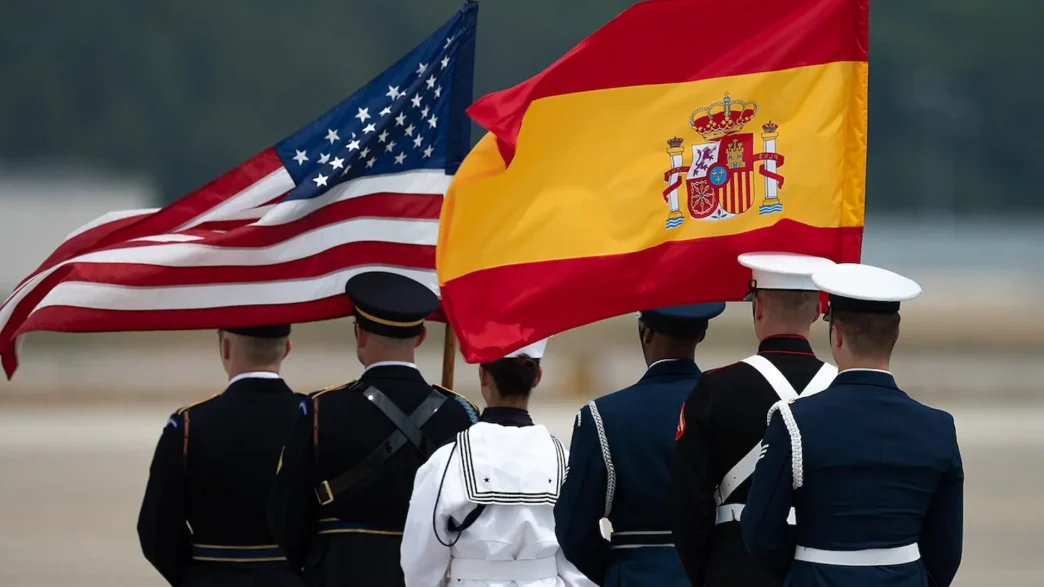
Photo: Staff Sgt. Alex Broome / U.S. Air Force, public domain, via Wikimedia Commons. https://w.wiki/JCjJ
Photo: Staff Sgt. Michelle Michaud / U.S. Air Force (public domain), via Wikimedia Commons. https://w.wiki/JCjP
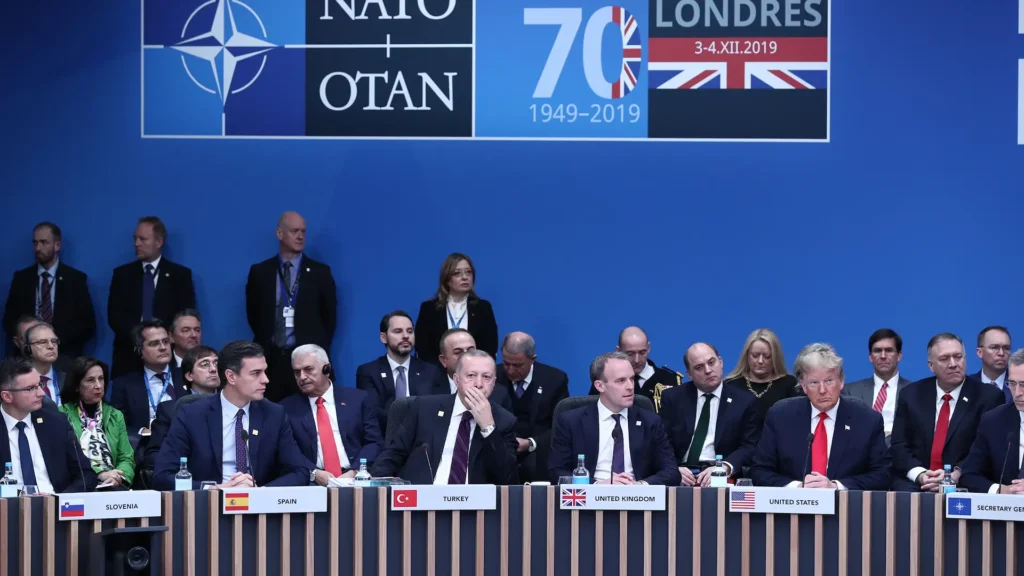
Image: Spanish Prime Minister Pedro Sánchez attending the 2019 NATO summit in London, United Kingdom, on 4 December 2019. Photo by Pool Moncloa/Fernando Calvo, published by the Ministry of the Presidency of the Government of Spain. Used under an attribution-only license; redistribution and reuse permitted with proper credit. Source: Wikimedia Commons / Ministry of the Presidency, Government of Spain. https://w.wiki/JBWu
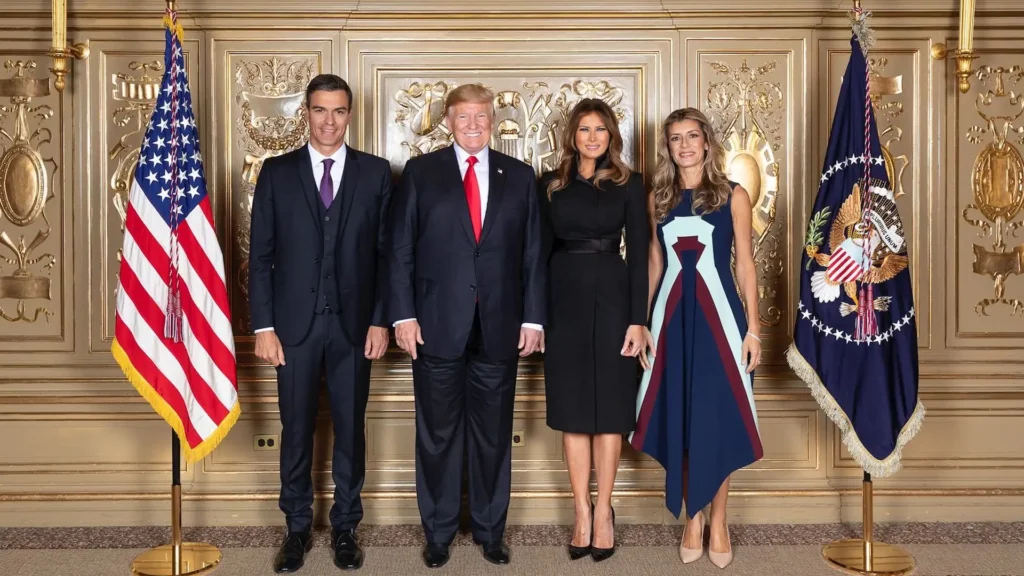
Photo credit: Official White House photo by Andrea Hanks, showing Presidents Donald J. Trump and Pedro Sánchez at the United Nations General Assembly, 25 September 2018. Public domain. Source: Wikimedia Commons (file President_Donald_Trump_and_Pedro_Sánchez.jpg). https://w.wiki/J9zG
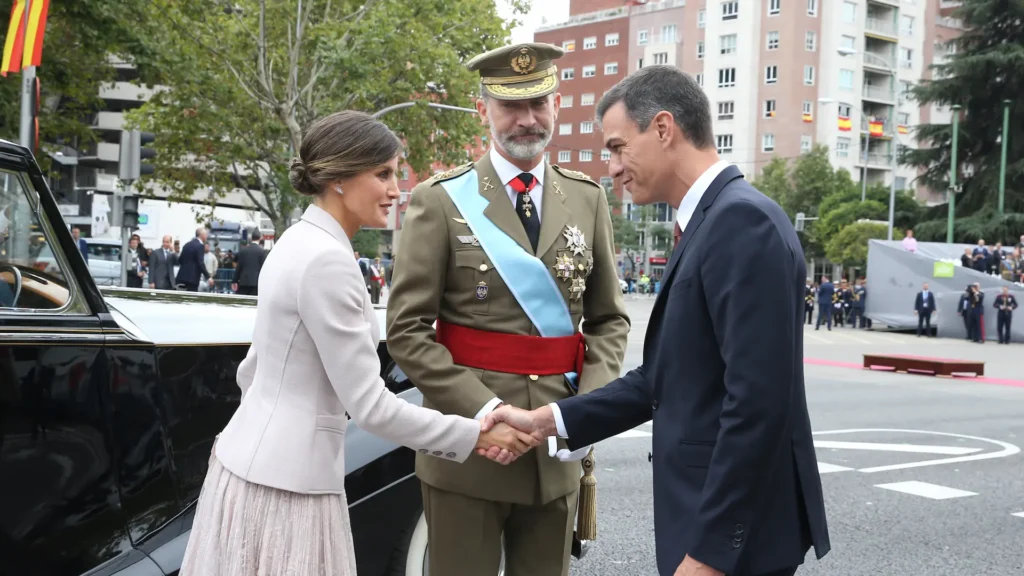
Photo credit: President Pedro Sánchez greets King Felipe VI and Queen Letizia of Spain at the National Day celebrations in Madrid (12 October 2018). © Ministry of the Presidency, Government of Spain / Fernando Calvo, licensed for reuse with attribution via Wikimedia Commons. https://w.wiki/J5PV
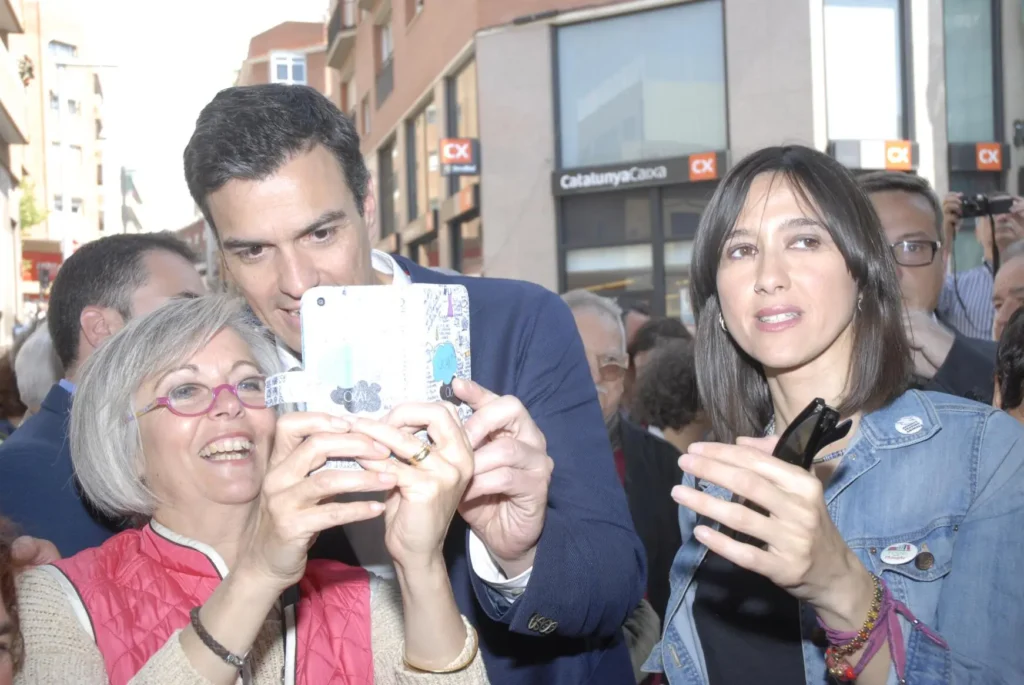
Visita de Pedro Sánchez. Núria Parlon Gil / Flickr / Wikimedia Commons (CC BY 2.0)