

 English
 Español
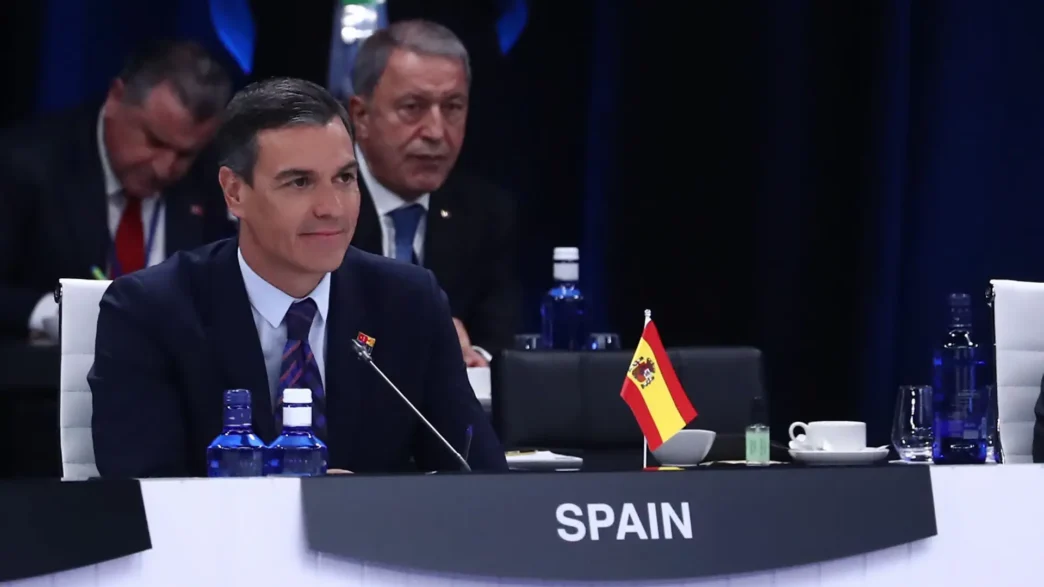
Spain takes a decisive stance in the Iran war
Spain has closed its airspace to U.S. military flights linked to the Iran war, marking one of the strongest moves by a European ally to distance itself from the escalating conflict.
The decision, confirmed by the government and reinforced in parliament, highlights Madrid’s firm opposition to the U.S.-Israel military operation against Iran and signals rising tensions with Washington.
Prime Minister Pedro Sánchez described the offensive as an “illegal war”, confirming that all flight requests related to the operation have been rejected—including refueling aircraft.
What exactly has Spain blocked?
Spain’s restrictions go beyond symbolic politics. They directly affect military logistics across Europe.
Madrid has banned:
- Use of Naval Station Rota
- Use of Morón Air Base
- Overflight of Spanish airspace by U.S. military aircraft linked to Iran operations
These measures apply to:
- Combat aircraft
- Refueling tankers
- Logistics and support planes
👉 Exception: Flights may still land or pass through Spain only in emergency situations.

Why did Spain close its airspace to U.S. military flights?
At the core of the decision is Spain’s legal and political position.
The government insists that:
- Any military action must comply with the United Nations Charter
- Spain will not support operations it considers outside international law
- Spanish territory will not be used for offensive war actions
Foreign Minister José Manuel Albares reinforced this stance:
This reflects a broader doctrine that aligns with Spain’s historic anti-war position, particularly since the Iraq War.
How does this impact U.S. military operations?
Spain’s decision has real operational consequences.
The country has long been a key logistics hub for U.S. missions between Europe and the Middle East. Blocking access means:
- Longer flight routes
- More complex refueling operations
- Relocation of aircraft to other European bases
In fact:
- The U.S. explored deploying B-52 and B-1 bombers to Morón
- Spain rejected the plan before formal approval
- Around 15 U.S. aircraft were withdrawn from Spanish bases
👉 The result: Washington had to shift operations to other countries like the UK.
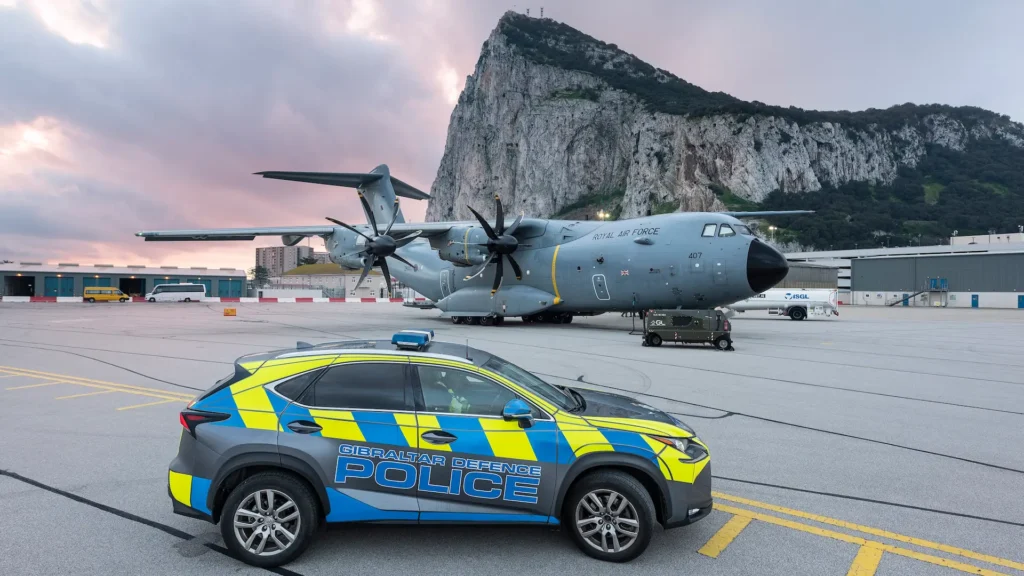
Can the U.S. still operate near Spain? The Gibraltar limitation
Despite the restrictions, Spain cannot fully block military movement.
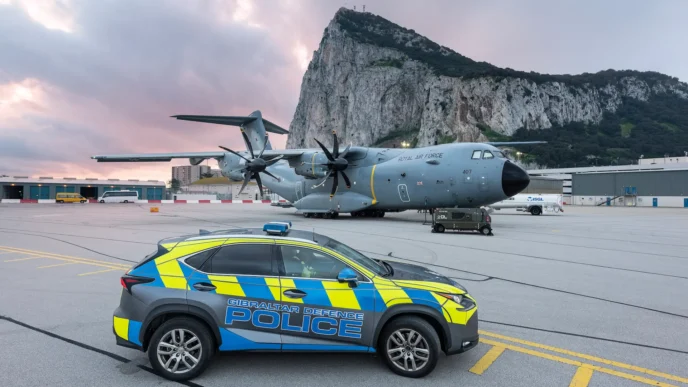
The key reason is the Strait of Gibraltar, an international corridor connecting the Atlantic and Mediterranean.
- Spain cannot legally close it
- U.S. bombers can still pass through international airspace
- Long-range missions from the U.S. remain possible
👉 This creates a strategic paradox:
Spain blocks support—but not passage.
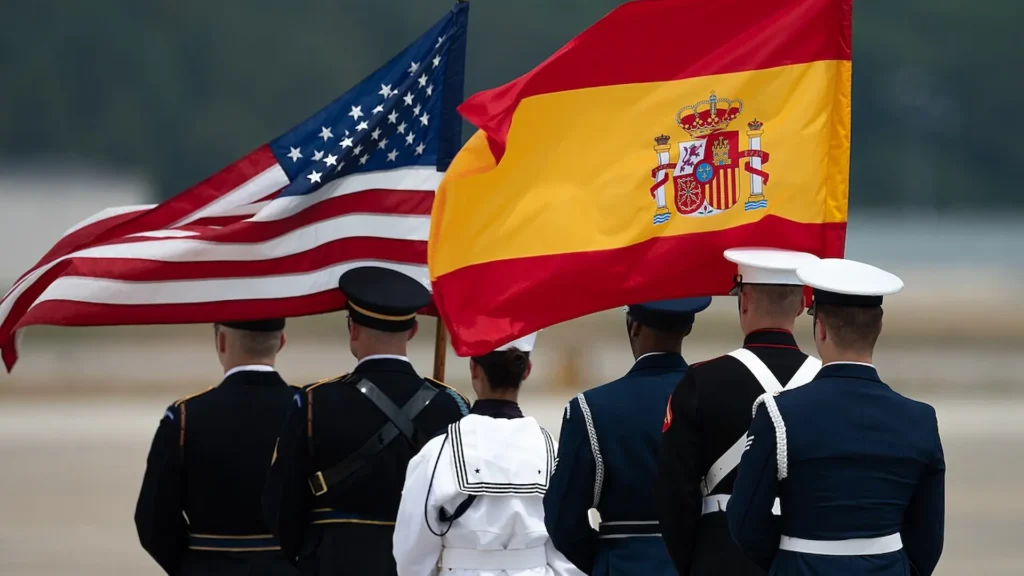
Spain vs U.S.: A growing diplomatic rift
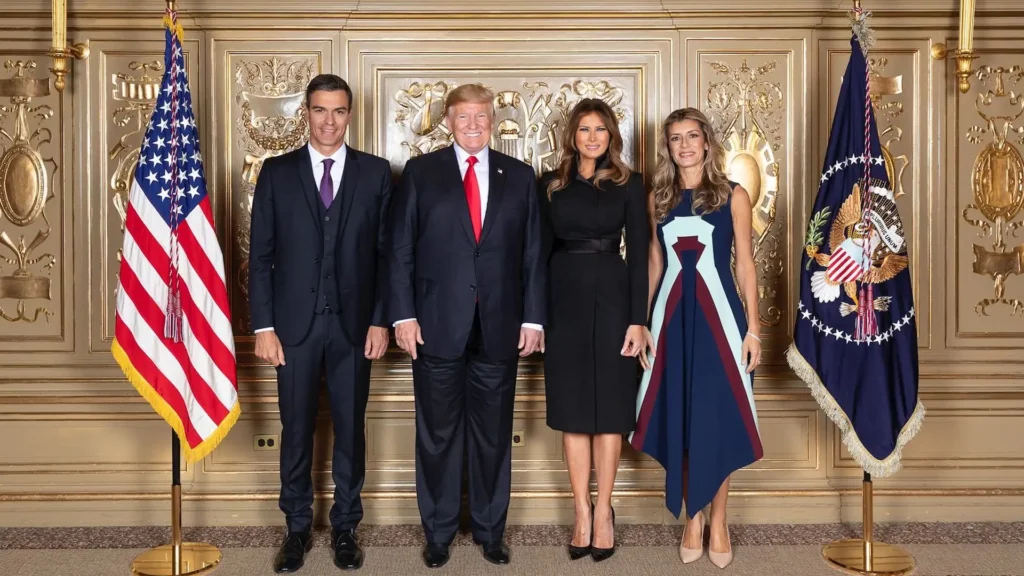
The decision has intensified tensions with Donald Trump’s administration, which had pushed for broader NATO support.
Reports suggest:
- The U.S. sought expanded access to Spanish bases
- Spain refused repeatedly
- Trump considered reducing U.S. presence in non-cooperative NATO countries
Defense Minister Margarita Robles responded firmly:
Is Spain neutral in the Iran conflict?
Not officially—but close.
Analysts describe Spain’s position as:
👉 “Strategic neutrality”
This means:
- ❌ No participation in military operations
- ❌ No logistical support
- ✅ Continued NATO and EU commitments
Spain is not leaving alliances, but is drawing a line on military involvement.
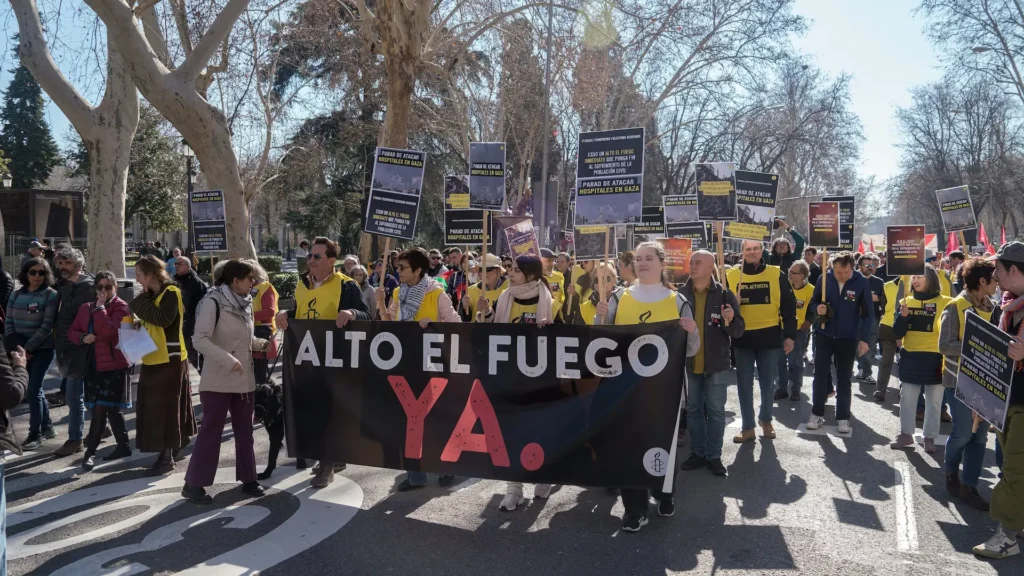
Domestic pressure: The return of the “No to War” movement
Spain’s stance is also shaped by strong public opposition to war.
Recent protests across the country have revived the historic:
👉 “No a la guerra” (No to War) movement
This domestic pressure reinforces the government’s refusal to support the Iran conflict.
🔗 Related coverage
To better understand Spain’s position and its global implications, explore:
- Spain’s Iran war stance: Pedro Sánchez warns the conflict could be worse than Iraq
- Thousands Protest Across Spain Against Gaza War and Iran Conflict, Reviving Historic “No to War” Movement
- Spain vs Trump: Why Pedro Sánchez Is Rejecting US Pressure Over the Iran War
- Did Spain Agree to Cooperate with the U.S. on Iran? White House Says Yes, Madrid Denies Military Involvement
- Pedro Sánchez Rejects Trump’s Iran Strikes and Revives Spain’s ‘No to War’ Doctrine
- Spain Condemns US-Israel Strike on Iran, Activates Crisis Cabinet to Protect 30,000 Citizens in Middle East
Geopolitical consequences for Europe and NATO
Spain’s move could influence other European allies.
Key implications:
- Raises questions about NATO unity
- Encourages debate on legal limits of military cooperation
- Signals growing division within Western allies
At the same time, the U.S. continues:
- Negotiations with Iran
- Efforts to stabilize oil routes via the Strait of Hormuz
What about Spanish citizens in the region?
The government is also focused on civilian safety.
- Around 30,000 Spaniards live in the Middle East
- Spain has activated crisis response mechanisms
- Evacuation and contingency plans are being prepared
FAQ: Spain, U.S. Military Flights, and the Iran War
Why did Spain close its airspace to U.S. military flights?
Spain closed its airspace to U.S. military flights involved in the Iran war because it considers the operation inconsistent with international law. The government has stated that any military action must comply with the United Nations Charter, and it will not allow Spanish territory to support what it describes as an “illegal war.”
Can the U.S. still use military bases in Spain during the Iran conflict?
No, the U.S. cannot use key Spanish bases like Rota and Morón for operations related to the Iran war. Spain has explicitly denied access for combat, refueling, and logistics missions linked to the conflict. However, routine operations under existing bilateral agreements continue.
What military bases are affected by Spain’s decision?
The main bases affected are:
- Naval Station Rota
- Morón Air Base
These installations are critical for U.S. military logistics, especially for operations between Europe and the Middle East.
Can U.S. military aircraft still fly near Spain?
Yes, but with limitations. While Spain has banned overflights through its airspace, U.S. aircraft can still pass through international routes such as the Strait of Gibraltar, which Spain cannot legally close.
Is Spain neutral in the Iran war?
Spain is not officially neutral, but it is taking a position close to neutrality. It has refused military involvement while continuing to cooperate with NATO and the European Union. Analysts often describe this stance as “strategic neutrality.”
How does Spain’s decision affect NATO and Europe?
Spain’s move highlights growing divisions within NATO over the Iran conflict. While some allies support the U.S., others are more cautious. This could impact:
- Military coordination
- Diplomatic relations
- Future alliance strategies
Will Spain’s decision impact global military operations?
Yes, particularly in terms of logistics. By denying access to its airspace and bases, Spain forces U.S. military aircraft to take longer routes and relocate resources, increasing costs and operational complexity.
Are Spanish citizens in the Middle East at risk?
The Spanish government is closely monitoring the situation. Around 30,000 Spaniards live in the region, and authorities have activated emergency and evacuation plans if the conflict escalates further.
What is Spain’s historical position on wars like this?
Spain has a strong tradition of public opposition to military interventions, especially since the Iraq War in 2003. The current stance reflects both political principles and public pressure, including the revival of the “No to War” movement.
A defining moment for Spain’s foreign policy
Spain’s airspace closure is more than a military decision—it’s a strategic statement.
By refusing to support the Iran war:
- Spain reinforces its commitment to international law
- Prioritizes domestic public opinion
- Risks friction with the United States
As the conflict evolves, Spain’s position could become a model—or a warning—for other mid-sized powers navigating global conflicts.
Information Source:
https://www.telecinco.es/noticias
https://www.eldiario.es/internacional/
Photo Attribution:
Photo: Pedro Sánchez at the NATO Summit (June 29, 2022)
Source: La Moncloa (Government of Spain)
Author: Pool Moncloa / Fernando Calvo Rollán
License: Government of Spain – free use with attribution https://w.wiki/KZVv
Photo credit: Official White House photo by Andrea Hanks, showing Presidents Donald J. Trump and Pedro Sánchez at the United Nations General Assembly, 25 September 2018. Public domain. Source: Wikimedia Commons (file President_Donald_Trump_and_Pedro_Sánchez.jpg). https://w.wiki/J9zG
Photo: Pool Moncloa / Borja Puig de la Bellacasa (Ministry of the Presidency, Government of Spain), 22 July 2019. lamoncloa.gob.es Wikimedia Commons: https://w.wiki/KKmW
2024-02-17-Manifestacion propalestina-01, by Nemo, Creative Commons Attribution-Share Alike 4.0 International, https://w.wiki/JjQR
Photo: Staff Sgt. Alex Broome / U.S. Air Force, public domain, via Wikimedia Commons. https://w.wiki/JCjJ
Imagen: RAF Gibraltar A400M durante la Operación Newcombe.
Autor: UK Ministry of Defence (Open Government Licence v1.0).
Fuente: Wikimedia Commons. https://w.wiki/J2Ms