

 English
 Español
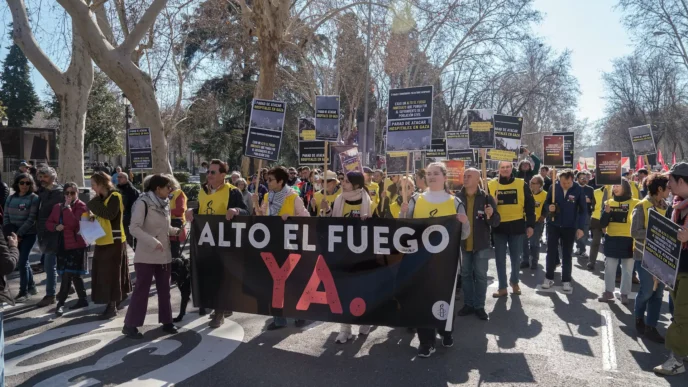
Spain’s Prime Minister, Pedro Sánchez, has reignited Spain’s historic “No to War” movement, positioning his government in direct opposition to the recent U.S.-Israel military strikes on Iran.
In a formal institutional address from the Moncloa Palace, Sánchez firmly rejected the offensive launched by Donald Trump and Benjamin Netanyahu, arguing that the escalation in the Middle East represents a violation of international law and a dangerous path toward broader regional conflict.
.
His remarks place Spain among the most vocal European critics of the Iran strikes and mark a clear assertion of Spain’s independent foreign policy stance within NATO and the European Union.
🔴 EN DIRECTO
— La Moncloa (@desdelamoncloa) March 4, 2026
Declaración institucional del presidente del Gobierno, @sanchezcastejon. https://t.co/0Dr2XpHsdf
Iraq War Lessons: Why Sánchez Invoked 2003
Sánchez deliberately referenced the Iraq War, recalling Spain’s participation under former Prime Minister José María Aznar.
“The world has been here before,” Sánchez warned. “The Iraq War led to terrorism, migration crises, and economic instability.”
The comparison is politically powerful in Spain. The 2003 anti-war protests mobilized millions and reshaped the country’s political landscape.
By invoking Iraq, Sánchez is sending a clear message:
Spain will not repeat what it considers a historic mistake.
This framing strengthens his domestic legitimacy while warning that military intervention in Iran could trigger similar destabilizing consequences across the Middle East and Europe.
Spain Rejects Iran’s Regime — But Also Rejects War
Sánchez made clear that Spain does not support Iran’s leadership, formerly headed by Ayatollah Ali Jamenei, who was killed in the recent strikes.
“No one supports the ayatollahs. But opposing a regime does not mean supporting war.”
This distinction is central to Spain’s position:
Rejecting authoritarianism does not justify bypassing international law.
Sánchez emphasized diplomacy as the only viable long-term solution, countering claims that opposing U.S. action amounts to siding with Tehran.
Donald Trump very angry with Spain and his President Pedro Sánchez.#Iraq #Cyprus #Iran #MiddleEast #USIranWar pic.twitter.com/uO9yHjabc7
— Global Portal News (@GPNenglish) March 3, 2026
Spain-US Tensions Escalate Over Military Bases
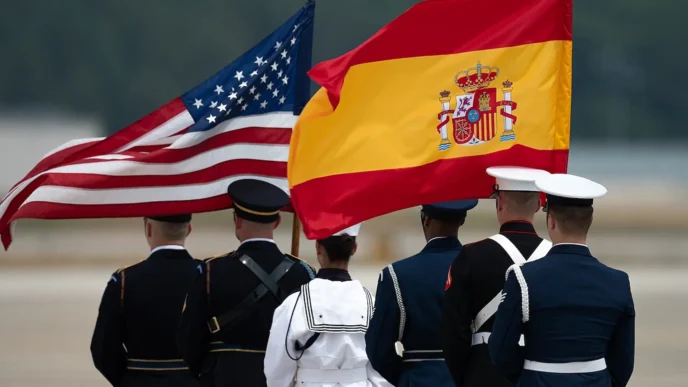
The diplomatic clash intensified after Spain refused to authorize the use of the jointly operated military bases in Rota and Morón for operations linked to the Iran strikes.
In response, Trump warned of a possible trade embargo against Spain, escalating tensions between Madrid and Washington.
Sánchez responded firmly:
“Diplomacy is not naïve. Blind alignment is not leadership.”
While reaffirming Spain’s reliability within NATO and the European Union, he stressed that alliance commitments do not require political subordination.
Economic Fallout: Spain Prepares a ‘Social Shield’
Beyond geopolitics, Sánchez highlighted the potential economic consequences of Middle East escalation:
- Rising energy prices
- Trade disruption
- Market volatility
- Increased instability in Europe
To mitigate potential fallout, the government is preparing a new “social shield”, similar to measures adopted during the COVID-19 pandemic and the Ukraine war.
“We will protect Spaniards. We have the capacity and the political will.”
The strategy signals that Spain is preparing for a prolonged crisis while seeking to protect households and businesses.
A Warning About Global Escalation
Sánchez invoked history to underline the risks of miscalculation.
Major wars, he warned, often begin through incremental escalations.
“We cannot play Russian roulette with the fate of millions.”
Spain fears that limited strikes on Iran could spiral into a broader regional war — or even a global confrontation.
Divisions Within Europe
Spain’s position differs somewhat from that of France and Germany, which have adopted more cautious diplomatic language.
Still, Sánchez insisted that Spain will work toward a coordinated European Union response, while maintaining its sovereign position.
“We meet our commitments. But that does not mean subordination.”
Domestic Political Impact
At home, the opposition led by Alberto Núñez Feijóo has criticized Sánchez for isolating Spain from key allies.
However, Spain has historically shown skepticism toward foreign military interventions.
By reviving the “No to War” message, Sánchez is tapping into a powerful political memory that once reshaped Spanish elections.
Whether this stance strengthens his leadership or strains Spain’s international relationships remains to be seen.
What is clear is this:
Spain has chosen diplomacy over alignment as Middle East tensions intensify.
❓ FAQ – Spain, Trump and the Iran Strikes
Why did Pedro Sánchez reject the Iran strikes?
Sánchez argues the strikes violate international law and risk escalating conflict in the Middle East.
Did Spain support Iran’s regime?
No. Spain explicitly rejected Iran’s leadership but insists diplomacy—not military force—is the solution.
Why did Sánchez mention the Iraq War?
He drew parallels to Spain’s participation in the 2003 Iraq War, which many Spaniards later viewed as a mistake that increased instability.
Is Spain facing trade retaliation from the U.S.?
Trump has threatened possible trade measures after Spain refused the use of military bases for strike operations.
What is Spain’s “social shield”?
It refers to economic protection measures designed to shield citizens from fallout such as energy price increases and trade disruption.
Information Source:
Photo Attribution:
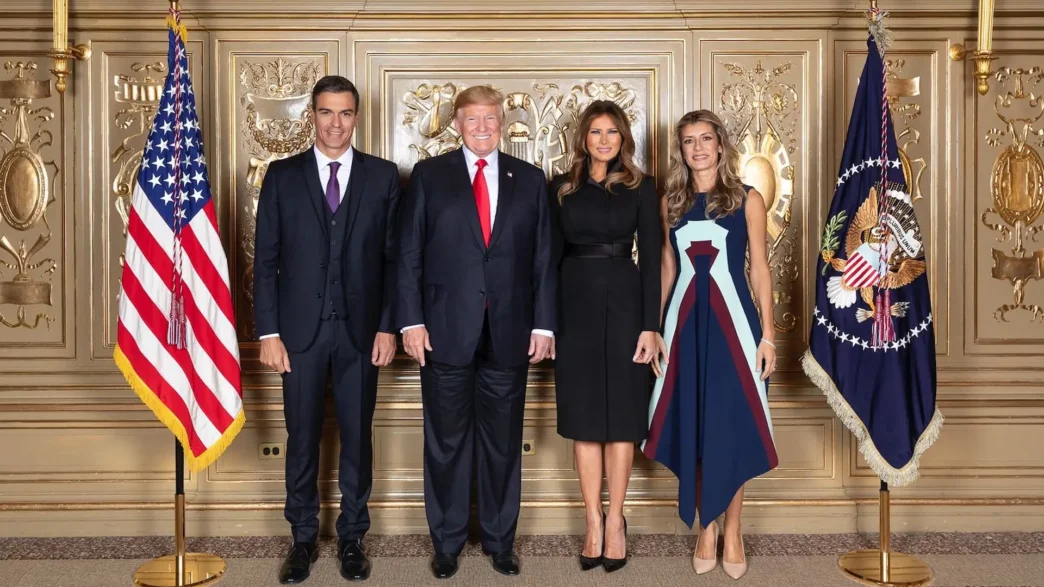
Photo credit: Official White House photo by Andrea Hanks, showing Presidents Donald J. Trump and Pedro Sánchez at the United Nations General Assembly, 25 September 2018. Public domain. Source: Wikimedia Commons (file President_Donald_Trump_and_Pedro_Sánchez.jpg). https://w.wiki/J9zG
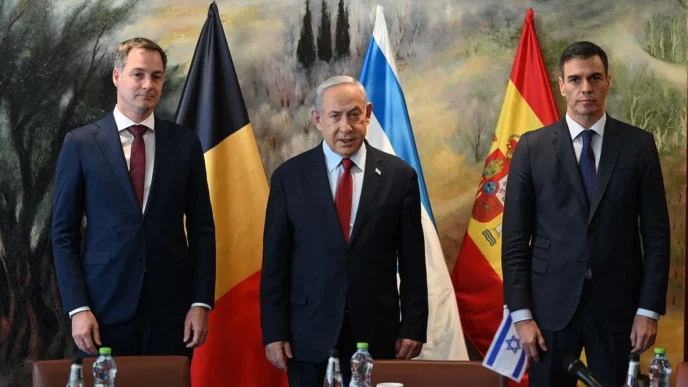
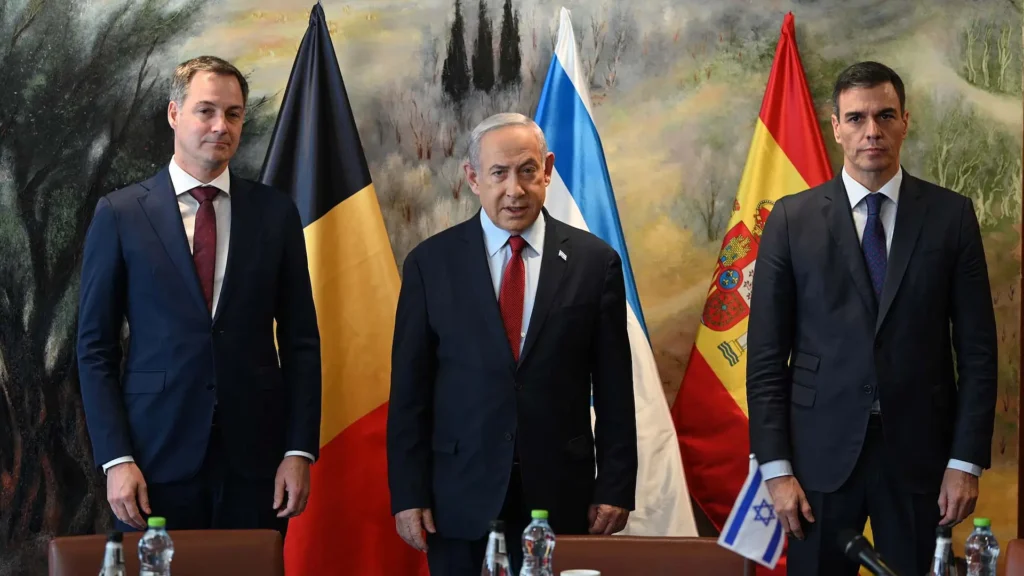
Viaje del presidente del Gobierno a Israel (Noviembre 2023) / Gobierno de España / Wikimedia Commons (CC BY 4.0)
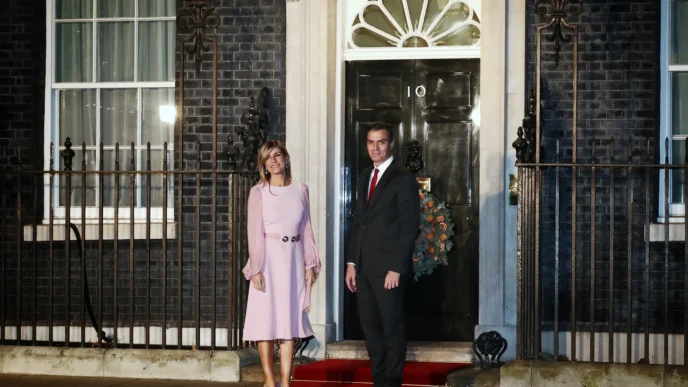
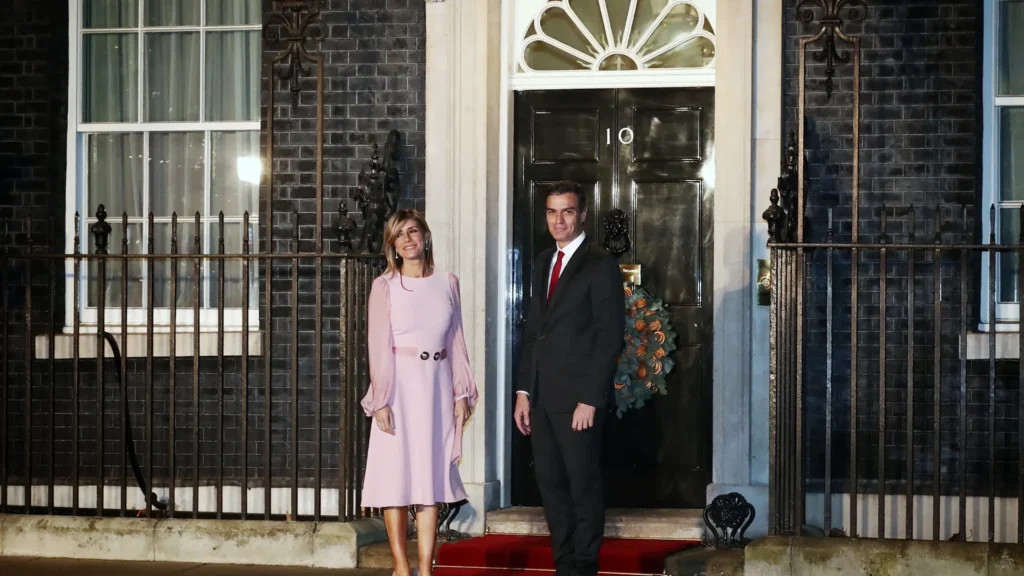
Photo: Pedro Sánchez and Begoña Gómez at Number 10 for NATO leaders meeting (3 Dec 2019) by Ministry of the Presidency, Government of Spain / La Moncloa. Licensed under the Government of Spain’s legal notice (free use with attribution and date, no distortion).