

 English
 Español

Spain has dismissed its ambassador to Israel and downgraded diplomatic relations, deepening a growing crisis between the two countries linked to the war in the Gaza Strip and Madrid’s recognition of the State of Palestine. The decision marks one of the most serious diplomatic tensions in decades between Madrid and Tel Aviv.
Spain formally dismisses ambassador to Israel
The Spanish government has officially dismissed its ambassador to Israel, Ana Sálomon Pérez, converting what had initially been a temporary diplomatic recall into a permanent downgrade in diplomatic representation.
The decision was published in Spain’s official government gazette and signals a further deterioration in Spain–Israel relations.
With the ambassadorial position now vacant, Spain’s embassy in Tel Aviv will be headed by a chargé d’affaires, a lower-ranking diplomat who typically manages an embassy when relations between countries become strained.
Spanish officials stressed that the move does not reflect any criticism of Sálomon’s performance, describing the decision as political rather than professional. The official decree thanked her for her service.
Spain and Israel now maintain downgraded diplomatic representation
The decision places Spain’s diplomatic presence in Israel at the same level as Israel’s representation in Spain.
Since May 2024, Israel’s embassy in Madrid has also been led by a chargé d’affaires after Israel withdrew its ambassador Rodica Radian-Gordon.
Israel took that step following Spain’s recognition of the State of Palestine, a decision that triggered strong criticism from the government of Israeli Prime Minister Benjamin Netanyahu.
As a result, both countries currently operate without ambassadors in each other’s capitals, underscoring the seriousness of the current diplomatic dispute.
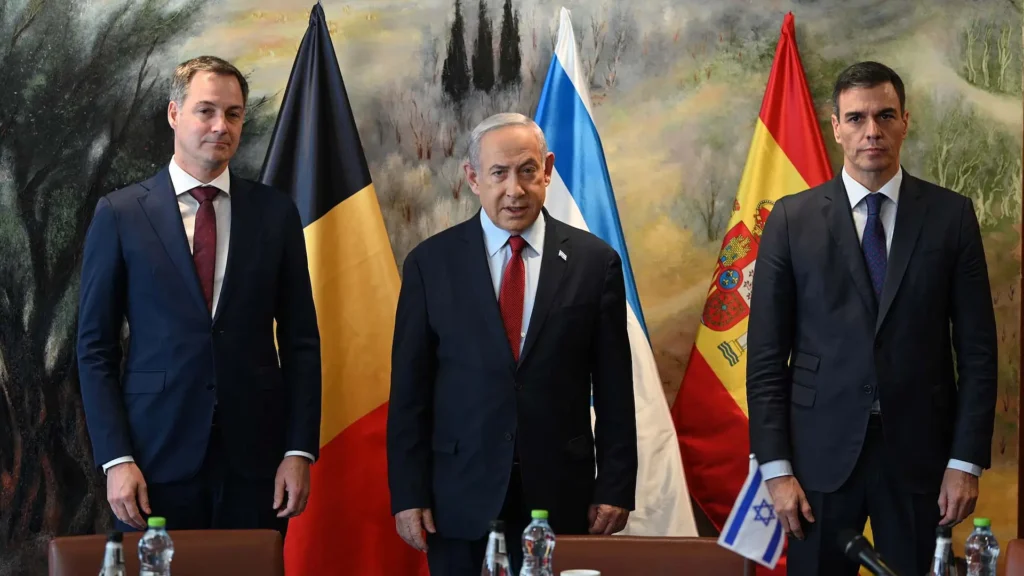
Gaza war drives growing Spain–Israel tensions
Spain’s ambassador had already been recalled to Madrid in September after remarks by Israel’s foreign minister Gideon Saar, who accused the Spanish government of antisemitism.
Those comments intensified tensions that had already been rising amid the ongoing conflict in Gaza.
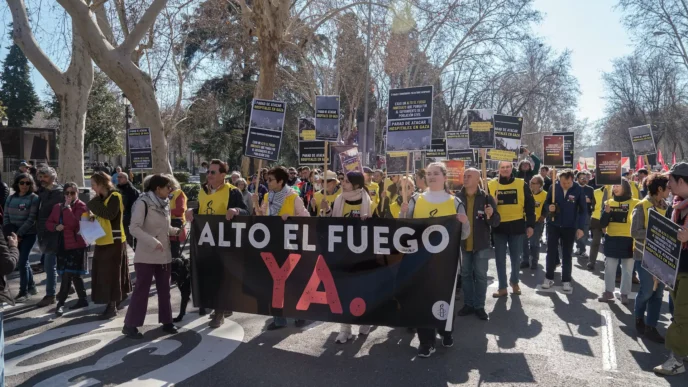
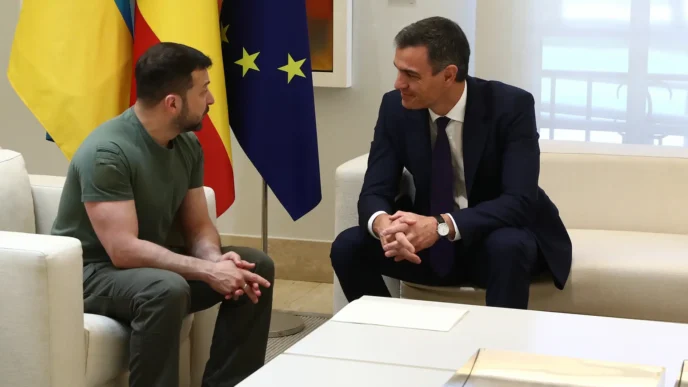
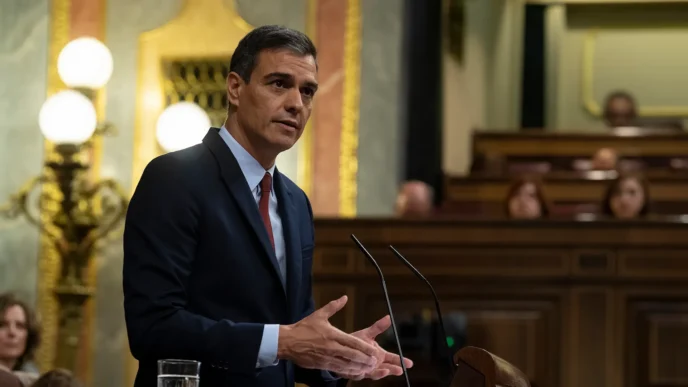
The Spanish government, led by Prime Minister Pedro Sánchez, has been one of the most outspoken European critics of Israel’s military operations in Gaza, repeatedly calling for stronger protection for civilians and adherence to international humanitarian law.
Spain formally recognized the State of Palestine in May 2024, a move that significantly worsened relations with Israel.
Foreign Minister José Manuel Albares said Spain initially kept the ambassador’s position as a gesture of goodwill.
According to Albares, maintaining the position was no longer justified under the current circumstances.
Show me who praises you, and I’ll tell you who you are.
— Israel Foreign Ministry (@IsraelMFA) March 12, 2026
When Hamas and the Iranian regime make up the Spanish prime minister’s biggest fan club, the people of Spain should ask themselves why. pic.twitter.com/I4k4RvhO5l
Political tensions extend beyond diplomacy
The diplomatic dispute has expanded beyond formal relations.
Israeli authorities reportedly barred Spanish Deputy Prime Minister Yolanda Díaz and Youth Minister Sira Rego from entering the country, further aggravating tensions.
Israeli officials responded by accusing Spain of aligning itself with Iran’s leadership.
The militant group Hamas also issued a statement praising Spain’s decision to dismiss its ambassador, describing it as a continuation of Spain’s “honorable positions” opposing Israel’s military actions in Gaza.
Israel’s foreign ministry responded sharply, saying Spaniards should question why “Hamas and the Iranian regime are among the biggest supporters” of Sánchez.
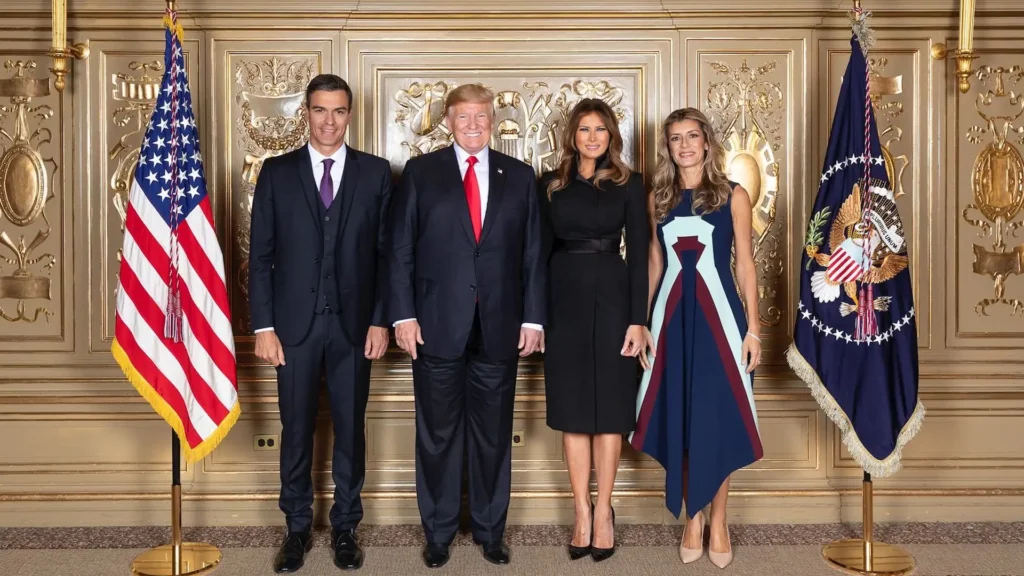
Spain avoids deeper military involvement in the Middle East
Defense Minister Margarita Robles said Spain would not participate in a potential French-led mission to reopen the Strait of Hormuz, a critical global shipping route facing security threats.
The proposal had been suggested by French President Emmanuel Macron.
Robles stressed that Spain only participates in international missions formally approved by organizations such as NATO or the European Union.
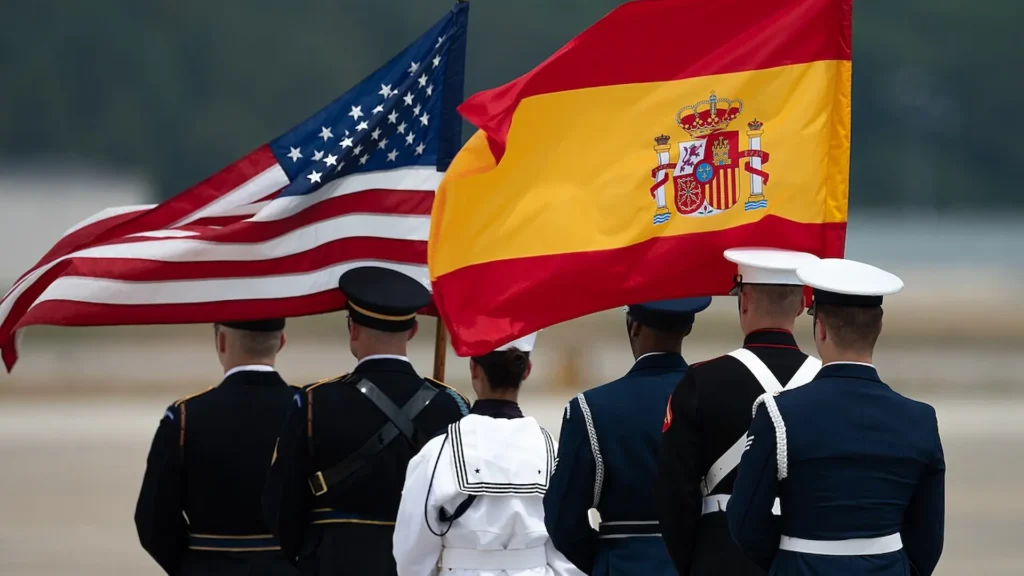
Spanish troops remain active in international missions
Spain currently has 4,512 troops deployed in international operations, participating in missions led by NATO, the United Nations, and the European Union.
The defense minister expressed particular concern about nearly 700 Spanish soldiers stationed in southern Lebanon as part of the United Nations Interim Force in Lebanon.
The region has faced intense bombardment and ground operations, increasing risks for international peacekeepers.
Robles also revealed that a Spanish Airbus A400M Atlas recently carried out an emergency evacuation flight to Beirut, rescuing a Spanish servicewoman suffering from a life-threatening illness despite the country’s closed airspace.
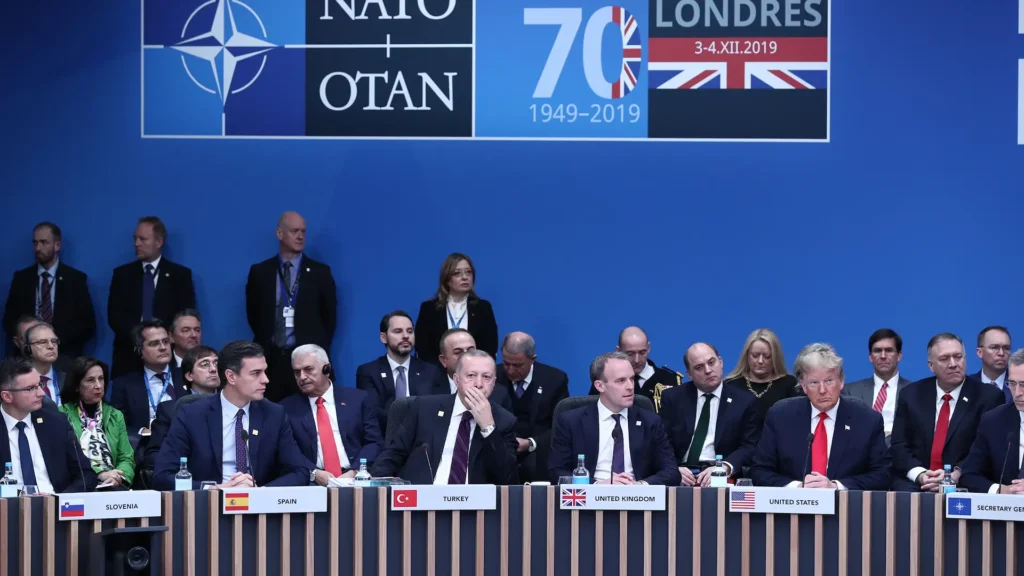
Spain–Israel diplomatic crisis likely to continue
The dismissal of Spain’s ambassador highlights one of the most serious diplomatic crises between Spain and Israel in recent decades.
Any future normalization would require Spain to appoint a new ambassador and obtain formal diplomatic approval — known as agrément — from Israeli authorities.
Until then, Spain and Israel will continue operating with downgraded diplomatic ties, reflecting the deep political divide created by the Gaza war and the recognition of Palestine.
Information Source:
Photo Attribution:
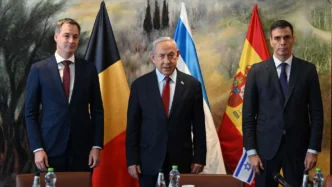
Viaje del presidente del Gobierno a Israel (Noviembre 2023) / Gobierno de España / Wikimedia Commons (CC BY 4.0)
Photo: Staff Sgt. Alex Broome / U.S. Air Force, public domain, via Wikimedia Commons. https://w.wiki/JCjJ
Photo credit: Official White House photo by Andrea Hanks, showing Presidents Donald J. Trump and Pedro Sánchez at the United Nations General Assembly, 25 September 2018. Public domain. Source: Wikimedia Commons (file President_Donald_Trump_and_Pedro_Sánchez.jpg). https://w.wiki/J9zG
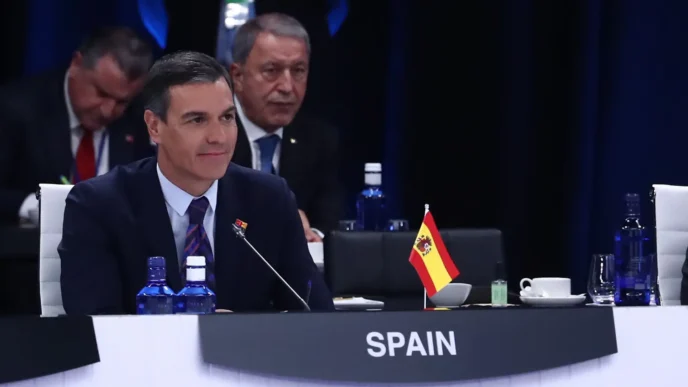
Image: Spanish Prime Minister Pedro Sánchez attending the 2019 NATO summit in London, United Kingdom, on 4 December 2019. Photo by Pool Moncloa/Fernando Calvo, published by the Ministry of the Presidency of the Government of Spain. Used under an attribution-only license; redistribution and reuse permitted with proper credit. Source: Wikimedia Commons / Ministry of the Presidency, Government of Spain. https://w.wiki/JBWu
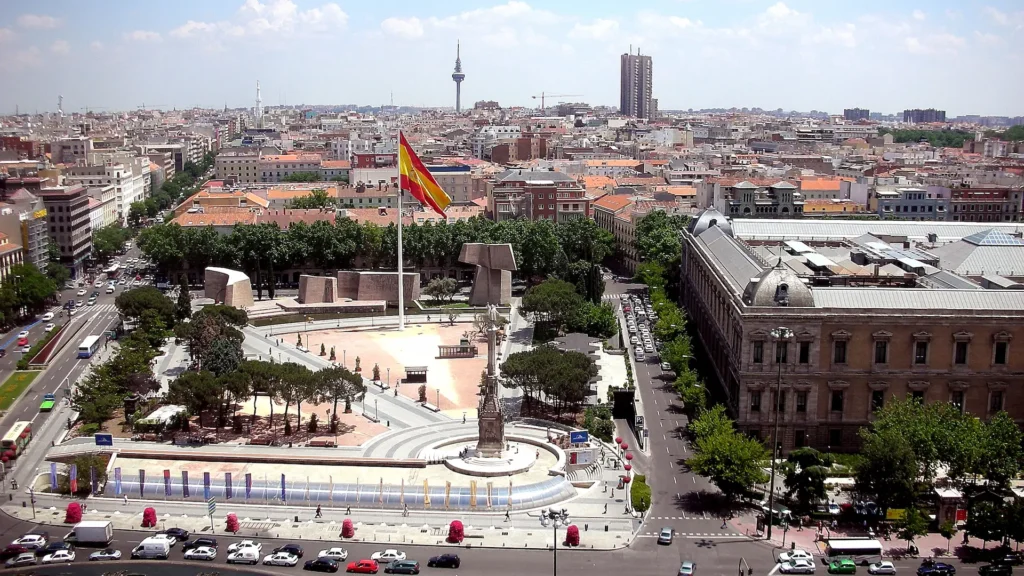
Plaza de Colón, by Enrique Dans, Creative Commons Attribution 2.0 Generic, Wikimedia Commons: https://w.wiki/JGMs