

 English
 Español
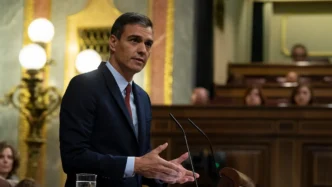
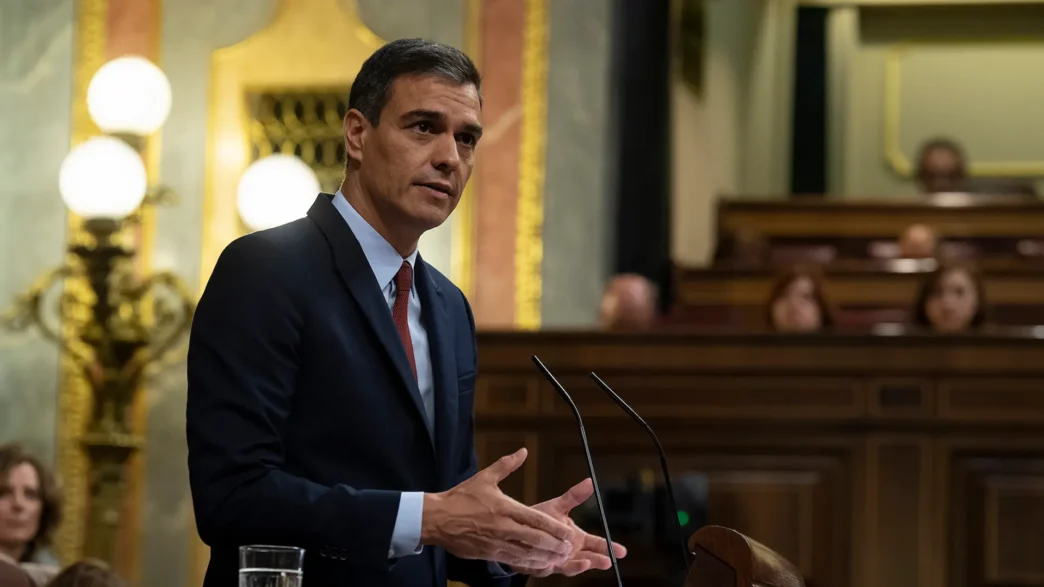
Spain’s Prime Minister defends anti-war policy, rejects US pressure, and clashes with opposition over the escalating Middle East conflicto.
Spain’s Prime Minister Pedro Sánchez has issued a stark warning about the escalating Iran war and broader Middle East conflict, arguing that its consequences could be “far worse” than the Iraq war of 2003.
Speaking before parliament, Sánchez defended Spain’s “No to War” stance, while launching a strong political attack on the opposition, accusing them of “cowardice and complicity” in the face of what he called an unjust and destabilizing conflict.
His remarks come amid rising global concern about the geopolitical, economic, and humanitarian impact of the Iran conflict, as well as a deepening political divide in Spain over foreign policy.
👉 This position is part of a broader strategy already explored in related coverage, including “Pedro Sánchez Rejects Trump’s Iran Strikes and Revives Spain’s ‘No to War’ Doctrine” and “Spain Condemns US-Israel Strike on Iran, Activates Crisis Cabinet to Protect 30,000 Citizens in Middle East”, reinforcing Spain’s consistent opposition to military escalation.
🕰️ “History is repeating itself”
In one of the most striking moments of his speech, Sánchez drew direct parallels between the current crisis and the Iraq war led by George W. Bush, in which Spain participated under José María Aznar.
“History is repeating itself.”
He added:
Sánchez emphasized that Iran is far more strategically significant than Iraq, making the current situation potentially more dangerous.
Key differences highlighted:
- Twice the population compared to Iraq in 2003
- A critical role in global energy markets
- Advanced military and missile capabilities
- Control over key trade routes like the Strait of Hormuz
👉 “Iran is a military power,” Sánchez warned, stressing that the global impact of the Iran war could be deeper and more destabilizing than Iraq.
🇪🇸Pedro Sánchez:
— Global Portal News (@GPNenglish) March 25, 2026
Former President Aznar dragged us into that madness, the Iraq War because he wanted to feel important.
He wanted Bush to buy him a cigar.
A war for ego.
Forgetting is the first step to repeating the same mistake.#Iran #IranWar #Trumppic.twitter.com/grqc3licUX
🌍 Humanitarian and economic impact of the Iran war
The Prime Minister also focused on the human cost of the Middle East conflict, highlighting alarming figures:
- Around 2,000 deaths in just one month
- More than 4 million displaced people across Iran and Lebanon
But beyond the humanitarian crisis, Sánchez warned of serious economic consequences of the Iran war, already affecting Europe.
Key global impacts:
- Disruptions to trade and aviation
- Rising prices of energy, fertilizers, and raw materials
- Increased pressure on food supply chains
In Spain, these effects are already visible, with higher energy costs impacting households and businesses.
“This war will not bring prosperity—it will bring the opposite,” Sánchez said.
👉 These risks are also examined in “Spain vs Trump: Why Pedro Sánchez Is Rejecting US Pressure Over the Iran War”, which explores how the conflict threatens Europe’s economic stability and energy security.
⚠️ “An absolute disaster” for global stability
Sánchez did not hold back, describing the Iran war as:
“An absolute disaster.”
He accused its promoters of undermining international law and destabilizing entire regions.
Potential global consequences:
- Renewed instability in Lebanon and Iraq
- Growing insecurity across the Gulf region
- Acceleration of nuclear ambitions in countries like North Korea and Pakistan
- Economic advantages for Russia due to rising fuel prices
He also warned that the conflict could worsen the humanitarian crisis in Gaza, further isolating the region.
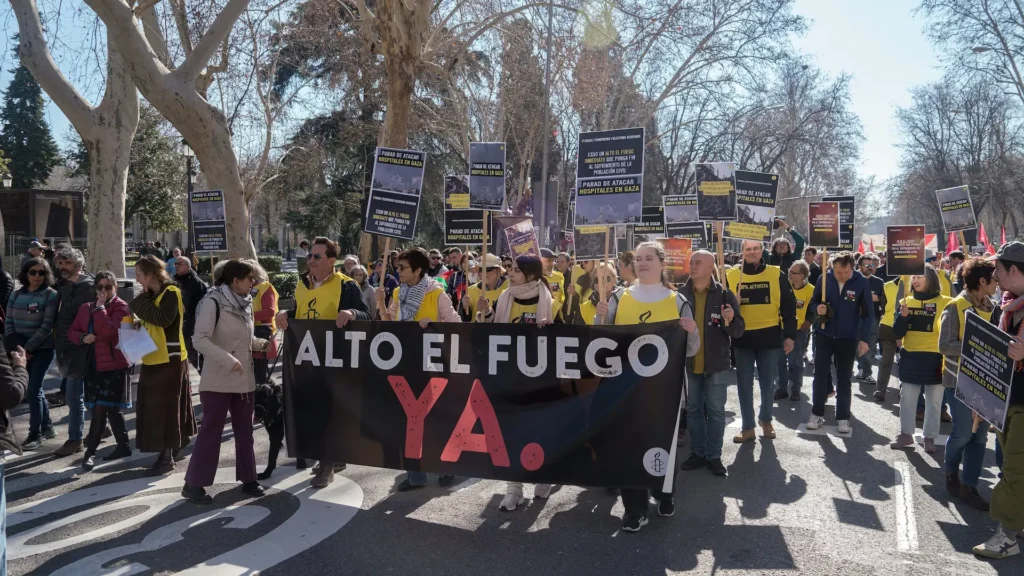
👉 This concern reflects growing public pressure, as seen in “Thousands Protest Across Spain Against Gaza War and Iran Conflict, Reviving Historic ‘No to War’ Movement”, where citizens are increasingly mobilizing against escalation.
🏛️ Political clash in Spain: “Silence is complicity”
He directly criticized opposition leaders Alberto Núñez Feijóo and Santiago Abascal.
“Remaining silent is not neutrality—it is complicity.”
He accused them of failing to defend international law and human rights, positioning his government as committed to diplomacy and multilateralism.
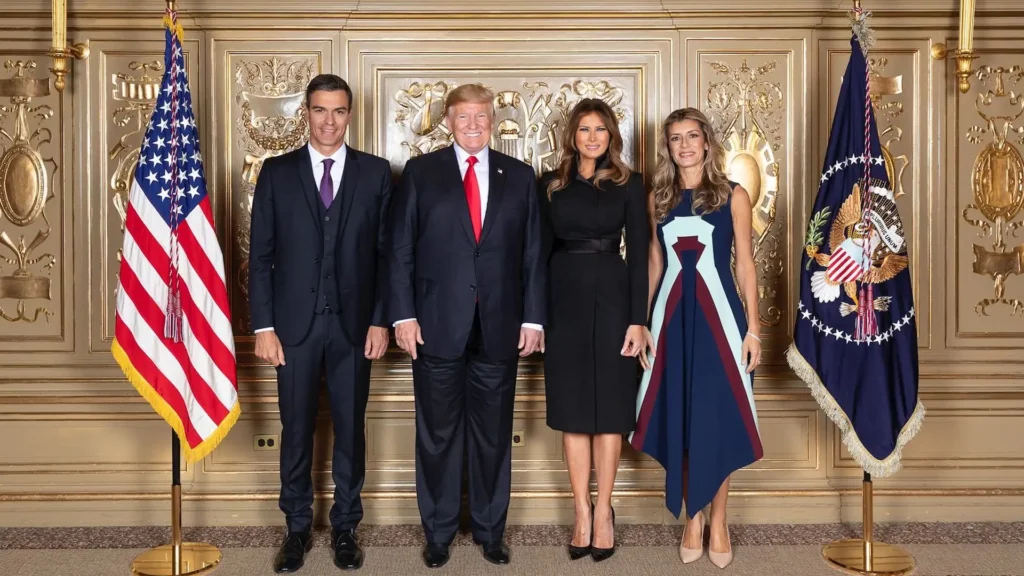
Sánchez also addressed Donald Trump directly:
👉 This statement connects with the ongoing debate covered in “Did Spain Agree to Cooperate with the U.S. on Iran? White House Says Yes, Madrid Denies Military Involvement”, where Spain has denied any military involvement.
🗣️ Feijóo hits back: “No to war—and no to you”
Opposition leader Feijóo responded forcefully, rejecting both the war and Sánchez’s leadership.
“No to war—and no to you.”
He accused Sánchez of political opportunism, calling him a “fake pacifist”, and questioned the government’s handling of the crisis.
Feijóo also criticized the economic response to the Iran conflict, arguing that measures were insufficient and delayed.
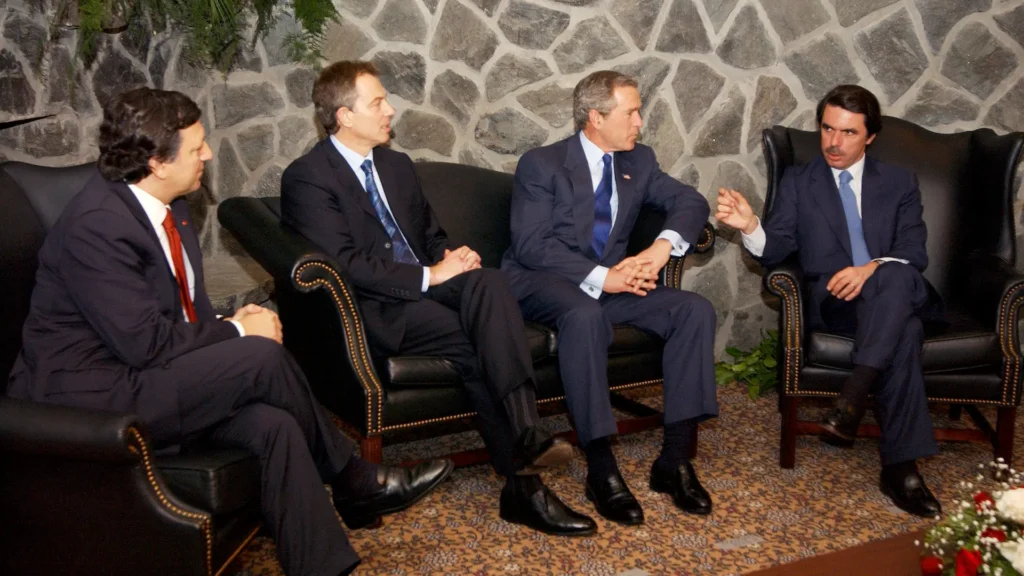
🧠 The Iraq war legacy still shapes Spain’s foreign policy
Sánchez repeatedly invoked Spain’s role in the Iraq war to justify his stance.
He sharply criticized Aznar’s decision to support the invasion, which was later discredited by the absence of weapons of mass destruction.
“Spain was dragged into that war,” Sánchez said.
He emphasized that historical memory continues to shape Spain’s “No to War” doctrine, now re-emerging as a central pillar of foreign policy.
🇪🇺 A defining moment for Spain and Europe
The current crisis is not just political—it is strategic.
Sánchez framed the Iran conflict as a test of Europe’s credibility and consistency.
“We cannot condemn one invasion and support another.”
A parliamentary vote on economic measures to mitigate the impact of the Iran war is expected to pass, but the broader political consequences remain uncertain.
❓ FAQ: Spain, the Iran War, and Political Tensions
Why is Spain opposing the Iran war?
Spain opposes the conflict based on its commitment to international law, diplomacy, and its historic “No to War” stance, which dates back to opposition to the Iraq war.
What did Pedro Sánchez say about the Iran conflict?
He warned that the Iran war could be more dangerous than Iraq, citing its scale, economic impact, and geopolitical risks.
Is Spain supporting the United States militarily?
No. Spain has denied any military involvement, despite claims from U.S. officials.
How could the Iran war affect Spain’s economy?
The conflict could lead to:
- Higher energy prices
- Supply chain disruptions
- Economic slowdown in Europe
Why is there political tension in Spain over this issue?
The Iran conflict has deepened divisions between the government and opposition over foreign policy, alliances, and economic strategy.
Information Source:
https://www.eldiario.es/politica/
Photo Attribution:
Photo: Pool Moncloa / Borja Puig de la Bellacasa (Ministry of the Presidency, Government of Spain), 22 July 2019. lamoncloa.gob.es Wikimedia Commons: https://w.wiki/KKmW
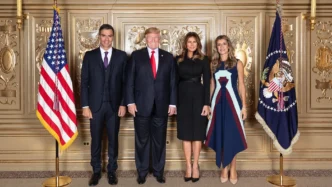
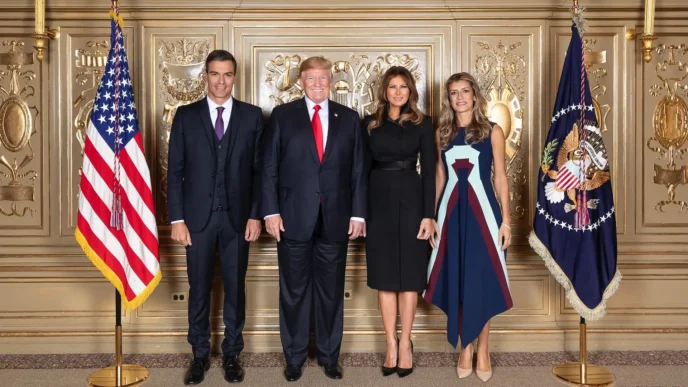
Photo credit: Official White House photo by Andrea Hanks, showing Presidents Donald J. Trump and Pedro Sánchez at the United Nations General Assembly, 25 September 2018. Public domain. Source: Wikimedia Commons (file President_Donald_Trump_and_Pedro_Sánchez.jpg). https://w.wiki/J9zG
Photo: Staff Sgt. Michelle Michaud / U.S. Air Force (public domain), via Wikimedia Commons. https://w.wiki/JCjP
2024-02-17-Manifestacion propalestina-01, by Nemo, Creative Commons Attribution-Share Alike 4.0 International, https://w.wiki/JjQR