

 English
 Español
Quick Answer
No final decision has been made on whether homes will be demolished to complete the Sagrada Familia’s Glory Facade.
However, some proposals linked to Antoni Gaudí’s original vision could affect hundreds—or even thousands—of homes near the basilica. Any future project would require planning approval, legal review, and housing solutions for affected residents.
A Historic Barcelona Debate Returns as the Sagrada Familia Nears Completion
As the completion of Barcelona’s Sagrada Familia draws closer, a decades-old urban planning conflict has returned to the spotlight.
At the center of the debate is a question that affects one of the world’s most famous landmarks and thousands of local residents:
Will homes be demolished to complete Antoni Gaudí’s original vision for the Sagrada Familia?
The controversy revolves around the unfinished Glory Facade, the basilica’s future main entrance.
Completing that entrance as originally envisioned could require major changes to the surrounding neighborhood and potentially affect a significant number of residents.
While no final decision has been made, the debate touches on some of Barcelona’s most sensitive issues:
- Housing rights
- Historic preservation
- Urban planning
- Tourism management
- The future of the city center
Why the Sagrada Familia Matters So Much to Barcelona
Few buildings attract as much global attention as the Sagrada Familia.
Construction began in 1882, and nearly 150 years later, the basilica remains one of the most ambitious architectural projects ever undertaken.
Today, it is:
- One of Spain’s most visited attractions
- One of Europe’s most recognizable landmarks
- A UNESCO World Heritage Site component
- A major economic engine for Barcelona
According to official figures:
- 3.7 million people enter the basilica each year.
- Around 20 million visitors pass through the surrounding area annually.
- The monument generates significant economic activity through tourism and local businesses.
Unlike many major landmarks, the Sagrada Familia receives no direct public funding.
Its construction is financed primarily through:
- Ticket sales
- Donations
- Visitor-related revenue
Recent financial reports show annual revenues exceeding €100 million, helping accelerate progress toward completion.
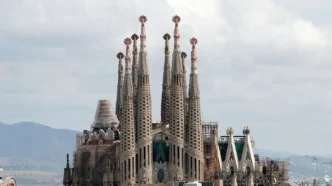
The Glory Facade: The Last Major Piece of Gaudí's Vision
The Sagrada Familia was designed around three monumental facades:
- Nativity Facade
- Passion Facade
- Glory Facade
The first two are complete.
The Glory Facade remains unfinished and is intended to serve as the basilica’s principal entrance.
Gaudí envisioned visitors approaching the temple through:
- A monumental staircase
- An elevated bridge-like structure
- A large public plaza
The goal was to create a dramatic arrival experience that reflected the spiritual significance of the basilica.
The problem?
The neighborhood was built long before those plans could be completed.
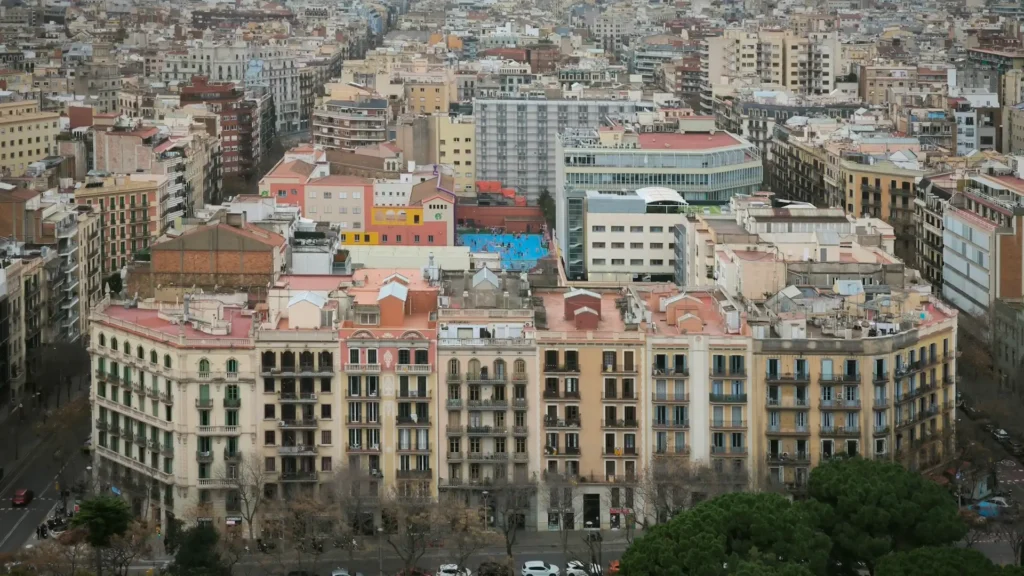
Today, residential buildings occupy the area where the staircase and plaza would be located.
Why Residents Fear Losing Their Homes
The buildings opposite the future Glory Facade are long-established residential properties.
Families have lived there for decades.
Among the best-known structures is the Núñez y Navarro building, developed during the 1970s.
Residents have displayed banners reading:
“Our homes are legal.”
“My life is here and they want to tear it down.”
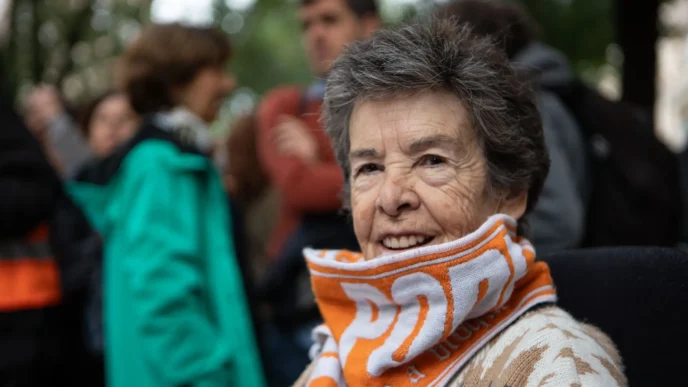
For many residents, the issue is not only about property.
It is about:
- Community
- Family history
- Housing security
Neighborhood identity
How Many Homes Could Be Affected?
This is one of the most debated aspects of the project.
Different proposals have produced very different estimates.
Lower-impact proposals
- Fewer than 200 homes affected
Earlier planning concepts
- More than 1,000 apartments affected
Larger historical estimates
- Up to 3,000 homes
- Around 10,000 residents
Because no final urban plan has been approved, officials have not confirmed the definitive number.
Even so, the project could become one of Barcelona’s largest urban redevelopment challenges in decades.
How Did This Conflict Begin?
The roots of the dispute go back more than 50 years.
In 1975, construction permits were granted for residential developments directly in front of the future Glory Facade.
The legality of those buildings was later supported by Spain’s Ministry of Education and Science.
Residents argue that this history is crucial.
Their position is straightforward:
If homes were legally approved and built, future expropriations raise significant legal and ethical concerns.
As a result, thousands of people have spent decades living with uncertainty.
Some residents say they have lived under the threat of possible expropriation for more than 40 years.
What Do Residents Want?
Neighborhood organizations say they are willing to negotiate.
What they oppose is uncertainty.
Potential solutions discussed over the years include:
- Financial compensation
- Apartment-for-apartment relocation
- New housing developments nearby
- Mixed compensation and rehousing programs
Residents insist that any agreement must protect their right to housing and provide fair treatment.
The Position of the Sagrada Familia Foundation
The Sagrada Familia Construction Board maintains that it does not want to abandon Gaudí’s vision.
Foundation leaders argue that the staircase is an essential component of the original project.
Esteve Camps, president delegate of the Construction Board, has repeatedly stated that the organization remains committed to completing the staircase while remaining open to dialogue.
Supporters argue that without the staircase, the basilica would remain incomplete.
Critics counter that modern realities should take precedence over historical plans.
Barcelona City Council Holds the Key
Ultimately, the future of the project depends on Barcelona City Council.
Any proposal would require:
- Planning approval
- Political consensus
- Public consultation
- Legal review
- Housing guarantees
City officials have repeatedly emphasized that residents must be protected.
The city’s position can be summarized simply:
No solution for residents means no project.
Was the Staircase Really Designed by Gaudí?
Another major controversy concerns authenticity.
Some critics argue that parts of the staircase proposal may have been developed after Gaudí’s death.
Supporters reject that claim.
They point to:
- Historical documents
- Archived plans
- Certified records
that they believe confirm the staircase was part of Gaudí’s vision.
The dispute highlights a larger question:
How should modern cities interpret unfinished historic projects?
The Legal Challenges Ahead
Even if a final agreement is reached, legal challenges appear likely.
Possible obstacles include:
- Administrative appeals
- Property rights disputes
- Compensation disagreements
- Court proceedings
Legal action could significantly delay any future construction.
That uncertainty remains a major factor in the ongoing negotiations.
How Close Is the Sagrada Familia to Completion?
Construction continues to advance rapidly.
Recent milestones include:
- Completion of the Evangelists’ Towers
- Progress on the Chapel of the Assumption
- Development of the Tower of Jesus
The Tower of Jesus is expected to become the tallest church structure in the world when completed.
The basilica has already reached approximately 172.5 meters in height.
Current estimates suggest the Sagrada Familia could be substantially completed between 2033 and 2034.
What Happens Next?
Several scenarios remain possible.
Scenario 1: Full Implementation
The staircase is built largely according to historical plans, requiring significant expropriations.
Scenario 2: Reduced-Impact Design
A revised project minimizes the number of affected homes.
Scenario 3: Negotiated Compromise
Authorities approve a modified version that preserves key elements of Gaudí’s vision while protecting residents.
Scenario 4: Long-Term Deadlock
Political, legal, or social challenges prevent major changes from moving forward.
A Decision That Will Shape Barcelona's Future
The debate surrounding the Sagrada Familia Glory Facade is no longer simply an architectural discussion.
It has become a broader conversation about:
- Housing rights
- Heritage preservation
- Urban redevelopment
- Tourism pressure
- The future of Barcelona
For supporters, completing the Glory Facade means fulfilling Gaudí’s original vision.
For residents, the issue is about protecting homes, communities, and decades of personal history.
As the Sagrada Familia approaches the end of its 150-year construction journey, Barcelona faces a decision that could become one of the most significant urban planning cases in modern Europe.
Whatever happens, the outcome will shape the city long after the final stone is placed on Gaudí’s masterpiece.
FAQ Sagrada Familia Glory Facade
Will homes be demolished to complete the Sagrada Familia?
No final decision has been made. Multiple proposals remain under discussion, and any demolition would require planning approval, legal review, and housing solutions for affected residents.
How many homes could be affected?
Estimates range from fewer than 200 homes to as many as 3,000 homes and around 10,000 residents, depending on the proposal adopted.
Why is the Glory Facade controversial?
The planned entrance includes a monumental staircase that could require changes to an existing residential area, creating a conflict between heritage preservation and housing rights.
When will the Sagrada Familia be completed?
Current projections suggest the main construction could be completed between 2033 and 2034, although artistic and urban planning elements may take longer.
Who pays for the construction of the Sagrada Familia?
The basilica is financed primarily through ticket sales, donations, and visitor-related revenue. It does not receive direct public funding for construction.
Could affected residents receive compensation?
If expropriations are approved, compensation and rehousing plans would likely form part of any final agreement, although no definitive framework has been announced.
Information Source:
https://www.elmundo.es/economia/vivienda/
Photo Attribution:
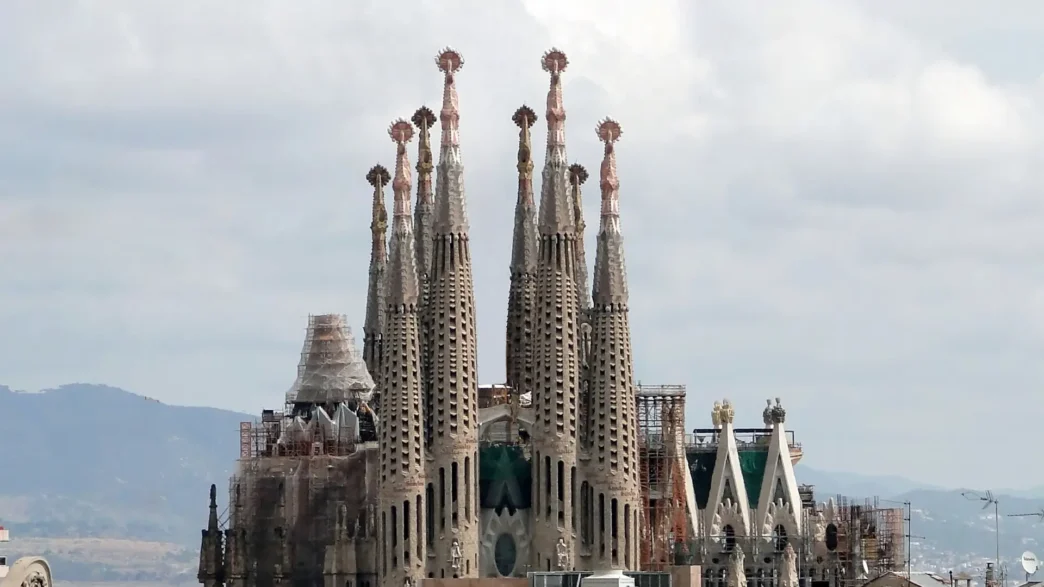
Sagrada Familia 01, by Bernard Gagnon, Creative Commons Attribution-Share Alike 3.0 Unported, 2.5 Generic, 2.0 Generic and 1.0 Generic license. Wikimedia Commons: https://w.wiki/QXqg
Plaça Sagrada Família, house 1 to 7 Barcelona, Spain, by Reda Kerbouche, Creative Commons Attribution-Share Alike 4.0 International license, Wikimedia Commons https://w.wiki/KCz9