

 English
 Español
A Jersey-based offshore trust linked to former Spanish King Juan Carlos I has donated £6.6 million (approximately €7.6 million) to the UK’s Refugee Council, reigniting scrutiny over an alleged €15 million hidden offshore fortune that remained outside Spain for decades.
The latest revelations, first reported by El País and supported by previous reporting in British media, focus on The JRM 2004 Trust, a financial structure established in Jersey in 2004 and connected to historian and banker Joaquín Romero Maura, a longtime associate of one of Juan Carlos I’s closest financial advisers.
Although Spain’s Anti-Corruption Prosecutor’s Office closed its investigation into the trust in 2022 after finding insufficient evidence that Juan Carlos I controlled the assets during the relevant period, the newly disclosed donations have revived questions about the origin of the money, the use of offshore financial structures and the transparency surrounding the former monarch’s wealth.
At a Glance
Key Fact | Details |
Donation | £6.6 million (€7.6 million) |
Recipient | Refugee Council (United Kingdom) |
Trust | The JRM 2004 Trust (Jersey) |
Original Offshore Fortune | Approximately €15 million |
Funds Hidden Since | 1995 |
Spanish Investigation | Closed in 2022 |
Main Question | Where did the original fortune come from? |
Key Points
- The Refugee Council has received £6.6 million (€7.6 million) through four donations between 2023 and 2026.
- The money came from The JRM 2004 Trust, an offshore trust established in Jersey.
- The trust has been linked to a €15 million offshore fortune previously associated with former King Juan Carlos I.
- The original source of the money has never been publicly established.
- Spanish prosecutors investigated the trust but closed the case in 2022, concluding they could not prove Juan Carlos I controlled or benefited from the trust during the period under investigation.
- The case continues to fuel debate about offshore wealth, financial transparency and accountability.
What Is the JRM 2004 Trust?
One of the key questions surrounding this case is the nature of The JRM 2004 Trust itself.
The trust was established in Jersey, a British Crown Dependency widely known for its international financial services industry.
A trust is a legal arrangement in which assets are held by trustees on behalf of beneficiaries. Such structures are commonly used for estate planning, asset management and inheritance purposes. While trusts are legal financial instruments, they frequently attract public scrutiny when they involve politically exposed individuals because ownership and control of assets can be difficult to determine.
According to reports published by El País, The JRM 2004 Trust inherited assets that had previously been held through earlier offshore trusts created during the 1990s.
Those assets have become the focus of renewed attention because investigators were never able to publicly establish the original source of the fortune.
Four Donations Over Four Years
The recipient of the funds is the Refugee Council, one of the United Kingdom’s largest charities supporting refugees and asylum seekers.
According to the organization, trustees spent six months conducting legal, ethical and financial due diligence before deciding to accept the donation.
The trust distributed the money through four separate payments:
- 2023: £2.3 million
- 2024: £1.3 million
- 2025: £1.5 million
- 2026: £1.5 million
Together, those transfers total £6.6 million, equivalent to approximately €7.6 million.
The charity stated that its review found “no material evidence of fault or wrongdoing” directly connected to the inheritance and concluded that accepting the funds would best serve refugees and asylum seekers.
It also confirmed that the donation will be used solely for humanitarian work.
The Hidden Offshore Fortune Behind the Trust
According to investigations published by El País, the Jersey trust originated from an offshore fortune worth approximately €15 million that allegedly remained outside Spain from 1995 onward.
The funds were reportedly managed through offshore structures established first in the British Virgin Islands and later in Jersey, with assistance from Manuel de Prado y Colón de Carvajal, one of Juan Carlos I’s closest advisers for many years.
The precise origin of the money has never been publicly clarified.
Investigators reported that the financial arrangements involved offshore companies, trusts, private banks and fiduciary administrators operating across multiple jurisdictions.
The complexity of the structure allowed the assets to remain largely outside public view for decades.
Why Was the Jersey Trust Created?
According to documents cited during the investigation, two earlier trusts—Tartessos and Hereu—were established during the mid-1990s.
Those trusts reportedly listed Juan Carlos I as the intended beneficiary.
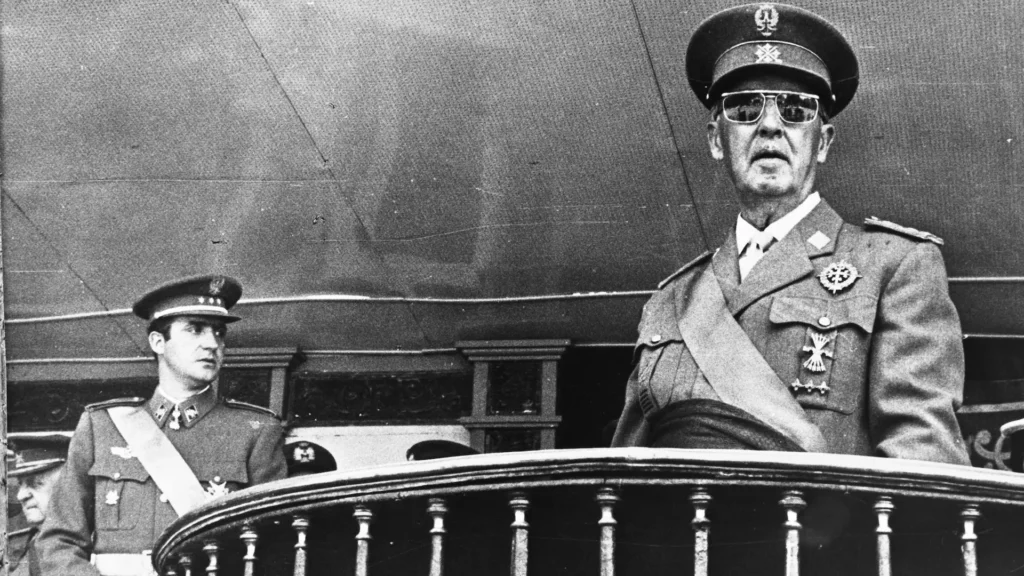
According to explanations later provided to financial institutions, their purpose was to ensure that the king would have access to financial resources if Spain experienced another period of political instability or a military coup similar to the failed coup attempt of 1981.
By the early 2000s, however, Spain’s democratic institutions were considered stable.
Compliance documents cited by El País indicate that Juan Carlos I allegedly decided the original purpose of the trusts no longer applied.
The assets were reportedly transferred in 2004 to historian and banker Joaquín Romero Maura, who established The JRM 2004 Trust.
"Embarrassing for the Monarchy"
Among the most significant revelations are statements contained in banking compliance records.
According to documents reviewed during the investigation, Romero Maura allegedly told bank officials that Juan Carlos I feared public disclosure of the offshore fortune would be “embarrassing for the monarchy.”
The records suggest that concerns focused primarily on the institution’s reputation rather than legal consequences.
That reported explanation has become one of the most widely discussed aspects of the case because it appears to acknowledge that disclosure of the funds could have damaged public confidence in Spain’s royal family.
Although these statements appear in banking documentation cited by media investigations, they have not resulted in criminal findings against the former king.
Who Was Joaquín Romero Maura?
Joaquín Romero Maura was a respected historian, Oxford academic and banker with longstanding ties to Spain’s political and financial establishment.
Following his death in 2022, his will directed much of his estate to charitable organizations.
Besides the Jersey trust assets, his estate reportedly included:
- A property in London.
- A residence in France’s Périgord region.
- Swiss bank assets.
- Additional financial investments.
The wider estate is estimated to be worth more than £11 million.
Over several years, Romero Maura amended his will to include charitable beneficiaries, eventually naming the Refugee Council among them.
His decision ultimately led to millions of pounds being transferred from the Jersey trust to the British charity.
Spanish Investigation Closed in 2022
The existence of The JRM 2004 Trust became public during investigations launched by Spain’s Anti-Corruption Prosecutor’s Office in 2020.
Authorities examined whether the trust represented hidden assets belonging to Juan Carlos I.
After a two-year investigation, prosecutors closed the case in 2022.
Their findings concluded that investigators had not identified sufficient evidence demonstrating that Juan Carlos I remained the trust’s beneficiary, exercised control over it or received payments from it during the period under investigation.
As a result, no criminal proceedings relating specifically to the Jersey trust continued beyond 2022.
However, prosecutors did not determine the origin of the original offshore fortune, leaving one of the central questions surrounding the case unanswered.
A Long History of Financial Controversies
The Jersey trust represents only one chapter in a much broader series of financial controversies involving Spain’s former monarch.
Over the past decade, investigations have examined several offshore financial structures connected to Juan Carlos I, including:
- The Lucum Foundation in Panama.
- Swiss bank accounts.
- Financial transfers linked to Saudi Arabia.
- Tax settlements made after Spanish authorities opened investigations.
Although several investigations were eventually closed because of constitutional immunity during his reign, statutes of limitation or insufficient evidence, the disclosures significantly affected the former king’s public image.
Juan Carlos I abdicated in 2014, handing the throne to King Felipe VI, and relocated to Abu Dhabi in 2020 amid growing scrutiny of his financial affairs.
Timeline: The Jersey Trust Case
Year | Development |
1995 | Offshore assets reportedly placed into trust structures linked to the British Virgin Islands. |
1997 | A second trust arrangement was created. |
2004 | The JRM 2004 Trust was established in Jersey under Joaquín Romero Maura. |
2020 | Spain’s Anti-Corruption Prosecutor’s Office launched an investigation. |
2022 | Prosecutors closed the investigation without criminal findings against Juan Carlos I regarding control of the trust. Joaquín Romero Maura died later that year. |
2023 | First donation of £2.3 million made to the Refugee Council. |
2024 | Second donation of £1.3 million. |
2025 | Third donation of £1.5 million. |
2026 | Fourth donation of £1.5 million brought the total donated to £6.6 million (€7.6 million). |
Why This Story Matters
The latest donations do not reopen Spain’s criminal investigation, nor do they alter the legal conclusions previously reached by prosecutors. However, they have brought renewed attention to longstanding questions surrounding an offshore fortune that remained outside Spain for decades.
While the money is now being used to support humanitarian work in the United Kingdom, the origin of the original assets, the reasons they were managed through offshore financial structures and their historical connection to Spain’s former head of state remain matters of significant public interest.
The case also highlights the continuing debate over transparency, accountability and financial disclosure for senior public figures, particularly those who once held the country’s highest constitutional office.
For many observers, the story extends beyond the donations themselves. It raises broader questions about how offshore trusts are used, how difficult it can be to trace beneficial ownership and whether legal investigations always provide definitive answers about the source of complex international financial arrangements.
As new documentation continues to emerge through investigative reporting, The JRM 2004 Trust remains one of the most closely scrutinized episodes in the financial legacy of Juan Carlos I, keeping the debate over transparency and public trust firmly in the spotlight.
Frequently Asked Questions (FAQ)
Why is the Jersey trust linked to Juan Carlos I?
According to investigations published by El País, The JRM 2004 Trust inherited assets from earlier offshore trusts that had reportedly been created for the benefit of Juan Carlos I during the 1990s. Spanish prosecutors later investigated whether the former king continued to control those assets but closed the case in 2022 after finding insufficient evidence to support that conclusion.
How much money has the Refugee Council received?
The Refugee Council has received £6.6 million, equivalent to approximately €7.6 million, through four donations made between 2023 and 2026.
The payments were distributed as follows:
- 2023: £2.3 million
- 2024: £1.3 million
- 2025: £1.5 million
- 2026: £1.5 million
What is The JRM 2004 Trust?
The JRM 2004 Trust is an offshore trust established in Jersey in 2004 under Joaquín Romero Maura.
According to media investigations, it became the successor to earlier offshore trusts that reportedly held assets originally associated with Juan Carlos I. The trust later became the source of multimillion-pound donations to the UK’s Refugee Council.
Was Juan Carlos I charged over the Jersey trust?
No.
Spain’s Anti-Corruption Prosecutor’s Office investigated the trust between 2020 and 2022 but ultimately closed the investigation after concluding there was insufficient evidence that Juan Carlos I controlled the trust, remained its beneficiary or received funds from it during the relevant period.
No criminal charges resulted from that investigation.
Where did the original €15 million fortune come from?
The precise origin of the reported €15 million offshore fortune has never been publicly established.
Investigative reports state that the money was held through offshore companies and trusts in the British Virgin Islands and Jersey, but no official explanation has definitively identified the original source of the funds.
Why did the Refugee Council accept the donation?
The charity said it spent six months carrying out legal, financial and ethical due diligence before deciding to accept the inheritance.
According to its public statement, trustees found “no material evidence of fault or wrongdoing” directly associated with the gift and concluded that accepting the funds was in the best interests of the refugees and asylum seekers the organization supports.
What role did Joaquín Romero Maura play?
Joaquín Romero Maura was a historian, academic and banker who reportedly became responsible for the offshore assets after the creation of The JRM 2004 Trust.
Before his death in 2022, he amended his will to leave much of his estate—including assets connected to the trust—to charitable organizations, with the Refugee Council ultimately becoming the principal beneficiary.
Why are offshore trusts controversial?
Offshore trusts are legal financial structures that can be used for estate planning, inheritance and asset management.
However, when they involve politically exposed persons, they often attract greater scrutiny because questions can arise about:
- The source of the assets.
- Beneficial ownership.
- Tax transparency.
- Financial disclosure.
- Public accountability.
The Jersey trust has attracted attention because of its reported historical links to Spain’s former head of state and the unresolved questions surrounding the origin of the underlying assets.
Key Takeaways
- £6.6 million (€7.6 million) has been donated to the UK’s Refugee Council from The JRM 2004 Trust.
- The trust has been linked through investigative reporting to a €15 million offshore fortune reportedly associated with former King Juan Carlos I.
- The origin of the fortune remains publicly unexplained.
- Spain’s prosecutors closed their investigation in 2022 after finding insufficient evidence that Juan Carlos I controlled or benefited from the trust during the relevant period.
- The donations have revived debate over offshore wealth, financial transparency and accountability involving former public officials.
Conclusion
Although the donations themselves are now supporting humanitarian work, the broader questions surrounding the offshore fortune remain unresolved.
The transfer of £6.6 million to the Refugee Council has revived international attention on a financial structure that has been the subject of investigations, media scrutiny and political debate for years.
While Spanish prosecutors concluded there was insufficient evidence to pursue criminal action in relation to The JRM 2004 Trust, the investigation did not establish the original source of the reported €15 million offshore fortune.
As a result, the case continues to attract interest not only because of the money involved, but also because it touches on wider issues of transparency, public accountability, offshore finance and trust in public institutions.
With fresh details continuing to emerge through investigative reporting, the Jersey trust remains a significant chapter in the financial legacy of former King Juan Carlos I—and one that is likely to remain under close public scrutiny for years to come.
Information Source:
Una ONG británica ya acumula 7,6 millones de un fondo en Jersey ligado a Juan Carlos I
https://www.elplural.com/politica/espana/
Photo Attribution:
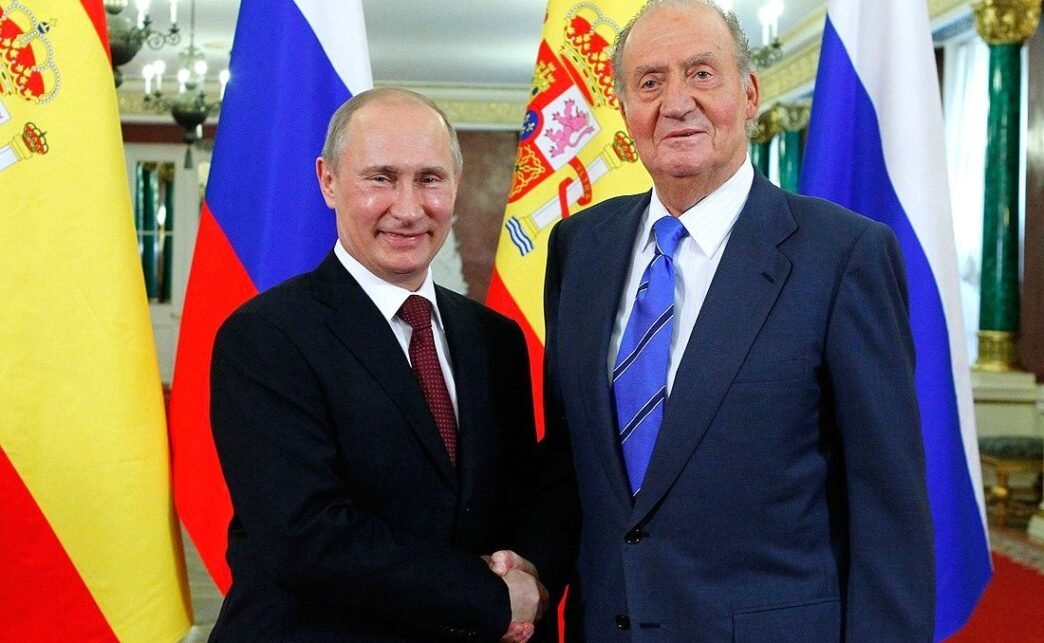
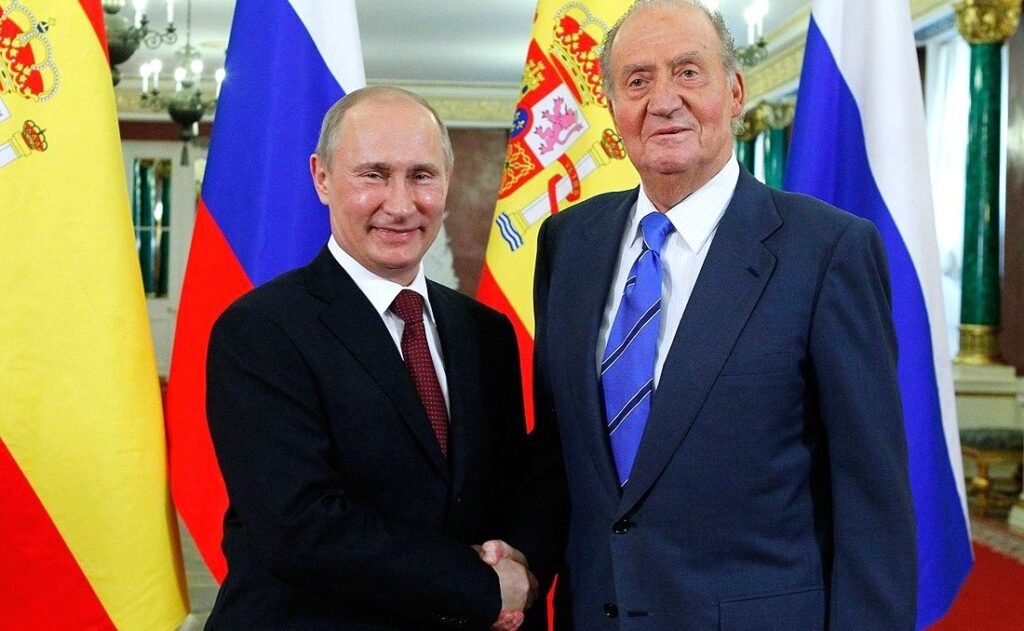
Vladimir Putin and King Juan Carlos I of Spain (19 July 2012) — Author: Presidential Press and Information Office / www.kremlin.ru. Licensed under Creative Commons Attribution 4.0 International (CC BY 4.0) via Wikimedia Commons
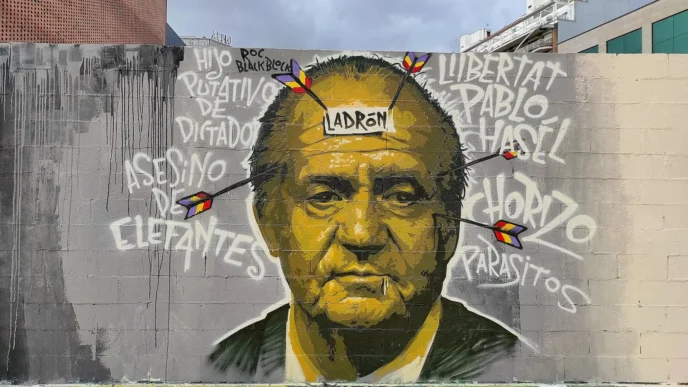
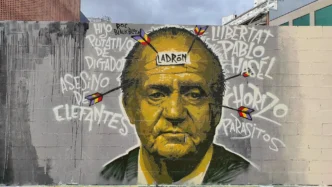
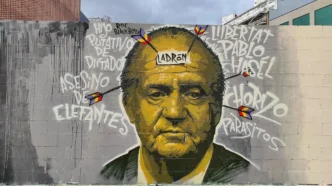
Mural censurat “Borbó – lladrón” (Barcelona, 7 Feb 2021) — Photographer: Roc Blackblock; licensed under Creative Commons Attribution-ShareAlike 4.0 International (CC BY-SA 4.0) via Wikimedia Commons
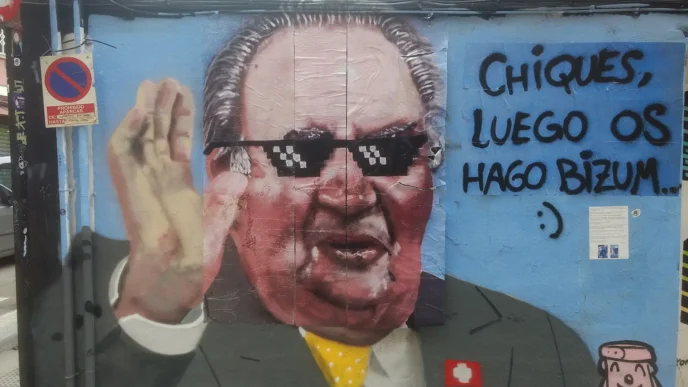
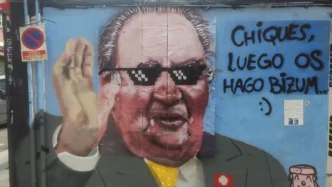
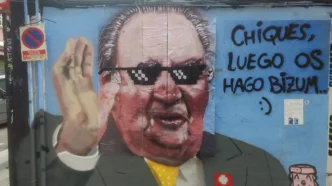
“Juan Carlos Bizum 3.jpg” (mural on Juan Carlos I of Spain) — Author: Francesc Fort. Licensed under Creative Commons Attribution-ShareAlike 4.0 International (CC BY-SA 4.0) via Wikimedia Commons
In Madrid is herdacht dat Franco 30 jaar geleden de burgeroorlog (1936-1939) won – Bestanddeelnr 922-4913 (cropped) — Source: Nationaal Archief / Anefo. Public domain (CC0 1.0 Universal). Available via Wikimedia Commons.