

 English
 Español
The Eurovision Song Contest 2026 was expected to celebrate music, unity, and the festival’s 70th anniversary. Instead, the competition arrives in Vienna surrounded by controversy, political tension, and growing divisions between European broadcasters.
In one of the biggest developments in Eurovision’s modern history, Spain withdraws from Eurovision 2026 alongside several other countries following a bitter dispute over Israel’s participation in the contest.
RTVE, Spain’s public broadcaster, confirmed its withdrawal after the European Broadcasting Union (EBU) approved new rules that effectively ensured Israel would remain in the competition despite opposition from multiple member broadcasters.
The Netherlands, Ireland, Slovenia, and Iceland later joined Spain in leaving the contest, reducing participation to just 35 countries, the lowest number in more than two decades.
Why Spain Withdrew From Eurovision 2026
The crisis surrounding Eurovision 2026 has been building for months amid tensions linked to the war in Gaza and growing criticism of Israel’s role in the contest.
On December 4, 2025, the EBU held a decisive General Assembly in Geneva where broadcasters debated reforms aimed at improving transparency, televoting security, and political neutrality within Eurovision.
However, the organization refused to hold a separate vote specifically on whether Israel should remain in the competition.
Instead, delegates approved a broader reform package by 738 votes in favor, 264 against, and 120 abstentions.
For RTVE, the decision marked a breaking point.
In an official statement, the Spanish broadcaster said the outcome “increases RTVE’s distrust in the organization of the festival and confirms the political pressures surrounding it.”
Spain had already warned months earlier that it could leave Eurovision if Israel continued participating. RTVE executives argued that the contest’s neutrality had become increasingly difficult to defend as geopolitical tensions overshadowed the music competition.
José Pablo López, president of RTVE, described Eurovision as “a festival dominated by geopolitical interests and deeply fractured.”
The broadcaster also announced it would not air the Eurovision 2026 final or the semifinals — a highly unusual decision given the contest’s massive popularity in Spain.

Growing Tensions Over Israel’s Eurovision Participation
The debate over Israel’s place in Eurovision has divided broadcasters across Europe since 2024.
Several countries, including Spain, Ireland, Slovenia, Belgium, and the Netherlands, demanded discussions about whether Israel should continue participating while the Gaza conflict continued.
Critics accused the EBU of applying double standards after Russia was previously excluded from Eurovision following the invasion of Ukraine.
RTVE’s criticism intensified during Eurovision 2025 in Basel, Switzerland.
During one semifinal broadcast, Spanish commentators Tony Aguilar and Julia Varela referenced civilian deaths in Gaza and called for political neutrality within the contest. According to reports, the EBU later warned RTVE against making further references to the conflict during the final broadcast.
Before the grand final aired, RTVE displayed a black screen message reading:
Relations between Spain and Eurovision organizers deteriorated rapidly after that moment.
EBU Defends Eurovision 2026 Decision
The EBU has strongly defended both the new voting rules and Israel’s participation, insisting Eurovision must remain politically neutral.
EBU President Delphine Ernotte Cunci said the assembly vote demonstrated a “shared commitment” to protecting “transparency and trust” in the competition.
Eurovision Director Martin Green acknowledged the seriousness of the withdrawals but insisted that most broadcasters wanted Eurovision to avoid becoming “a political battlefield.”
“We miss these countries and want them back,” Green said following Spain’s withdrawal announcement.
According to the EBU, approximately 35 countries are expected to compete in Vienna, with the final participant list expected before Christmas.
Eurovision Voting Changes Explained
The EBU’s new rules introduce several major changes aimed at preventing voting manipulation and restoring trust in the competition.
The reforms include:
- Reducing the number of public votes per payment method from 20 to 10
- Reintroducing professional jury voting in the semifinals
- Increasing technical measures against coordinated televoting campaigns
- Strengthening transparency and monitoring systems
The organization said the measures were designed to respond to concerns over televoting irregularities that have damaged Eurovision’s credibility in recent years.
Economic Impact of Spain’s Eurovision Exit
Spain’s withdrawal represents more than a symbolic loss.
As part of Eurovision’s Big Five — alongside France, Germany, Italy, and the United Kingdom — Spain contributes one of the contest’s largest financial shares.
Industry estimates suggest RTVE paid more than €330,000 to participate in Eurovision 2025.
Combined with contributions from the Netherlands, Ireland, and Slovenia, Eurovision organizers are estimated to have lost at least €770,000 in participation fees for the 2026 edition.
Former Eurovision executive producer Christer Björkman described Spain’s absence as “an enormous economic blow” for the contest.
The impact is already visible beyond broadcaster finances.
Eurovision Streaming and Audience Numbers Fall
Streaming figures for Eurovision 2026 songs have dropped sharply compared to previous years.
Industry tracking data shows competing songs accumulated around 127 million streams in the days before the final — a decline of more than 45% compared to the same period in 2025.
The absence of Spain and other countries with strong Eurovision fan bases appears to have significantly reduced audience engagement.
Television audiences are also expected to decline.
Eurovision 2025 reached approximately 166 million viewers across 37 markets, with Spain alone contributing nearly 23 million viewers across the contest’s broadcasts.
The final featuring Spanish singer Melody attracted more than 5.8 million average viewers in Spain, rising above 6.3 million during the voting sequence.
Without RTVE broadcasting Eurovision 2026, the EBU may attempt to sell Spanish broadcasting rights to another television network or regional broadcaster.
Eurovision Faces Deepening Internal Divide
The controversy has exposed one of the deepest internal divisions in Eurovision’s history.
While Spain and several other countries withdrew over Israel’s participation, Germany, Austria, and Switzerland reportedly warned they would reconsider their involvement if Israel were excluded.
Austria, hosting Eurovision 2026 after the victory of JJ with the song Wasted Love, strongly supported Israel remaining in the contest.
Austrian Chancellor Christian Stocker previously suggested Vienna should not host Eurovision if Israel was removed.
Meanwhile, Israeli public broadcaster KAN welcomed the EBU’s decision. Israeli President Isaac Herzog said Israel “deserves to be represented on every stage in the world.”
The broader dispute has raised serious questions about Eurovision’s future identity.
Long promoted as a non-political celebration of music and culture, Eurovision now faces growing accusations that political interests increasingly shape participation decisions, voting dynamics, and broadcaster relations.
What Happens Next for Spain and Eurovision?
Despite withdrawing from Eurovision 2026, RTVE confirmed that Benidorm Fest — Spain’s national music competition used to select Eurovision representatives — will continue.
Spanish broadcasters insist the event remains an important platform for promoting national artists regardless of Eurovision participation.
RTVE director Sergio Calderón also left the door open for a future return.
“From May 17 onward, we will evaluate whether the conditions exist for participating again in the future,” he said in comments to Spanish media.
That timeline is significant because it begins immediately after the Eurovision 2026 final in Vienna.
For now, however, Spain’s withdrawal marks one of the most dramatic moments in Eurovision’s recent history — a clear sign of how deeply geopolitical tensions have transformed an event once defined primarily by music, entertainment, and European unity.
Information Source:
https://www.elplural.com/extratele/
Photo Attribution:
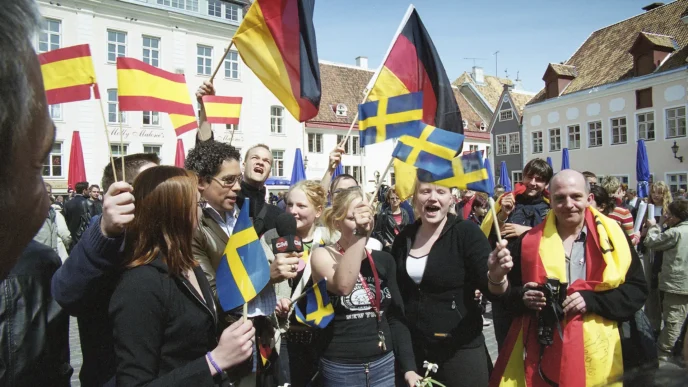
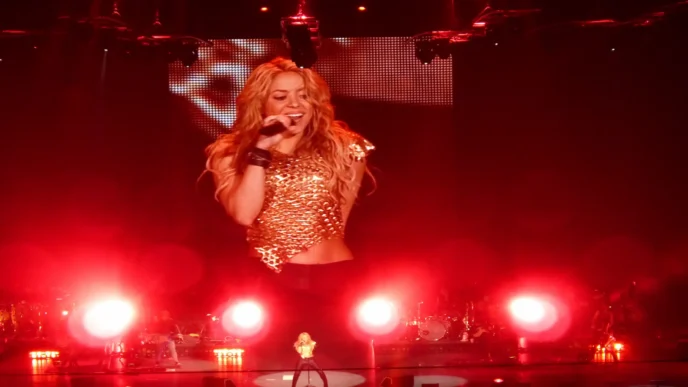
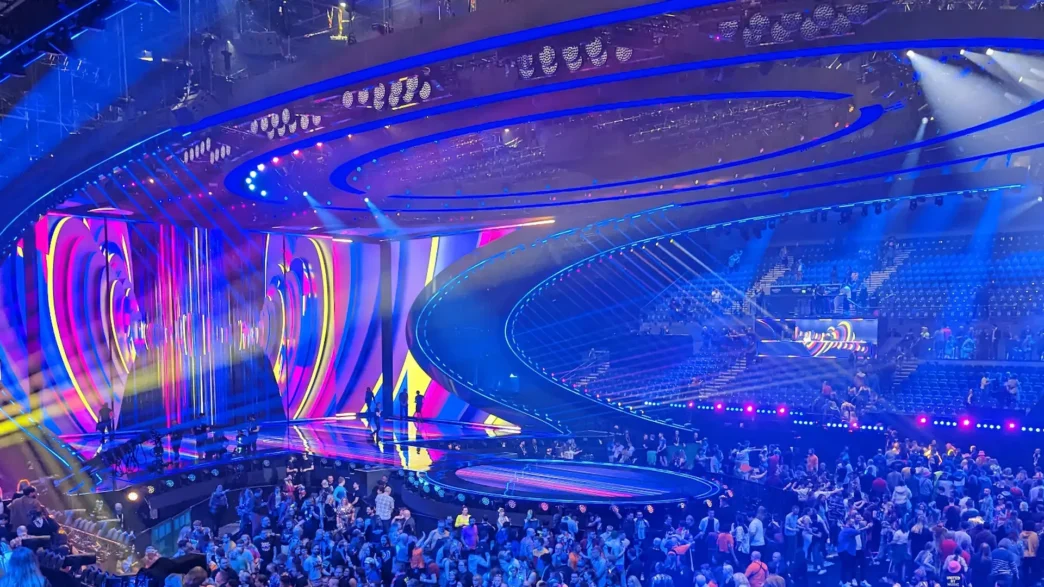
Eurovision 2023 – Stage, by Michael Doherty Creative Commons Attribution-Share Alike 4.0 International license Wikimedia Commons: https://w.wiki/NFAS
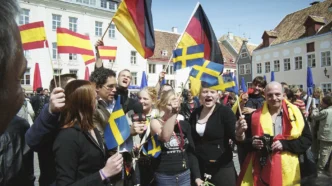
Eurovisiooni 2002 Raekoja platsil, by Jaan Künnap Creative Commons Attribution-Share Alike 4.0 International license. Wikimedia Commons: https://w.wiki/NNko