

 English
 Español
Spain’s high-profile Begoña Gómez trial has reached a critical stage, as prosecutors once again assert that no criminal offense has been committed in the widely debated corruption case involving the wife of Prime Minister Pedro Sanchez.
The case, centered on Begoña Gómez, has become one of the most closely followed legal and political developments in Spain, attracting sustained public and media attention due to its potential implications for political accountability and judicial independence.
The latest development comes after Spain’s Public Prosecutor’s Office submitted its preliminary conclusions, formally requesting the dismissal of the case. The move underscores growing tensions between prosecutors and the investigating judge, Juan Carlos Peinado, whose handling of the investigation has drawn increasing criticism.
Prosecutors Say No Evidence Supports Corruption Charges
In a detailed legal filing, prosecutors argue that the Begoña Gómez corruption case lacks the necessary legal basis to proceed.
The alleged offenses under review include:
- Influence peddling
- Corruption in business dealings
- Embezzlement of public funds
- Misappropriation
After two years of investigation, prosecutors maintain that no substantive evidence has emerged to support any of these charges.
“The facts investigated do not constitute criminal offenses,” the filing states, highlighting the absence of the legal elements required to sustain the case.
Prosecutors further criticize what they describe as a forced narrative, in which unrelated actions are combined to suggest wrongdoing without sufficient factual grounding.
Judge’s Investigation Faces Mounting Criticism
The prosecution’s conclusions include unusually direct criticism of Judge Peinado’s methodology. The investigation is described as relying on “deliberate confusion” and overly complex theories that lack evidentiary support.
A central issue in the Begoña Gómez trial is the weight given to her relationship with Pedro Sánchez.
Legal experts warn that such reasoning risks setting a dangerous precedent, where personal associations could be interpreted as evidence of misconduct without concrete proof.
University Role and Public-Private Partnerships Under Review
Part of the investigation focuses on Gómez’s involvement in academic and institutional initiatives.
However, an independent expert report submitted to the court challenges the allegations, concluding that:
- Public-private collaboration in universities is standard practice
- External professionals regularly participate in academic programs
- These roles are often non-remunerated and focused on knowledge exchange
The findings reinforce that Gómez’s activities fall within accepted academic frameworks, weakening claims of improper conduct.
“No Financial Gain” Weakens the Corruption Case
One of the most significant aspects of the prosecution’s argument is the absence of financial benefit.
The case has even been described as potentially “the least profitable corruption case”, emphasizing that:
- No personal enrichment has been identified
- No financial wrongdoing has been proven
Prosecutors stress that even if administrative irregularities existed, they do not automatically constitute criminal offenses, a key distinction in corruption cases.
Appeals Highlight Deep Legal Disagreement
The Public Prosecutor’s Office has repeatedly called for the case to be dropped, filing appeals with higher courts, including the Madrid Provincial Court.
These appeals cite:
- Lack of evidence
- Legal inconsistencies
- Concerns over judicial overreach
Despite this, Judge Peinado has continued the investigation and raised the possibility of a jury trial, further intensifying the legal dispute.
Political Impact of the Begoña Gómez Case in Spain
The Begoña Gómez corruption case in Spain has evolved into a major political issue, extending beyond legal arguments.
As the wife of Pedro Sanchez, the case raises broader concerns about:
- Judicial independence in Spain
- Politicization of corruption investigations
- Standards of evidence in high-profile cases
The situation continues to fuel debate about the balance between accountability and judicial fairness.
Ongoing Coverage and Case Evolution
This development builds on previous reporting, including:
- Begoña Gómez, Pedro Sánchez’s Wife, Could Face Jury Trial in Malfeasance Case, Judge Rules
- Begoña Gómez Trial: Spanish PM Pedro Sánchez’s Wife Faces Corruption, Influence Peddling Charges
These articles provide essential background for readers following the evolution of the Begoña Gómez trial and corruption case in Spain.
What Happens Next in the Begoña Gómez Trial?
Several key questions remain:
- Will the courts accept the prosecutor’s request to dismiss the case?
- Can the investigation continue without new evidence?
- What precedent will this set for political corruption cases in Spain?
Legal analysts suggest the outcome could shape how future investigations involving political figures and their families are conducted.
Frequently Asked Questions (FAQ)
What is the Begoña Gómez case in Spain?
The Begoña Gómez case is a high-profile legal investigation in Spain involving the wife of Prime Minister Pedro Sánchez. The case examines allegations related to influence peddling, corruption, and misuse of public resources, although prosecutors argue there is no evidence of criminal wrongdoing.
Why are prosecutors asking for the case to be dismissed?
Spain’s Public Prosecutor’s Office maintains that after two years of investigation, there is no evidence supporting corruption charges. Prosecutors argue that the facts do not meet the legal criteria for criminal offenses, making the continuation of the case unjustified.
What accusations were made against Pedro Sánchez’s wife?
The investigation into Pedro Sánchez’s wife includes allegations of:
- Influence peddling
- Corruption in business dealings
- Embezzlement of public funds
- Misappropriation
However, prosecutors insist that none of these accusations have been substantiated by evidence.
Who is Judge Juan Carlos Peinado and why is he criticized?
Judge Juan Carlos Peinado is leading the investigation. He has faced criticism from prosecutors, who accuse him of:
- Creating overly complex corruption theories
- Linking unrelated facts into a single narrative
- Relying on assumptions tied to Gómez’s relationship with the Prime Minister
This criticism has become a central issue in the legal debate.
Is there evidence of corruption in the Begoña Gómez trial?
According to prosecutors, there is no proven evidence of corruption or personal financial gain. They have even described the case as potentially “the least profitable corruption case”, highlighting the absence of economic benefit.
How is this case affecting Spanish politics?
The Begoña Gómez corruption case has become a major political issue in Spain, raising concerns about:
- Judicial independence
- Political influence in legal proceedings
- Public trust in institutions
It has intensified political debate and media attention nationwide.
Could the Begoña Gómez case go to trial?
Although prosecutors are pushing for dismissal, the investigating judge has suggested the possibility of a jury trial. The final decision will depend on how higher courts respond to ongoing appeals.
What could happen next in the investigation?
What could happen next in the investigation?
Several outcomes are possible:
- The case could be dismissed due to lack of evidence
- Courts could allow the investigation to continue or proceed to trial
The case could set a legal precedent for future political investigations in Spain
A Critical Moment for Spain’s Legal System
The Begoña Gómez trial in Spain has become a defining test for the country’s judicial system.
With prosecutors insisting that no corruption has occurred, and the investigation continuing despite a lack of evidence, the case highlights deeper institutional tensions.
The final outcome will likely influence not only this case but also public trust, legal standards, and political accountability in Spain for years to come.
Information Source:
https://cadenaser.com/nacional/
https://www.rtve.es/noticias/20260427/
https://www.elplural.com/sociedad/tribunales/
Photo Attribution:
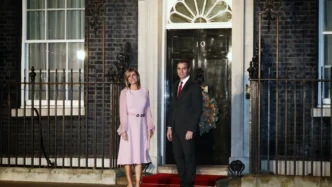
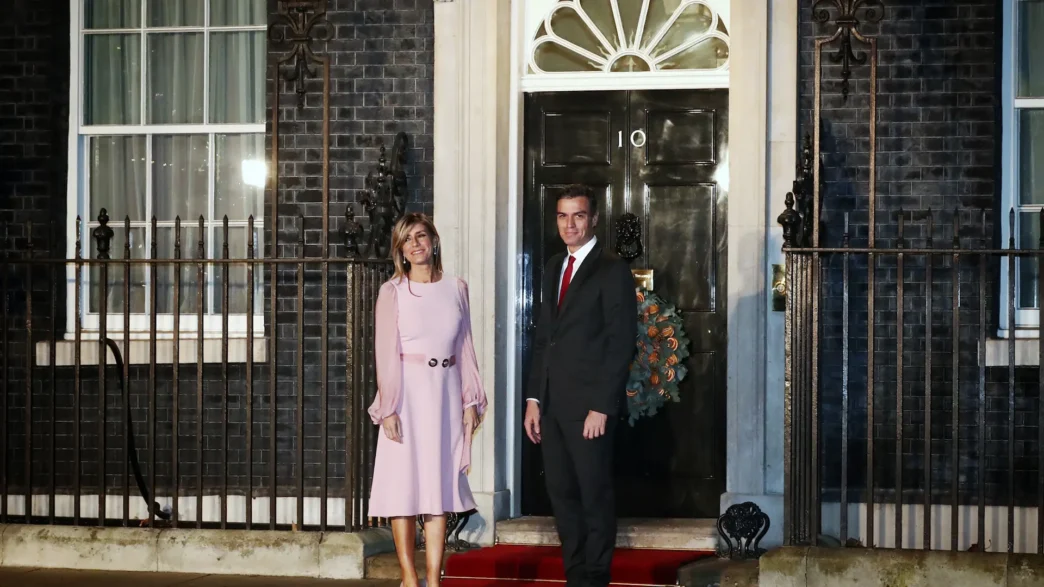
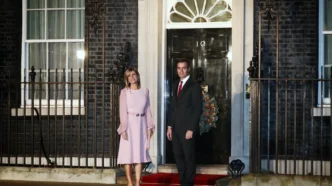
Photo: Pedro Sánchez and Begoña Gómez at Number 10 for NATO leaders meeting (3 Dec 2019) by Ministry of the Presidency, Government of Spain / La Moncloa. Licensed under the Government of Spain’s legal notice (free use with attribution and date, no distortion).
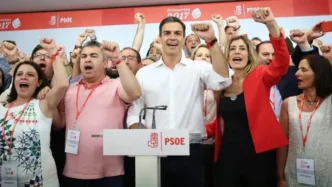
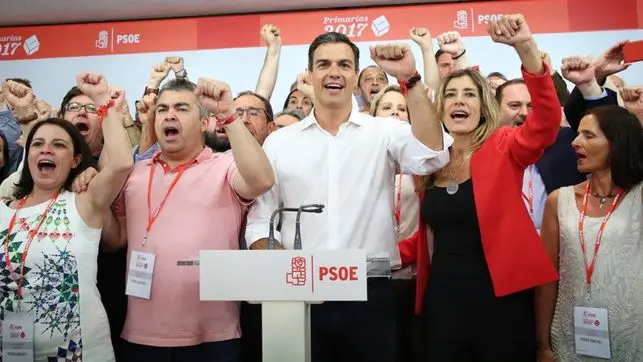
Photo: Pedro Sánchez after winning the PSOE primaries, singing “La Internacional” (21 May 2017). By Marta Jara / eldiario.es. Licensed under CC BY-SA 3.0 Spain.
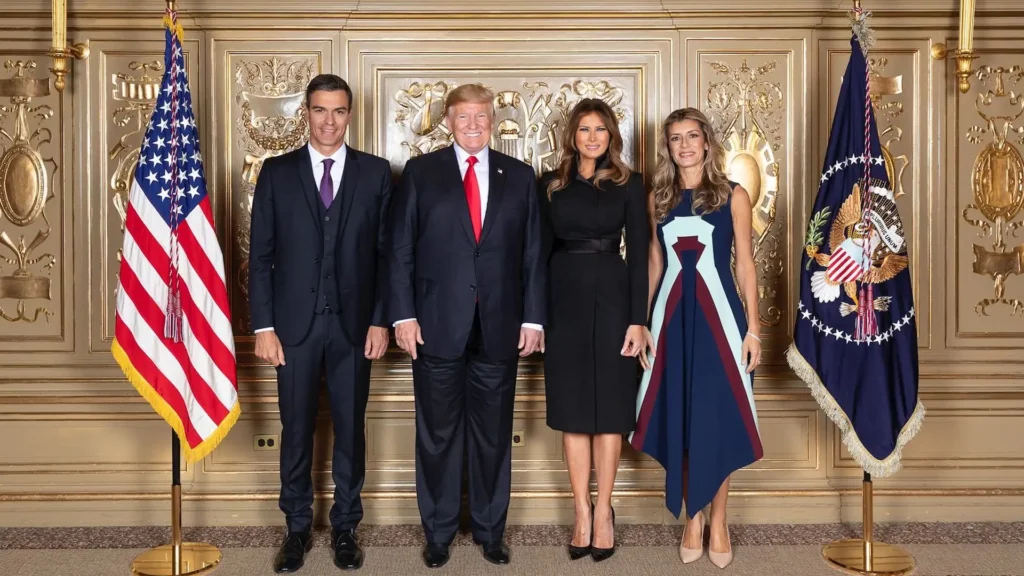
Photo credit: Official White House photo by Andrea Hanks, showing Presidents Donald J. Trump and Pedro Sánchez at the United Nations General Assembly, 25 September 2018. Public domain. Source: Wikimedia Commons (file President_Donald_Trump_and_Pedro_Sánchez.jpg). https://w.wiki/J9zG