📊 Socialist Party Spain hits lowest support in decades
The latest PSOE Andalusia polls 2026 point to a dramatic and potentially historic collapse for the Socialist Party Spain, marking one of the most significant political shifts in the region’s modern history.
According to a new pre-election survey conducted by the Centro de Estudios Andaluces, the PSOE is projected to secure just 20.1% of the vote, translating into 25 to 27 seats in the Andalusian parliament.
If confirmed, this would represent the worst electoral result for the PSOE in Andalusia, a region it governed for nearly four decades and once considered its strongest political stronghold.
📉 From dominance to decline: a historic collapse
For decades, the PSOE dominated Andalusian politics, shaping institutions, policies, and regional identity. That dominance now appears to be definitively over.
Key electoral trend:
- 2022 election: 30 seats (previous historic low)
- 2026 projection: 25–27 seats
- Vote share: 20.1%
This marks a continued downward trajectory, not a temporary fluctuation.
The party is not just losing elections—it is losing structural relevance in one of Spain’s most important regions.
📊 Latest Andalusia Poll (2026 Pre-Election Survey)
Party | Vote Share | Seats (Projection) |
PP | 42.4% | 53–56 |
PSOE | 20.1% | 25–27 |
Vox | 14.4% | 17–19 |
Por Andalucía | 7.9% | 4–7 |
Adelante Andalucía | 6.9% | ~5 |
👉 Key insight: The PSOE trails the PP by 22.3 percentage points, one of the largest gaps ever recorded in Andalusia.
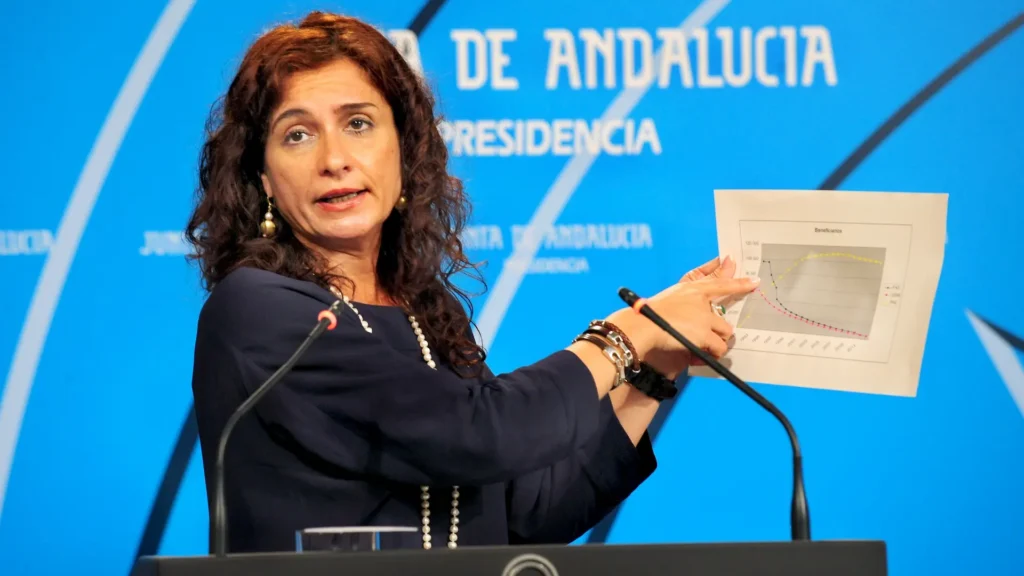
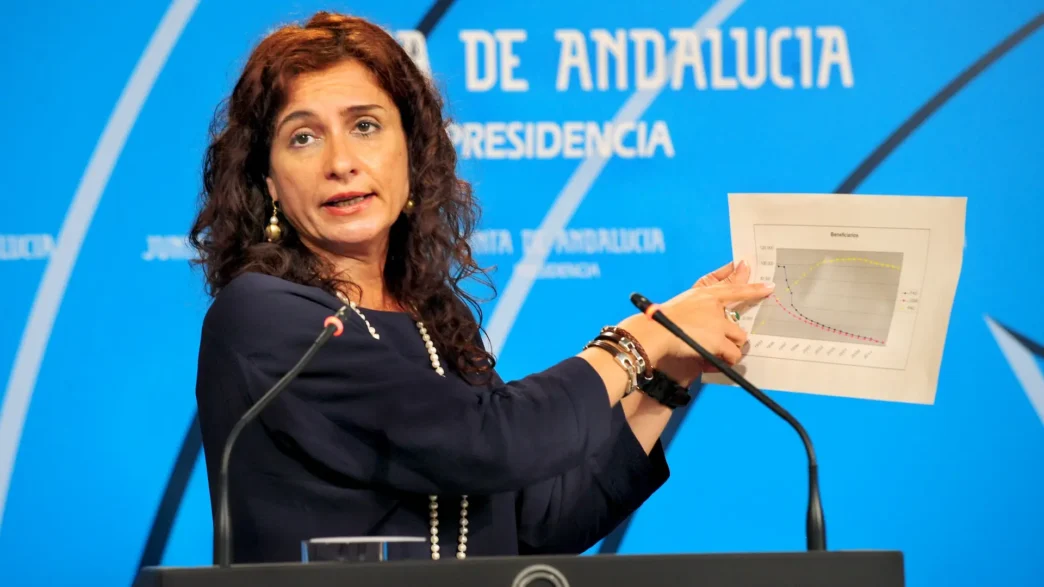
👤 María Jesús Montero: high visibility, low electoral impact
The PSOE entered the campaign with a high-profile candidate: María Jesús Montero, a senior national political figure.
However, polling data reveals a critical disconnect:
- Recognition: 93.1%
- Approval rating: 3.77 / 10
Despite near-universal recognition, Montero records the lowest rating among major candidates.
This highlights a fundamental issue:
👉 Visibility is not translating into voter trust or support.
⚠️ A structural crisis, not a campaign problem
The decline of the PSOE in Andalusia is not simply the result of a weak campaign—it reflects deep structural challenges.
Key factors behind the decline:
- Erosion of traditional voter base
- Fragmentation of the left-wing vote
- Weak regional leadership perception
- Shift of moderate voters toward the PP
Even with a prominent national figure leading the ticket, these trends remain unchanged.
📊 Leadership ratings expose deeper weakness
The survey also highlights how the PSOE is struggling in leadership perception:
Candidate | Recognition | Rating |
Juanma Moreno (PP) | 97.2% | 5.49 |
María Jesús Montero (PSOE) | 93.1% | 3.77 |
Antonio Maíllo | 59.6% | 4.97 |
Manuel Gavira (Vox) | 29.3% | 3.78 |
José Ignacio García | 18.2% | 6.07 |
👉 Montero ranks last among major candidates, despite being one of the most recognized figures.
🧩 Fragmented left limits PSOE recovery
Another major obstacle for the Socialist Party Spain is the fragmentation of the left.
Smaller parties continue to absorb key segments of the progressive vote:
- Por Andalucía
- Adelante Andalucía
Bloc comparison:
- Left bloc total: 34.9%
- Right bloc (PP + Vox): 56.8%
👉 Even combined, left-wing forces fall far short of a governing majority.
🚫 No realistic path to government
Current projections suggest the PSOE has no viable route to power in Andalusia.
Even under optimistic scenarios:
- PSOE and allies remain far below majority threshold
- The PP is positioned to govern alone or with external support
This shifts the election dynamic:
👉 The PSOE is no longer competing to govern—but to remain relevant.
🇪🇸 National implications for Socialist Party Spain
The implications go beyond Andalusia.
This region is:
- Spain’s most populous autonomous community
- A historical PSOE stronghold
- A key indicator of national political trends
A collapse here would signal:
- Weakening national influence
- Erosion in traditional voter bases
Growing dominance of the center-right bloc
📊 Voter behavior limits late recovery
The survey reveals another critical constraint for the PSOE:
- 59.4% of voters decide before the campaign begins
- Key decision factors:
- Electoral program: 22.7%
- Government performance: 20%
- Candidate: 17.4%
👉 This leaves little room for late momentum shifts, making recovery even more difficult.
⚖️ A widening political gap
The gap between the PSOE and the PP continues to expand:
- Direct vote gap: 16.4 points
- Adjusted estimate gap: over 22 points
This reflects more than electoral loss:
👉 It signals a structural realignment of voters.
🔍 A turning point for the Socialist Party in Spain
The Andalusia regional elections 2026 may mark a defining moment for the PSOE.
The party faces:
- Record low projected vote share
- Weak leadership perception
- Fragmented ideological base
- No clear governing path
What was once its strongest territory has become its clearest warning sign.
The key question is no longer whether the PSOE will lose ground—
👉 but how deep and lasting this decline will be.
Information Source:
https://www.centrodeestudiosandaluces.es
Photo Attribution:
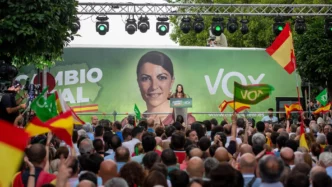
12.12.18-C. Salud, by Junta de Andalucía Creative Commons Attribution-Share Alike 2.0 Generic license. Wikimedia Commons: https://w.wiki/MhZK
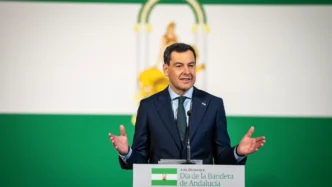
2025 12 04 4D Día de la Bandera de Andalucía, by Junta de Andalucía Creative Commons Attribution-Share Alike 4.0 International license. Wikimedia Commons https://w.wiki/MCFj
Photo: Pool Moncloa / Borja Puig de la Bellacasa (Ministry of the Presidency, Government of Spain), 22 July 2019. lamoncloa.gob.es Wikimedia Commons: https://w.wiki/KKmW
English
Español