

 English
 Español
A humanitarian mission that escalated into a global crisis
The detention of Saif Abukeshek, a Spanish activist of Palestinian origin, has ignited international outrage, diplomatic tension, and a growing legal debate after Israeli forces intercepted a humanitarian flotilla bound for Gaza.
Abukeshek was part of the Global Sumud Flotilla, a civilian-led initiative aimed at delivering aid to Gaza amid an escalating humanitarian crisis. What began as a peaceful mission quickly transformed into a geopolitical flashpoint when Israeli forces boarded and seized multiple vessels in international waters near Greece.
Two activists—Saif Abukeshek and Brazilian campaigner Thiago Avila—were taken into Israeli custody, while the rest of the participants were redirected to Greece. The operation has raised urgent questions about international law, maritime jurisdiction, and the treatment of humanitarian activists.
Who is Saif Abukeshek?
Saif Abukeshek is widely known as a human rights advocate, labor activist, and community organizer. Born in the Askar refugee camp in Nablus, in the occupied West Bank, he later moved to Spain, where he has lived for more than two decades.
Now based in Barcelona, he lives with his wife and three children and holds dual Spanish and Swedish citizenship.
His work has focused on:
- Human rights advocacy
- Labor and union movements
- International solidarity with Palestine
He is:
- A founder of the Global Movement to Gaza in Spain
- A member of the Palestinian community in Catalonia
- Head of international affairs at a major Catalan labor union
Colleagues describe him as a principled figure committed to justice.
“He stands out for his integrity and dedication,” said a longtime associate.


The flotilla mission and the unexpected interception
According to his wife, Salli Issa, Abukeshek was not attempting to reach Gaza directly. Instead, he was on an observer vessel, responsible for logistical coordination—similar to previous missions he had undertaken in Mediterranean ports such as Tunisia, Sicily, and Crete.
The flotilla, consisting of more than twenty vessels carrying humanitarian supplies, was intercepted on April 30.
Governments including Spain and Brazil have described the operation as illegal under international law, stressing that it took place in international waters.


Allegations of mistreatment raise serious concerns
Following their detention, Abukeshek and Avila were transferred to a facility in Ashkelon, where they remain in custody.
According to the legal rights organization Adalah, both activists have reported serious mistreatment, including:
- Physical abuse
- Prolonged blindfolding
- Solitary confinement
- Denial of legal rights
Adalah has warned that these actions may constitute serious violations of international law.
The detainees have reportedly launched a hunger strike in protest.
Eyewitnesses from the flotilla describe violent scenes during the boarding, with activists allegedly beaten, dragged, and injured. Several participants reportedly required medical treatment.
Israel’s accusations and the activists’ defense
Israeli authorities have accused the detainees of:
- Assisting an enemy during wartime
- Contact with foreign agents
- Membership in a terrorist organization
- Providing material support to such groups
Both activists have firmly denied all allegations.
In a recent statement prior to the mission, Abukeshek emphasized:
His legal team argues that the detention is unlawful, noting that the interception occurred outside Israeli jurisdiction.

International reaction and diplomatic pressure
The incident has triggered intense diplomatic efforts.
Spain’s Foreign Minister confirmed that authorities are in constant communication with Israel and Greece, demanding transparency and respect for Abukeshek’s rights.
The Spanish government has formally condemned the detention and called for his release.
Brazil has issued similar demands regarding Thiago Avila, and both countries have described the arrests as a violation of international law.
Other global reactions include:
- Italy and Germany, expressing concern
The United States, supporting Israel’s actions and warning against backing the flotilla
A family waiting and calling for urgent action
In Barcelona, Abukeshek’s family is facing uncertainty and growing distress.
His wife has urged both Spain and Sweden to act quickly, warning that once he is fully processed within Israel’s legal system, securing his release could become significantly more difficult.
“We need immediate action,” she said.
“Time is critical.”
She has also called for public demonstrations to increase pressure on European governments.
A history of activism and personal risk
This is not the first time Abukeshek has faced detention.
In 2025, he was held in Egypt during another humanitarian mission aimed at opening access to Rafah. He later alleged that he had been subjected to torture.
Despite these risks, those close to him say he remained committed to peaceful activism.
Why this case matters globally
The detention of Saif Abukeshek has broader implications that go far beyond one individual case.
It raises critical questions about:
- The legality of intercepting civilian vessels in international waters
- The protection of humanitarian missions
- The treatment of detainees under international law
- The criminalization of activism
Legal experts warn that this case could set a major precedent for future humanitarian operations at sea.
What happens next?
An Israeli court has extended the detention of both activists, although for a shorter period than initially requested.
Legal teams are actively working to challenge the charges, while diplomatic negotiations continue.
Meanwhile, the flotilla organizers have called for:
- Independent international investigations
- Sanctions
- Immediate release of the detainees
A case under global scrutiny
The detention of Saif Abukeshek has evolved into a high-profile international case that touches on humanitarian rights, international law, and geopolitical tensions.
As legal battles and diplomatic efforts unfold, the outcome could shape how similar missions are treated in the future.
For now, one reality remains clear: the world is watching closely.
Information Source:
https://www.ondacero.es/noticias/mundo/
https://www.france24.com/es/medio-oriente/
Photo Attribution:
Viaje del presidente del Gobierno a Israel (Noviembre 2023) / Gobierno de España / Wikimedia Commons (CC BY 4.0)
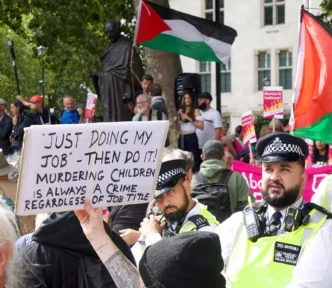
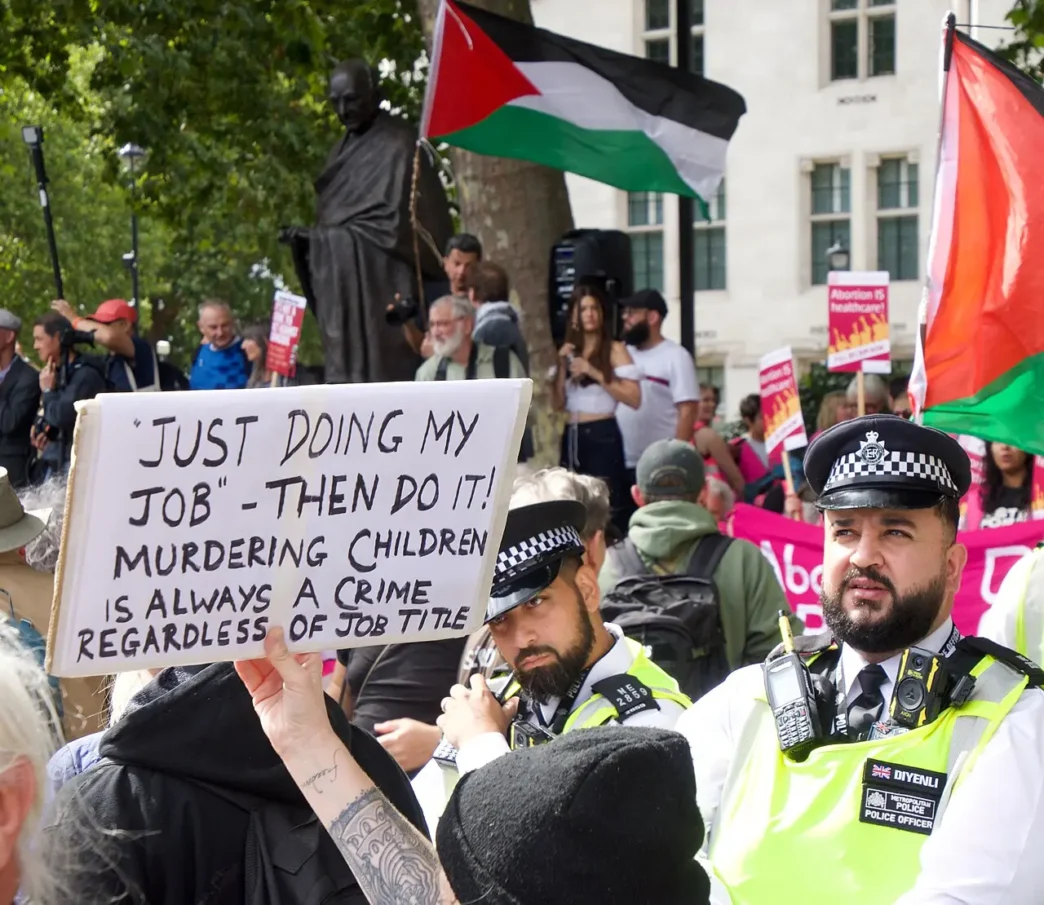
Protesta de Defend Our Juries / Palestine Action en Londres el sábado 6 de septiembre de 2025. La fotografía muestra a manifestantes y fuerzas policiales durante una concentración en apoyo al grupo activista Palestine Action, que ese año fue objeto de detenciones masivas tras ser proscrito por el Gobierno británico bajo leyes antiterroristas. Imagen tomada por Indigo Nolan el 6 de septiembre de 2025 y licenciada bajo Creative Commons Attribution 4.0 International. https://w.wiki/HqTJ