

 English
 Español
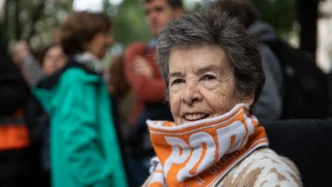
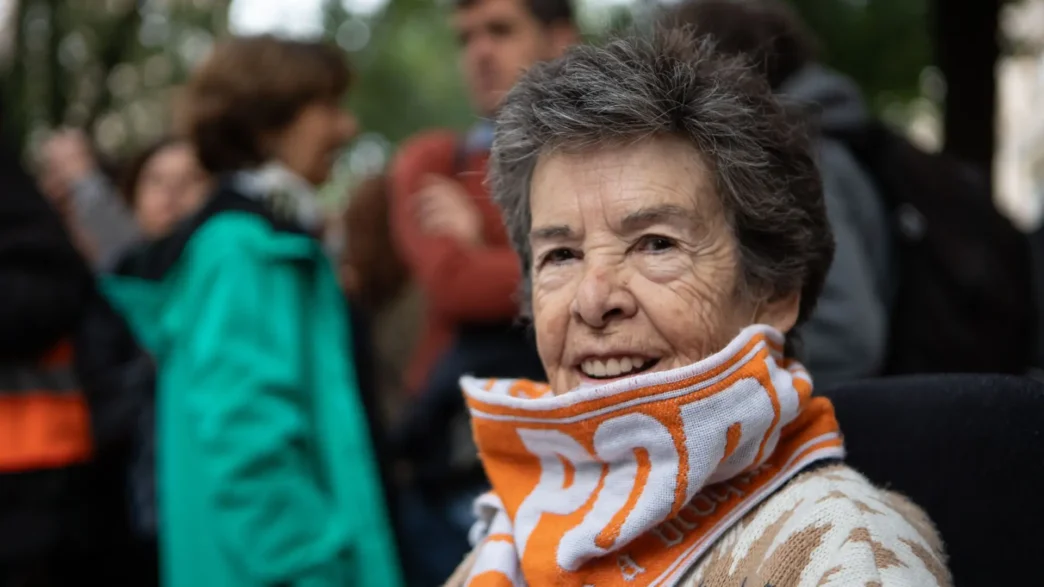
MADRID — Maricarmen Abascal, the 87-year-old woman whose eviction from her Madrid home became a symbol of Spain’s housing crisis, has died in hospital, just two weeks after she was removed from the apartment where she had lived for 71 years.
Abascal died on Wednesday, October 7, at Madrid’s Gregorio Marañón Hospital, according to the Madrid Tenants’ Union, her family and her lawyer.
Her September 23 eviction triggered a wave of protests across Spain, an encampment in Madrid’s Puerta del Sol and a political crisis that has pushed housing to the centre of the country’s debate ahead of a snap general election on November 29.
Her death has now brought renewed attention to the Spain housing crisis, including rising rents, a shortage of affordable homes and the growing conflict between tenants and property owners.
🚨Breaking News : Maricarmen (87) has passed away. Her eviction ignited an unprecedented housing revolution across Spain, culminating in a major political crisis that forced Pedro Sánchez to call snap elections. #MaricarmenAbascal #PedroSanchez https://t.co/qSgejbAy1z
— Global Portal News (@GPNenglish) October 7, 2026
Who was Maricarmen Abascal?
For most of her life, Maricarmen Abascal was not a political activist.
Her father rented the Madrid apartment in 1956, when she was 17. She lived there with her parents and brother and eventually spent almost her entire adult life in the property.
She trained in shorthand and secretarial work and worked for 34 years as a secretary to the board of a pharmaceutical company before retiring in 1998.
Her retirement was quiet. She enjoyed walking around the Retiro neighbourhood, shopping locally and caring for the paintings, porcelain and family possessions that filled her home.
She repeatedly stressed that she had worked all her life.
That ordinary life changed when the ownership of her apartment changed and a long-running legal dispute over her tenancy began.
@BBCNews This is how the police entered Maricarmen's home and removed her by force. This brutal eviction ignited a housing revolution in Spain that ultimately forced Pedro Sánchez to call snap elections. Everything started here. Everything started with her. https://t.co/3UC43FKppb
— Global Portal News (@GPNenglish) October 8, 2026
Why was Maricarmen Abascal evicted?
Abascal had continued paying her rent and household bills. Her pension was around €1,400 a month, while her total housing costs under the old rental arrangement were approximately €500.
The property was acquired by a company while she was still living there. The new owners sought to end the existing tenancy and proposed a substantially higher rent.
According to reporting on the case, the new rental terms were far beyond what Abascal could afford. Several attempts were made to find an alternative, including proposals involving a higher rent or the purchase of the property, but no agreement was reached.
The dispute continued for years.
There were four attempts to evict Abascal, with the first three postponed after legal challenges and pressure from neighbours and housing activists. The fourth attempt, on September 23, 2026, was successful.
By then, Abascal was in fragile health. She used a wheelchair and had lost considerable muscle mass.
Yet she remained determined.
“I will fight until the end,” she repeatedly told journalists.
🚨 BREAKING NEWS: Pedro Sánchez, 🇪🇸 Spanish Prime Minister has announced snap general elections on November 29 #PedroSanchez #EleccionesGenerales #Spain https://t.co/0E3w1UlT9x
— Global Portal News (@GPNenglish) October 5, 2026
The eviction that shocked Spain
On September 23, hundreds of people gathered outside Abascal’s apartment in Madrid’s Retiro district in an attempt to stop the eviction.
The images that emerged that morning travelled rapidly across Spain.
An 87-year-old woman in fragile health was carried from her lifelong home on a stretcher and taken to hospital.
The eviction transformed a long-running tenancy dispute into a national political story.
Protests spread across Madrid and other Spanish cities. In the centre of the capital, activists established a large encampment in Puerta del Sol, turning one of Madrid’s most famous public spaces into the focal point of Spain’s housing movement.
The slogan “We are all Maricarmen” appeared on signs, banners and clothing.
Her story resonated because it put a human face on a problem that had often been discussed through statistics.
Abascal had not simply become another tenant facing a housing dispute. She was an elderly pensioner who had lived in the same apartment for seven decades and had continued paying her rent.
Her eviction became a powerful illustration of the tension between long-term tenants, rising property values and Spain’s increasingly expensive rental market.
Spain's housing crisis becomes a political crisis
Spain’s housing problems did not begin with Maricarmen Abascal.
But her case became a catalyst for a movement that was already confronting rising rents, limited housing supply and increasing difficulty for young people trying to find affordable accommodation.
The Bank of Spain has warned of a significant housing shortage, with the deficit projected to reach around one million homes by 2028. At the same time, housing costs have risen sharply in major urban areas.
Madrid and Barcelona have been particularly affected by the combination of strong demand, limited supply, investment activity and the growth of short-term and tourist rentals.
Maricarmen’s eviction made that structural crisis personal.
After the eviction, the housing movement grew rapidly.
The government attempted to respond with emergency housing legislation, but two housing decrees were rejected by Congress. The defeat contributed to the political crisis that led Prime Minister Pedro Sánchez to call an early general election for November 29.
Housing is now one of the defining issues of the election campaign.
What happened after Maricarmen was evicted?
Even after she was taken to hospital, Abascal continued to communicate with protesters.
From her hospital bed, she encouraged activists to continue their campaign and defend their right to housing.
She referred to members of the Tenants’ Union as her “family” and affectionately called younger protesters her “children”.
Her messages became widely shared across social media.
By early October, the protest camp in Puerta del Sol had become one of the most visible symbols of the Spain housing protests, while demonstrations were taking place in cities across the country.
Then came an extraordinary development.
The company that owned Abascal’s apartment eventually agreed to a new rental arrangement that would have allowed her to return home.
Maricarmen won the right to return home — but too late
After negotiations involving her family, lawyer and other representatives, an agreement was reached that would have allowed Abascal to return to her apartment.
It was a remarkable reversal.
The woman who had been forcibly removed from her home was eventually offered a way back.
But Abascal never returned.
She remained in hospital after the eviction and died before she could complete the process that would have restored her tenancy.
The Tenants’ Union, her family and her lawyer said after her death that the agreement represented a historic breakthrough, but that the solution had arrived too late.
Her lawyer, Beatriz Duro, has argued that the eviction had a profound effect on Abascal’s physical condition and questioned whether the removal should have gone ahead given her health.
There is no established finding that the eviction caused her death, however, and the circumstances should not be presented as a proven direct cause.
What is clear is that she spent the final two weeks of her life in hospital after being removed from the home where she had lived for more than seven decades.
The housing crisis now reaches Spain's election
The political consequences of the Maricarmen case continue to grow.
On October 6, Sánchez’s government approved 21 new housing measures, covering affordable rents, home ownership, housing supply, tenant protections and restrictions on speculative investment. The package includes tax relief for some renters, incentives for affordable rental housing and a €10 billion interest-free loan scheme for first-time buyers.
The government has also proposed measures to extend some tenancy agreements and protect vulnerable people without alternative housing.
But the measures face political uncertainty because Parliament has already rejected the previous housing decrees.
Meanwhile, Spain’s two largest trade unions, CCOO and UGT, have called a nationwide general strike for November 11, with housing and wages at the centre of the action. It will take place just weeks before the November 29 general election.
The political argument is no longer simply about housing policy.
It is about what kind of housing market Spain wants, how much protection tenants should receive and whether governments have done enough to make housing affordable.
“I wanted to die in my home”
For Abascal, the dispute was ultimately about something more personal than property prices or political policy.
She wanted to die in the home where her parents had lived and died.
Before her eviction, surrounded by boxes, she recalled the memories attached to every room.
Her father died there in 1960. Her mother died there in 2005.
“I have lived here from 1956 until today,” she said shortly before leaving.
She also understood that her personal struggle had become something larger.
In one of her final interviews, Abascal said she hoped to be “the spark that lights the first candle”, but that others would have to keep the movement alive.
They did.
On Wednesday night, after news of her death, protesters gathered in Puerta del Sol with candles and photographs of Abascal. Others returned to the street where she had lived, leaving flowers and handwritten messages.
The Madrid Tenants’ Union described her case as “a turning point in the history of this country.”
What is Maricarmen Abascal's legacy?
Abascal began as an 87-year-old pensioner trying to remain in the only home she had known for most of her life.
She became the face of Spain’s housing crisis.
Her story has now helped transform housing from a long-running social problem into one of the central issues of Spain’s political debate.
The coming weeks will show whether the movement inspired by her can produce lasting changes to Spain’s housing system.
For those who knew her, however, the legacy is simpler.
She wanted people to keep fighting for a home they could afford and to stand up for others facing the same situation.
Her final message to those who supported her was clear:
Frequently Asked Questions
Who was Maricarmen Abascal?
Maricarmen Abascal was an 87-year-old Madrid pensioner who lived in the same apartment for 71 years. Her eviction in September 2026 turned her into a national symbol of Spain’s housing crisis and the campaign against evictions.
Why was Maricarmen Abascal evicted?
Abascal was involved in a long-running legal dispute over the tenancy of her Madrid apartment after the property changed ownership. The new owners sought to end the existing rental arrangement and offered terms she could not afford. She was eventually evicted on September 23, 2026.
What happened to Maricarmen Abascal after her eviction?
Abascal was taken to Gregorio Marañón Hospital after being removed from her home. She remained there until her death on October 7, 2026. Her representatives later reached an agreement that would have allowed her to return home, but she died before that could happen.
Why did Maricarmen Abascal become a symbol of Spain's housing crisis?
Her case combined several issues at the heart of Spain’s housing crisis: rising rents, limited affordable housing, tenant insecurity and the vulnerability of elderly people on fixed incomes. Images of her being carried from her lifelong home generated widespread public anger.
What is happening with Spain's housing protests?
Housing protests have spread across Spain following Abascal’s eviction, with activists establishing a major encampment in Madrid’s Puerta del Sol. The movement has demanded stronger tenant protections, more affordable housing and action to control rising rents.
Is Spain holding an early general election?
Yes. Spain will hold an early general election on November 29, 2026, after Prime Minister Pedro Sánchez called a snap election following political difficulties over his government’s housing measures.
When is the general strike over housing in Spain?
Spain’s major unions CCOO and UGT have called a general strike for November 11, 2026, with housing and wages among its central demands. The strike will take place shortly before the November 29 general election.
Information Source:
https://www.eldiario.es/madrid/
Photo Attribution:
Maricarmen Abascal Martín, by Sindicato de inquilinas e inquilinos de Madrid. This file is licensed under the Creative Commons Attribution 4.0 International license.Wikimedia Commons: https://w.wiki/XCai