

 English
 Español
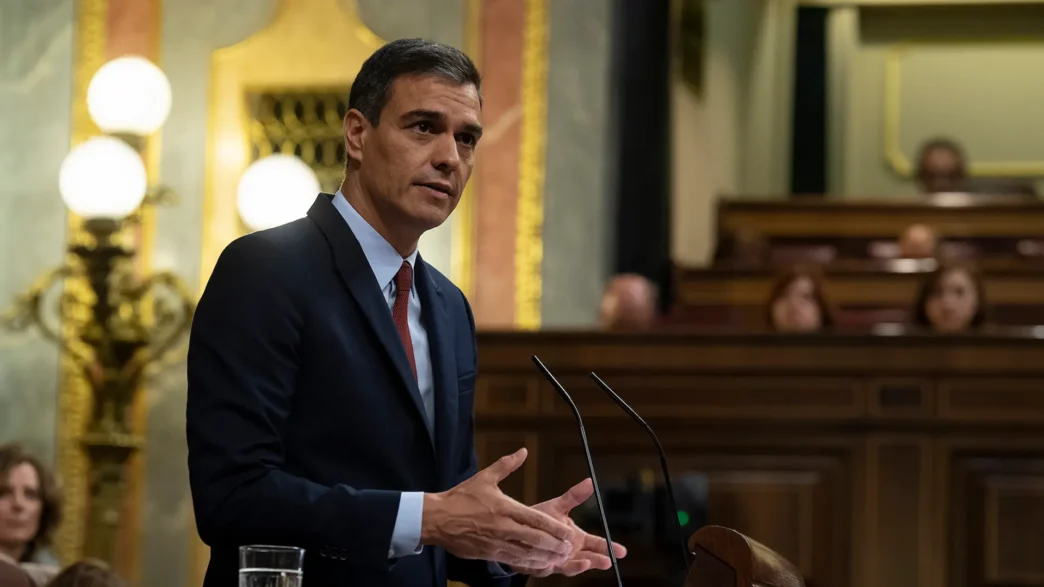
Prime Minister Pedro Sanchez has called a snap general election in Spain for 29 November 2026, bringing the current parliamentary term to an early end after his government suffered a major defeat over its housing measures.
The announcement came on Monday morning at the Moncloa Palace, where Sanchez acknowledged that his government had made mistakes but argued that a stronger mandate was now necessary to continue its programme.
“For too long, the interests of ordinary people have been pushed aside in Parliament,” Sanchez said. He argued that Spain still faced major challenges involving inequality, public services and access to housing, adding that “to do more, we need to renew and broaden the support of the people.”
The prime minister said Spanish voters would now have the opportunity to decide the country’s political direction and called for a broader progressive majority capable of advancing his government’s agenda.
The announcement comes just three days after Congress rejected two government housing decrees, creating the immediate political crisis that led Sanchez to bring forward the 2026 Spanish general election.
🚨 BREAKING NEWS: Pedro Sánchez, 🇪🇸 Spanish Prime Minister has announced snap general elections on November 29 #PedroSanchez #EleccionesGenerales #Spain https://t.co/0E3w1UlT9x
— Global Portal News (@GPNenglish) October 5, 2026
Housing crisis triggers Spain's snap election
The immediate political crisis followed the eviction in Madrid of 87-year-old Maricarmen Abascal, an episode that attracted widespread public attention and became a symbol of Spain’s growing housing difficulties.
The government had sought to strengthen protections for vulnerable tenants and introduce further measures addressing housing affordability and evictions. However, both decrees were defeated in Congress on Friday after Junts joined the People’s Party and Vox in voting against them.
The defeat was particularly damaging because the government had negotiated elements of the legislation with Junts, underlining the increasingly fragile parliamentary support on which Sanchez has relied.
The collapse of the measures was followed by demonstrations across Spain. Organisers said that more than 900,000 people took part in protests during the weekend, while a continuing protest camp in Madrid’s Puerta del Sol became a focal point for demands for stronger action on housing.
The demonstrations have also included calls for a general strike, increasing pressure on a government already struggling to maintain support in Congress.
Sanchez spent the weekend consulting ministers, senior figures within his Socialist Party and regional leaders before deciding to call the election.
The housing crisis and the scale of the public mobilisation ultimately provided the backdrop for a decision that had the potential to change the political balance in Spain.
Sanchez seeks a stronger parliamentary majority
The prime minister’s central argument is that the problem is no longer simply whether his government can survive individual parliamentary votes, but whether it has enough support to carry out its political programme.
“We need the Parliament to give us a much broader progressive majority,” Sanchez said, presenting the snap election as an opportunity to overcome the parliamentary obstacles that have repeatedly complicated his government’s legislative agenda.
The decision means Sanchez will seek a new mandate roughly nine months before the scheduled end of the current parliamentary term.
His government has faced difficult parliamentary arithmetic since taking office, requiring agreements with several smaller parties to pass legislation. The defeat of the housing decrees demonstrated how quickly those alliances can break down when major measures come before Congress.
The election will therefore be both a judgement on Sanchez’s record and a test of Spain’s fragmented political landscape.
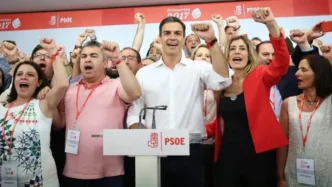
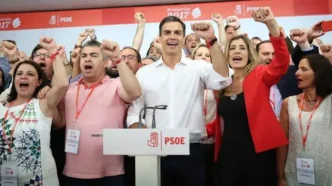
Opposition parties had already been calling for an election. People’s Party leader Alberto Nunez Feijoo is due to make an institutional statement at the party’s headquarters in Madrid following Sanchez’s announcement.
For the People’s Party, the election offers an opportunity to turn parliamentary opposition into a governing mandate. Vox will seek to strengthen its position on the right, while the political forces to the left of the Socialist Party face a more complicated electoral challenge.
A new contest on the Spanish left
The Spain general election in 2026 will also accelerate the reorganisation of the political left beyond the Socialist Party.
The parties that make up the wider left-wing coalition around Sumar have been working on a new electoral project and are expected to launch Frente Amplio later this month.
The group has scheduled an event for 17 October, when it is expected to present its political roadmap and reveal who will lead the new project.
The shortened electoral timetable gives the emerging alliance little time to settle its internal arrangements.
That could become one of the most important developments of the election campaign. While Sanchez is seeking a larger progressive majority, the election could also expose divisions between the Socialist Party and its potential allies if different parties compete for the same voters.
The distribution of the progressive vote could prove as important as the relative strength of the individual parties.
Spain election timetable: key dates for 29 November
Sanchez’s announcement is the political starting point, but the Spanish election timetable becomes legally effective through the publication of the formal dissolution decree.
The government is expected to approve the necessary decree on Monday, with publication in the Official State Gazette on Tuesday, 6 October. The electoral timetable will then begin formally.
Spanish electoral law requires an early general election to take place 54 days after the relevant decree is published.
The main dates in the 2026 Spanish general election timetable are expected to be:
Date | Election milestone |
6 October | Congress and the Senate are formally dissolved |
21 to 26 October | Political parties submit their electoral candidates |
2 November | Candidates are formally proclaimed |
13 November | Official election campaign begins |
27 November | Election campaign ends |
28 November | Election silence, or reflection day |
29 November | Spain holds its general election |
24 December | Latest deadline for the new Congress and Senate to be constituted |
The dissolution of Parliament does not leave Spain without institutional oversight.
The Permanent Deputations of Congress and the Senate remain active between the dissolution of Parliament and the formation of the new chambers. Their powers are limited, but they provide continuity during the electoral period.
The government itself also remains in office during the election campaign. Sanchez and his ministers do not automatically become a caretaker government when Parliament is dissolved. The government continues exercising its functions until the election takes place and a new government is eventually formed.
What is at stake in the 2026 Spanish general election?
The 29 November Spanish general election will put housing at the centre of a much wider political contest.
For Sanchez, the calculation is straightforward: winning a stronger mandate could give his government the parliamentary numbers needed to pass measures that have repeatedly been blocked or diluted.
However, calling an early election also carries significant risks, particularly after months of political instability and growing public frustration.
For Feijoo and the People’s Party, the Spain snap election offers the opportunity to turn parliamentary opposition into government.
Vox will seek to consolidate its influence on the right, while the emerging alliance on the left will attempt to prevent the progressive vote from fragmenting further.
The campaign will therefore be fought not only over housing in Spain, but also over the broader political direction of the country.
Sanchez has framed the choice in terms of whether Spain should continue along its current political path or move in a different direction. The opposition will seek to make the election instead a judgement on the government’s record and its ability to govern without a stable parliamentary majority.
After months of parliamentary uncertainty, Spanish voters will now have the final word.
The decisive vote will come on 29 November 2026, when Spain goes to the polls.
Frequently asked questions about Spain's 2026 snap election
When is the next general election in Spain?
Spain’s next general election will take place on 29 November 2026, following Prime Minister Pedro Sanchez’s decision to dissolve Parliament and call an early election.
Why has Pedro Sanchez called an early election?
Sanchez called the snap election after his government suffered a major parliamentary defeat over two housing decrees. The measures were rejected in Congress after Junts joined the People’s Party and Vox in voting against them.
When does the Spanish election campaign start?
The official Spanish election campaign is scheduled to begin on 13 November 2026 and will run until 27 November, two days before the vote.
When will Spain vote in the 2026 general election?
Spanish voters will go to the polls on Sunday, 29 November 2026.
Which parties are expected to compete in the Spanish election?
The main political forces include the Socialist Party, the People’s Party and Vox. The wider left is also undergoing a reorganisation around the emerging Frente Amplio project.
What is the main issue in Spain's snap election?
Housing is expected to be one of the central issues of the election campaign, following the government’s defeat over its housing measures and the large demonstrations that took place across Spain.
However, the campaign is also likely to focus on the economy, public services, political stability, immigration and the country’s wider political direction.
When will Spain's new Parliament be formed?
The new Congress and Senate must be constituted within the constitutional deadline following the election. The latest expected date is 24 December 2026.
Information Source:
https://www.eldiario.es/politica/
Photo Attribution:
Photo: Pool Moncloa / Borja Puig de la Bellacasa (Ministry of the Presidency, Government of Spain), 22 July 2019. lamoncloa.gob.es Wikimedia Commons: https://w.wiki/KKmW