

 English
 Español
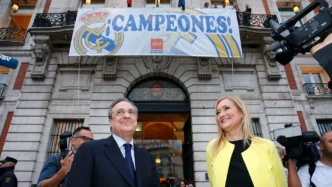
Florentino Perez has been re-elected as president of Real Madrid after securing 65% of the vote against challenger Enrique Riquelme in the club’s first contested presidential election in two decades.
The result gives Perez a new mandate that will keep him in charge until 2030, extending one of the most influential presidencies in football history.
For Real Madrid supporters, the election was about far more than choosing a president. It was a vote on the club’s future direction, including transfer policy, leadership stability and even the long-term ownership structure of the club.
Key Takeaways
✔️ Florentino Perez won 65% of the vote
✔️ Enrique Riquelme secured 35%
✔️ Perez will remain president until 2030
✔️ The election was Real Madrid’s first contested vote since 2006
✔️ Major transfer plans and institutional reforms could now move forward
Real Madrid Election Results
According to the Electoral Board, the final results were:
Candidate | Votes | Percentage |
Florentino Perez | 21,741 | 65% |
Enrique Riquelme | 11,814 | 35% |
Despite a comfortable margin of victory, the official announcement was delayed for several hours due to disputes involving postal ballots.
Around 400 postal votes cast for Perez were initially invalidated because of a double-postmark issue. However, the controversy ultimately had no effect on the final outcome.
Perez won every voting table across all age groups of Real Madrid members.
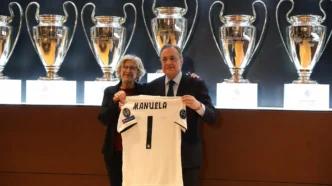
Why This Real Madrid Election Was Historic
This election marked a rare moment in modern Real Madrid history.
The club had not held a genuine presidential contest since 2006, with Perez running unopposed in:
- 2013
- 2017
- 2021
- 2025
For many younger members, this was the first time they had the opportunity to choose between competing visions for the future of the club.
The strong turnout highlighted the significance of the vote and demonstrated renewed engagement among Real Madrid’s membership.
Who Is Enrique Riquelme?
Although defeated, Enrique Riquelme emerged as one of the biggest stories of the election.
The businessman campaigned as the candidate of change and attracted support from several high-profile figures associated with Real Madrid.
Among those who publicly backed his project were:
- Vicente del Bosque
- Raul Gonzalez
- Fernando Hierro
- Iker Casillas
His campaign also generated headlines with several ambitious proposals, including:
- Signing Erling Haaland
- Bringing Rodri to Madrid
- Naming Raul as sporting director
- Appointing Hierro to oversee youth development
- Exploring the possibility of hiring Jurgen Klopp
While many of those ideas faced skepticism, they helped Riquelme become Perez’s strongest challenger in years.
His 35% vote share suggests he could remain an influential figure in future Real Madrid politics.
What Happens Next Under Florentino Perez?
With the election secured, attention now turns to Perez’s plans for the next five years.
Sporting Changes
Reports throughout the campaign linked Perez’s new mandate to several major football decisions.
Among the names reportedly under consideration are:
- Jose Mourinho
- Ibrahima Konate
- Denzel Dumfries
There has also been speculation about a potential transfer package worth approximately €150 million.
If completed, these moves could represent one of the club’s most significant rebuilding projects since Perez returned to power in 2009.
The Ownership Referendum That Could Shape Real Madrid's Future
Perhaps the most important issue facing Perez’s new administration is not on the pitch.
The president has repeatedly discussed the possibility of a referendum on the club’s future ownership model.
The proposal could include:
- Allowing members to vote on structural reforms
- Selling a minority stake to investors
- Distributing part of the club’s economic value among members
Supporters argue the changes could strengthen Real Madrid’s financial position and competitiveness.
Critics warn that such reforms could weaken the member-owned model that has defined the club for more than a century.
The debate is likely to become one of the defining issues of Perez’s new term.
How This Victory Compares With Previous Elections
Perez’s record in presidential elections now stands at:
Year | Opponent | Result |
1995 | Ramon Mendoza | Lost |
2000 | Lorenzo Sanz | Won |
2004 | Lorenzo Sanz | Won (91%) |
2026 | Enrique Riquelme | Won (65%) |
Although his percentage was lower than the overwhelming 91% victory achieved in 2004, a 65% result still represents a strong endorsement from the membership.
What Florentino Perez's Victory Means for Real Madrid
The election ultimately came down to a choice between continuity and change.
Real Madrid members chose continuity.
That decision means:
✅ Leadership stability until 2030
✅ Continuation of the current sporting project
✅ Potential blockbuster transfer activity
✅ A likely ownership referendum
✅ Five more years under one of football’s most successful club presidents
At the same time, Riquelme’s performance suggests future elections may become increasingly competitive, ending the era of uncontested presidential races at the club.
FAQ Real Madrid Election Results
Who won the Real Madrid presidential election?
Florentino Perez won the election with 65% of the vote, defeating Enrique Riquelme.
How many votes did Florentino Perez receive?
Perez received 21,741 votes, representing 65% of all valid ballots cast.
How many votes did Enrique Riquelme receive?
Riquelme received 11,814 votes, equivalent to 35% of the vote.
How long will Florentino Perez remain president?
His new mandate will keep him in office until 2030.
Why was the vote count delayed?
The official count was delayed because of disputes involving postal ballots, including the invalidation of approximately 400 votes due to a double-postmark issue.
What are the biggest changes expected after the election?
The key issues expected to shape Perez’s new term include major transfer activity, possible coaching changes and a referendum on Real Madrid’s future ownership structure.
People Also Ask
Why was the Real Madrid election considered historic?
It was the club’s first contested presidential election since 2006, ending nearly two decades of uncontested campaigns for Florentino Perez.
What percentage of the vote did Florentino Perez win?
Perez secured 65% of the vote, defeating Enrique Riquelme’s 35%.
Will Florentino Perez remain Real Madrid president until 2030?
Yes. His election victory gives him a new five-year mandate that runs until 2030.
What changes could Florentino Perez make after winning?
Potential changes include major transfer moves, structural reforms and a referendum on Real Madrid’s ownership model.
Information Source:
https://www.marca.com/futbol/real-madrid/
Photo Attribution:
Real Madrid, campeón de la Champions (27309388441), by Cristina Cifuentes Creative Commons Attribution 2.0 Generic license. Wikimedia Commons: https://w.wiki/Qj4p