

 English
 Español


The 2026 Andalusia regional election has reshaped Spain’s political landscape and triggered a new period of uncertainty in the country’s most populous autonomous community.
Although the conservative Popular Party (PP) emerged as the largest force in the Andalusian parliament, it failed to secure an absolute majority, leaving the region facing complex coalition negotiations and growing political tension. At the same time, the far-right Vox party significantly increased its leverage, the Spanish Socialist Workers’ Party (PSOE) suffered its worst result in Andalusia’s modern democratic history, and Adelante Andalucía emerged as one of the surprise winners of the election.
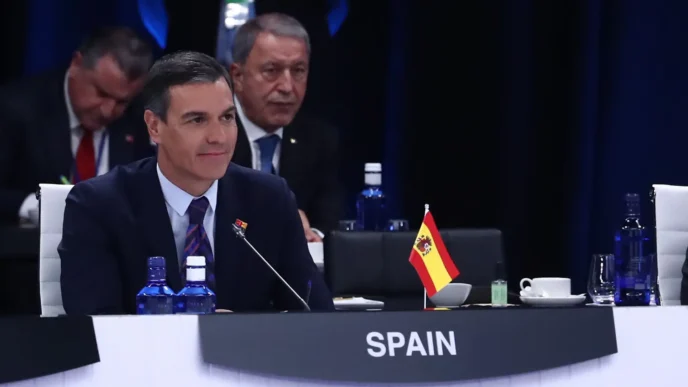
The outcome has transformed Andalusia into the center of Spanish politics, with national implications for Prime Minister Pedro Sánchez, opposition leader Alberto Núñez Feijóo, and the future balance between Spain’s left and right blocs.
Here is a complete guide to the Andalusia election 2026, the coalition talks, Vox’s demands, the collapse of PSOE, and what happens next.
Who Won the Andalusia Election 2026?
The election delivered a fragmented parliament and no clear governing majority.
The PP won the largest number of seats but fell short of the threshold needed to govern alone. Vox strengthened its position, while PSOE suffered a dramatic electoral collapse across much of the region.
🧾 Andalusia Election Results Summary
Key Result | Details |
Winning Party | PP (Partido Popular) |
Regional President Likely | Juanma Moreno |
Total Seats Won | PP: 53 |
Majority Needed | 55 |
Turnout | 64.83 % |
Biggest Gain | Adelante Andalucía |
Biggest Loss | PSOE |
📊 Andalusia Election Ful Results
Party | Vote Share | Seats | Change |
Partido Popular (PP) | 41,59% | 53 | −5 |
PSOE | 22,72% | 28 | −2 |
Vox | 13,82% | 15 | +1 |
Adelante Andalucía | 9,62% | 8 | +6 |
Por Andalucía | 6,32% | 5 | = |
Others | — | — | — |
The main results included:
- PP remaining the largest party
- Vox making significant gains
- PSOE recording historic losses
- Adelante Andalucía achieving one of its best regional performances
- Smaller left-wing parties losing further ground
The election highlighted the growing fragmentation of Spain’s political system and the erosion of the traditional two-party dominance that defined Andalusian politics for decades.
Historically, Andalusia had been considered one of PSOE’s strongest electoral territories. For many years, the Socialist Party governed the region almost uninterruptedly and maintained deep institutional and electoral roots throughout southern Spain.
That political dominance now appears seriously weakened.


Why PSOE Suffered Its Worst Result in Andalusia
One of the defining stories of the election was the collapse of PSOE support across large parts of Andalusia.
The Socialist Party lost support in both urban and working-class areas that had traditionally formed the backbone of the Andalusian left. Analysts point to several overlapping reasons behind the historic decline.
National political fatigue
The election became partly a referendum on the national government led by Prime Minister Pedro Sánchez.
Although regional elections often focus on local issues, the political atmosphere surrounding Sánchez’s administration heavily influenced the campaign. Growing political polarization, economic concerns, and multiple national controversies and corruption cases surrounding figures linked to PSOE weakened the party’s image among moderate and undecided voters.
Competition on the left
PSOE also faced growing pressure from smaller left-wing and regionalist movements.
The rise of Adelante Andalucía fragmented the progressive vote and attracted younger voters, disillusioned left-wing supporters, and sectors critical of the national leadership of PSOE.
Loss of traditional working-class support
The election also reflected broader political trends visible across Europe, where traditional center-left parties are increasingly losing support among working-class voters.
In several industrial and economically vulnerable areas, parts of the electorate shifted toward either Vox or regional protest movements.
The scale of PSOE’s losses immediately triggered debate about the future of the party and the long-term political consequences for Pedro Sánchez ahead of Spain’s next general election cycle.


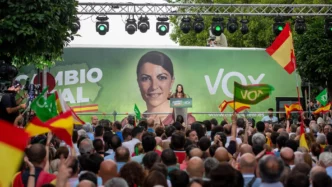
Why Vox Is Now Key to Forming a Government
Despite not winning the election, Vox emerged as one of its biggest political winners.
Because the PP failed to secure an outright majority, Vox now holds significant influence over whether a conservative government can be formed in Andalusia.
The party has used that leverage to push a series of political demands during coalition negotiations, particularly on immigration, public spending, and regional governance.
Vox leaders have argued that their electoral gains give them a democratic mandate to demand stronger influence over government policy rather than merely offering external parliamentary support.
The negotiations have intensified pressure on PP leadership both regionally and nationally.
For Alberto Núñez Feijóo, the situation creates a difficult balancing act:
- cooperating too closely with Vox could alienate moderate voters
- rejecting Vox’s conditions could risk political deadlock or even another election
What Is “National Priority” and Why Is It Controversial?
The proposal includes measures aimed at prioritizing Spanish citizens in access to certain public services, housing assistance, and social support programs.
Critics argue the policy could conflict with constitutional protections and European Union legal principles regarding equal treatment and non-discrimination.
Supporters of Vox, however, argue the measures are designed to prioritize national citizens during periods of economic pressure, housing shortages, and rising migration concerns.
The controversy has rapidly become one of the central issues in coalition negotiations.
Political analysts believe the PP faces growing pressure to define how far it is willing to move toward Vox’s agenda in exchange for parliamentary support.
The debate has also increased international attention on Andalusia because it reflects broader political trends visible across Europe, including the rise of nationalist and anti-immigration parties.


The Rise of Adelante Andalucía
While PSOE struggled, Adelante Andalucía became one of the election’s biggest surprises.
The left-wing Andalusian party significantly improved its parliamentary representation and strengthened its position as an alternative voice within the regional left.
Its campaign focused heavily on:
- social inequality
- housing affordability
- public services
- Andalusian identity
- criticism of both PSOE and mainstream national politics
The party benefited from growing frustration among younger progressive voters who increasingly view PSOE as disconnected from regional concerns.
Adelante Andalucía also capitalized on dissatisfaction with traditional party structures and presented itself as a more grassroots and regionally focused alternative.
Its electoral growth reflects a broader transformation taking place within Spain’s left-wing political landscape, where fragmentation and regional identity politics continue to reshape voter behavior.
Can the PP Govern Andalusia Without Vox?
The central question now dominating Spanish politics is whether the PP can govern Andalusia without formally depending on Vox.
Several scenarios remain possible.
Minority government
The PP could attempt to govern alone while negotiating issue-by-issue parliamentary support from Vox or smaller parties.
However, such arrangements are often politically unstable and vulnerable to legislative paralysis.
Formal coalition
Another possibility is a direct coalition agreement between PP and Vox.
This would likely involve policy concessions and potentially cabinet positions for Vox representatives, something that could create political controversy both inside Spain and internationally.
Repeat election
If coalition talks collapse, Andalusia could eventually face another regional election.
Although no party publicly favors that scenario, political deadlock could make it unavoidable if negotiations fail.
At the moment, negotiations remain ongoing and no final agreement has been reached.
Why the Andalusia Election Matters Nationally
The Andalusia election is not only a regional political story.
It has rapidly become a major national test for Spain’s political parties ahead of future national elections.
For Pedro Sánchez, the PSOE collapse raises serious questions about:
- voter fatigue
- the future of the Spanish left
- growing political fragmentation
- the government’s ability to retain support outside major urban centers
For the PP, the election highlights both opportunity and risk.
Although conservatives remain electorally strong, their growing dependence on Vox complicates efforts to maintain support among moderate and centrist voters.
Meanwhile, Vox views the election as evidence that its political influence continues to grow despite years of controversy and polarization.
The Andalusian results are also being closely watched internationally because they reflect wider European political trends:
- decline of traditional center-left parties
- rise of populist right-wing movements
- fragmentation of political systems
- increasing polarization
What Happens Next?
The coming weeks are expected to be dominated by coalition negotiations and political maneuvering.
Key developments to watch include:
- possible agreements between PP and Vox
- parliamentary leadership votes
- policy concessions
- reactions from national party leadership
- the possibility of repeat elections
Political tensions are likely to remain high as parties attempt to secure enough support to form a stable regional government.
At the same time, the election has already reshaped Spain’s broader political conversation and may influence national strategy ahead of future general elections.
Whatever coalition eventually emerges, the Andalusia election 2026 has already become one of the most important political turning points in recent Spanish politics.
FAQ – Andalusia Election 2026
Who won the Andalusia election 2026?
The Popular Party (PP) won the most seats but failed to secure an absolute majority in the Andalusian parliament.
Why did PSOE perform so badly in Andalusia?
PSOE suffered from national political fatigue, fragmentation on the left, and the loss of traditional working-class support.
What does Vox want in coalition talks?
Vox is pushing policies linked to immigration, national identity, and its controversial “National Priority” proposal.
What is “National Priority” in Spain?
It is a Vox-backed proposal aimed at prioritizing Spanish citizens in access to some public services and social benefits.
Can the PP govern without Vox?
The PP may attempt a minority government, but Vox’s parliamentary support could still be necessary for stability.
What is Adelante Andalucía?
Adelante Andalucía is a left-wing Andalusian political movement focused on regional identity and progressive social policies.
Could Andalusia hold another election?
Yes. If coalition talks fail and no government can secure parliamentary support, another election could eventually be called.
Why is the Andalusia election important for Pedro Sánchez?
The result increases political pressure on the Spanish prime minister after PSOE’s historic losses in one of its former strongholds.
Information Source:
Photo Attribution:
2025 12 10 Jornada de trabajo en Bruselas, by Junta de Andalucía Creative Commons Attribution-Share Alike 4.0 International license. Wikimedia Commons: https://w.wiki/NUKp