

 English
 Español

The war involving Iran in the Middle East is already sending shockwaves through global markets — and the economic consequences could soon reach households across Spain.
Following joint strikes by Israel and the United States on Iranian targets, oil and gas prices surged worldwide, triggering volatility in financial markets.
Within days of the escalation:
- Brent crude oil climbed above $90 per barrel
- Natural gas prices in Europe jumped past €52 per megawatt hour
- Spain’s stock market benchmark, the IBEX 35, recorded its worst weekly drop since the start of the Ukraine war, falling about 7% in five trading sessions
While these figures may seem distant from everyday life, economists warn that the economic impact of the Iran conflict could gradually affect household finances in Spain.
From fuel prices and electricity bills to food costs, mortgages and airline tickets, the consequences may appear in many parts of daily spending.

Higher Fuel Prices in Spain
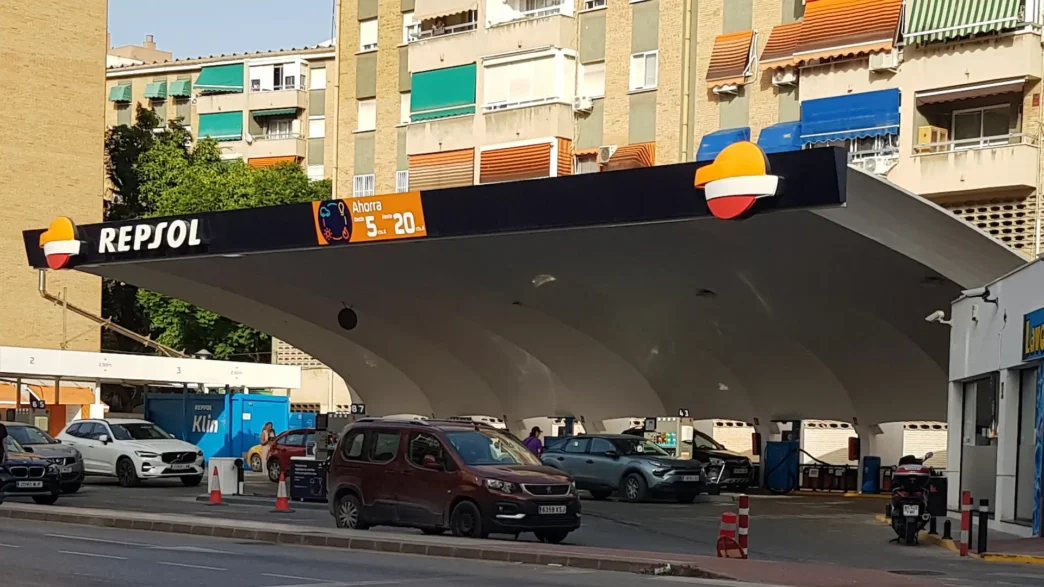
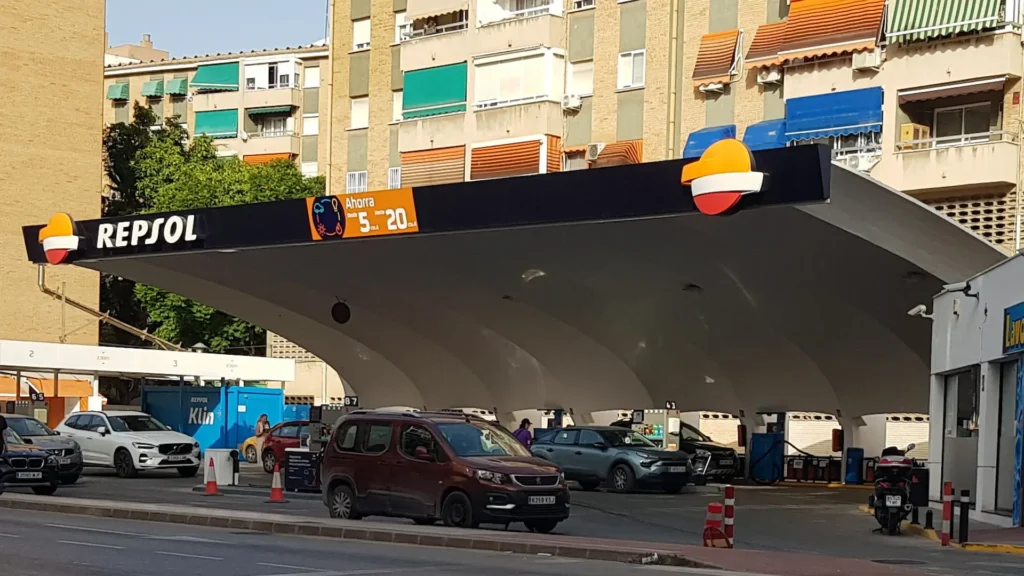
The most immediate effect is already visible at gas stations across Spain.
Data from more than 12,000 service stations reported to Spain’s Ministry for the Ecological Transition shows that the average gasoline price rose from:
- €1.44 per liter last week
- to about €1.62 per liter
That represents an increase of more than 10%.
For drivers, that means roughly €9 more to fill a 50-liter fuel tank.
Economists say the future of fuel prices in Spain will largely depend on how the conflict evolves — particularly around the Strait of Hormuz.
This narrow maritime passage between Iran and Gulf states handles about a quarter of the world’s oil shipments.
If tensions escalate or shipping routes are disrupted, oil prices could rise further, pushing fuel costs higher in Spain and across Europe.
Economist Manuel Hidalgo, professor of applied economics at Pablo de Olavide University, warned:
Analysts also point to the “rocket and feather effect” — when fuel prices rise quickly after a shock but fall slowly once markets stabilize.
Spain’s government has indicated it may consider consumer protection measures, similar to those introduced after Russia’s invasion of Ukraine, if energy prices continue to climb.
Electricity and Gas Bills Could Increase
Another concern for households is the sharp rise in natural gas prices.
In just one week, European gas prices jumped nearly 50%.
Although Spain imports only a small share of gas directly from the Persian Gulf, energy markets are highly interconnected.
When global gas prices increase, the effects quickly spread across Europe.
Higher gas prices affect households in two major ways:
- Heating costs for homes
• Electricity generation, since gas-fired plants produce a significant share of Spain’s power
As a result, electricity bills in Spain could rise.
Spain’s regulated electricity tariff, known as PVPC, is already about 13% higher than the February average, according to the economic think tank Funcas.
However, analysts say it is too early to determine how much of the increase is directly linked to the Iran conflict.
Some factors may help limit the short-term impact, including:
- Full hydroelectric reservoirs after recent rains
- Longer daylight hours in spring
- Record renewable energy production in Spain
Food Prices in Spain Could Rise
If energy prices remain high, consumers may soon feel the impact in supermarkets across Spain.
Energy costs influence the entire food supply chain, including:
- Transport and logistics
- Agricultural production
- International shipping
Farmers’ organizations such as COAG and UPA have already reported higher agricultural diesel costs, although some industry representatives believe part of the increase may be speculation rather than actual supply shortages.
Over time, higher transport and production costs could push up prices for imported foods, especially products coming from Asia.
Items potentially affected include:
- Rice, including basmati varieties from India and Pakistan
• Coffee, with Vietnam the world’s second-largest producer
• Saffron, although Spanish spice company Carmencita says it has reserves for the next six months
Food prices were already rising before the conflict.
According to the Food and Agriculture Organization (FAO), its global Food Price Index increased 1% in February, driven by cereals, vegetable oils and meat.
Mortgage Rates in Spain Could Face Pressure
Another potential consequence involves mortgages and interest rates.
When inflation rises, central banks often increase interest rates to slow price growth.
Europe experienced this after the energy shock caused by Russia’s invasion of Ukraine, which pushed mortgage costs sharply higher.
If energy prices surge again, inflation could rise — potentially affecting mortgage rates in Spain.
This would especially impact homeowners with variable-rate mortgages linked to the Euribor, the benchmark used for most Spanish home loans.
For now, policymakers appear cautious.
José Luis Escrivá, governor of the Bank of Spain, recently said it was “very unlikely” that the European Central Bank (ECB) would change interest rates at its next meeting.
However, economists warn that persistent energy inflation could eventually force the ECB to tighten monetary policy.
Flights From Spain Could Become More Expensive
The Iran conflict is also disrupting global air travel.
Major aviation hubs in the Gulf — including Dubai, one of the world’s busiest airports — have experienced disruptions as airlines cancel or reroute flights.
Airspace restrictions across parts of the Middle East are forcing airlines to:
- Fly longer routes
- Burn more fuel
- Increase operational costs
According to the Spanish Confederation of Travel Agencies (CEAV), these disruptions affect not only Gulf destinations but also long-haul routes between Europe and Asia.
If the situation continues, airlines may pass these costs to travelers through higher ticket prices.
This could affect many passengers flying from Spain to Asia or Oceania.
Tourism Patterns Could Shift Toward Spain
Geopolitical tensions may also reshape tourism flows.
Countries such as Egypt and Turkey, popular destinations for European tourists, could see weaker demand due to security concerns.
At the same time, Spain could benefit if travelers choose destinations perceived as safer.
However, increased tourism demand could also push hotel prices even higher, particularly during peak holiday seasons.
Spain’s tourism sector is already experiencing strong demand after the post-pandemic travel boom.
A Conflict With Global Economic Consequences
History shows that wars often have economic consequences far beyond the battlefield.
Rising oil prices, disrupted trade routes and financial market uncertainty can influence global inflation and consumer costs.
The Iran conflict could become another example.
For households in Spain, the impact may gradually appear in everyday expenses:
- At the gas pump
- In the supermarket
- On the electricity bill
- Or when booking flights and holidays
Ultimately, the economic impact on Spain will depend on one key factor: how long the conflict lasts and whether tensions escalate further.
Photo Attribution:
Gasolinera Alaska Málaga, by Tyk, Creative Commons Attribution-Share Alike 4.0 Internationa, Wikimedia Commons: https://w.wiki/JGM9
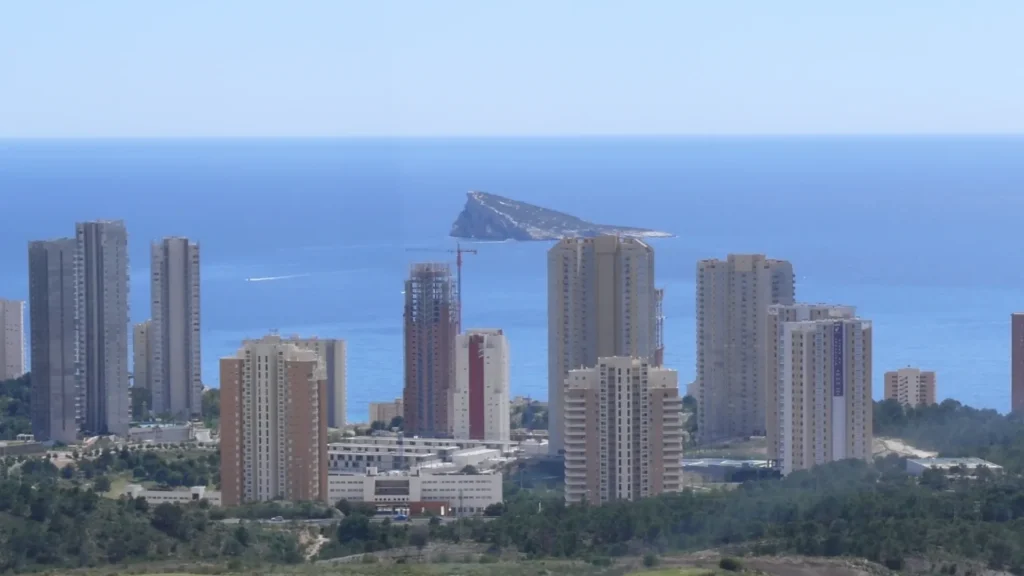
Skyline of Benidorm by Ad Meskens, via Wikimedia Commons, licensed under CC BY-SA 3.0.
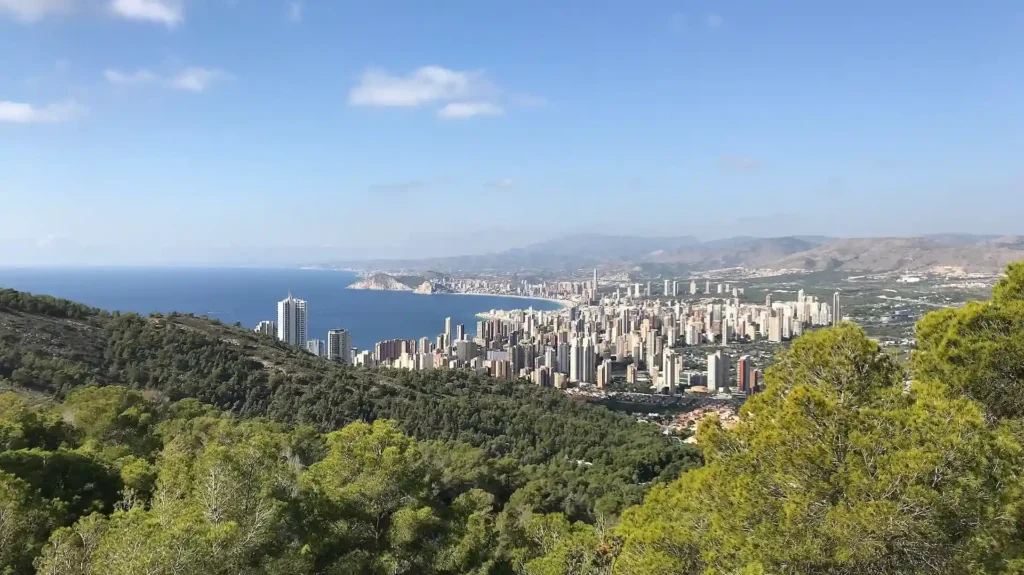
Parque natural de Serra Gelada, Benidorm (2017-10-15)” by Triplecaña. Source: Wikimedia Commons Licensed under CC BY-SA 4.0
Plaza de Colón, by Enrique Dans, Creative Commons Attribution 2.0 Generic, Wikimedia Commons: https://w.wiki/JGMs
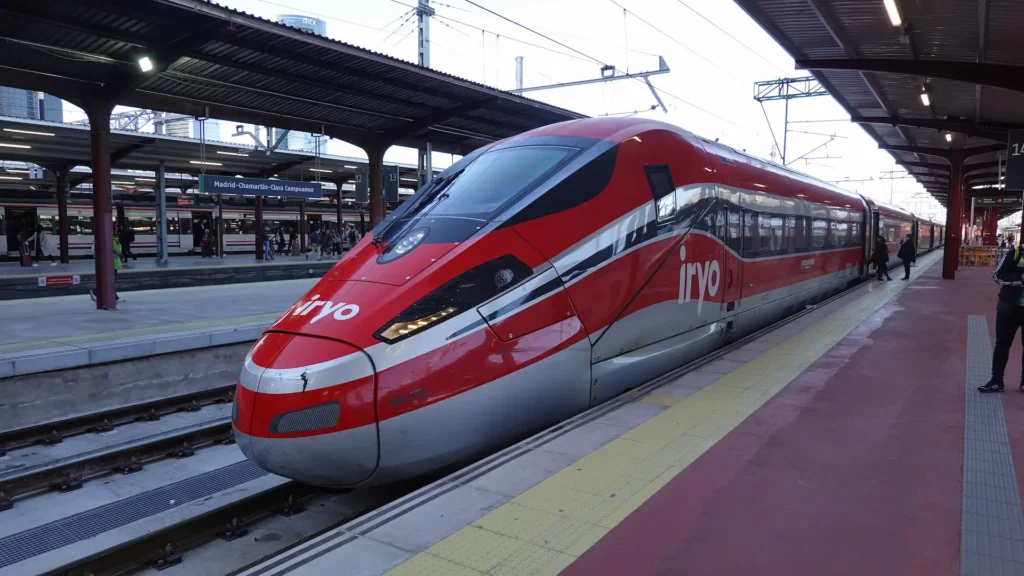
Madrid Chamartín station 2023 03 by Smiley.toerist, licensed under Creative Commons Attribution-ShareAlike 4.0 International (CC BY-SA 4.0).
Source: Wikimedia Commons (https://w.wiki/HXR2)