

 English
 Español
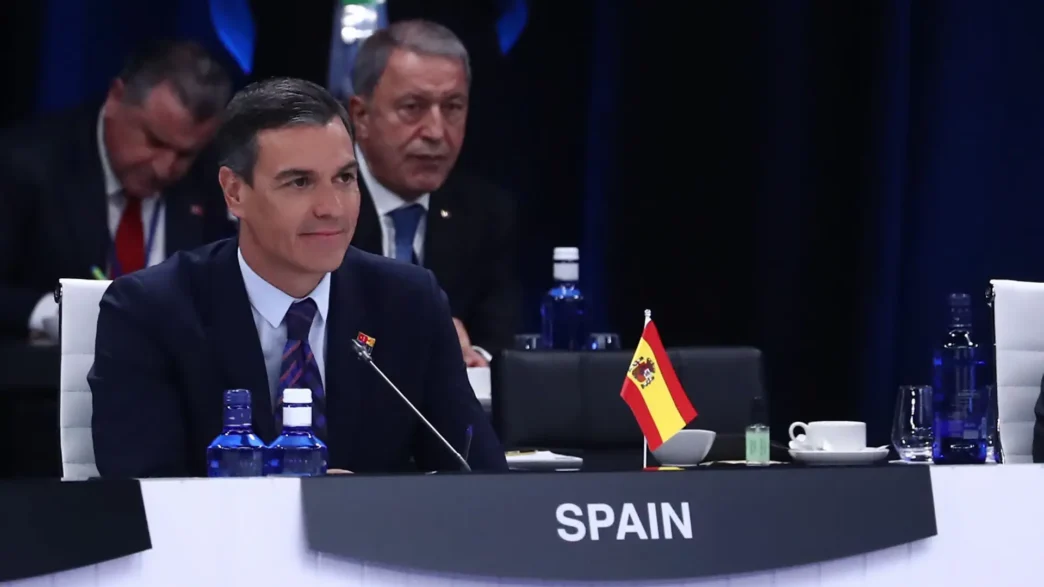
A leaked internal Pentagon email has intensified debate within the North Atlantic Treaty Organization (NATO), raising a critical question with long-term search relevance: can a country like Spain actually be suspended from NATO?
The document, first reported by Reuters, outlines potential measures against allies that refused to support recent U.S. military operations against Iran. Among them is the possibility of suspending Spain from NATO, a proposal that has sparked widespread political and legal discussion.
Spain’s Prime Minister, Pedro Sánchez, rejected the suggestion and reaffirmed Spain’s commitment to the alliance, emphasizing that all actions are guided by international law and NATO obligations.
What the Pentagon Memo Reveals About NATO Tensions
The leaked memo reflects growing frustration within Washington over what it describes as “uncooperative” NATO allies. Several European countries, including Spain, restricted the use of their airspace, military bases, and overflight permissions during U.S. operations targeting Iran.
A U.S. official cited in the report said these options are being considered at “the highest levels” of the Pentagon, highlighting a deepening divide between the United States and European allies.
Spain, in particular, denied the use of key strategic bases such as Rota and Moron for offensive operations. This decision has become central to the current debate over NATO burden-sharing and alliance loyalty.
Can Spain Be Suspended from NATO? The Legal Reality
Despite the political pressure, the legal answer is clear: Spain cannot be suspended from NATO under current rules.
NATO’s founding treaty does not include any mechanism for expelling or suspending a member state. The only formal pathway is voluntary withdrawal under Article 13, which allows a country to leave the alliance after giving one year’s notice.
Key Takeaways on NATO Rules:
- No suspension clause exists in NATO’s legal framework
- No expulsion mechanism is defined in the treaty
- Membership changes rely on voluntary decisions, not enforcement
This means that any talk of suspension would likely be symbolic or political, not legally enforceable.
However, analysts note that countries could still face indirect consequences, such as:
- Loss of influence within NATO decision-making bodies
- Exclusion from key leadership roles or strategic operations
Increased diplomatic pressure from allies
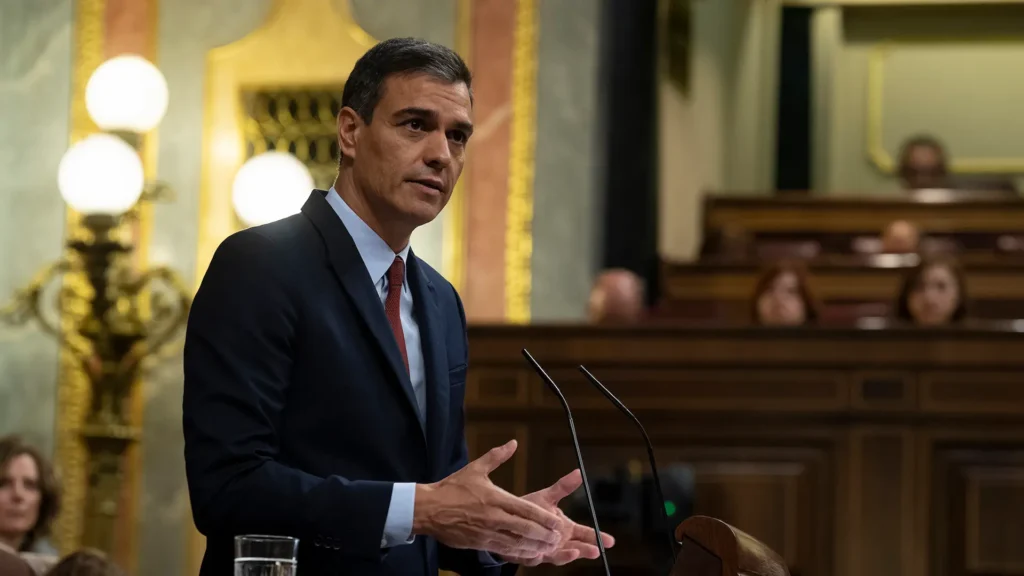
Spain’s Position: A “Loyal Ally” Within Legal Limits
Sánchez has maintained a firm stance, stressing that Spain remains a “loyal NATO partner” while also respecting international law.
“We do not work with emails; we work with official positions,” he said, reinforcing that Spain’s policy is based on formal agreements, not internal communications.
Spain continues to:
- Deploy troops in Eastern Europe
- Support Ukraine through NATO mechanisms
- Meet capability targets with defense spending around 2.1 percent of GDP
This positions Spain as an active contributor, despite disagreements over the Iran conflict.
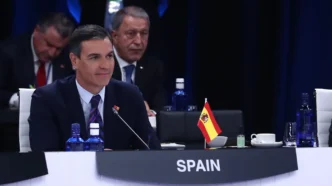
Why the Iran Conflict Is Dividing NATO
The current tensions are rooted in the escalating conflict involving the United States, Israel, and Iran. The crisis has disrupted global trade routes and raised concerns about military escalation in the Middle East.
Several NATO countries, including the United Kingdom, France, and Italy, have also limited support for U.S. operations, arguing that direct involvement could lead to a broader war.
Instead, these nations favor:
- Post-conflict stabilization efforts
- Protection of maritime routes like the Strait of Hormuz
- Diplomatic solutions over military escalation
This reflects a growing divide between U.S. strategic priorities and European caution.
Growing Pressure from Washington
The tensions align with long-standing criticism from U.S. President Donald Trump, who has repeatedly accused NATO allies of not contributing enough to collective defense.
Trump has previously suggested that Spain should be expelled from NATO and has criticized European countries for failing to support U.S. military initiatives.
U.S. Defense Secretary Pete Hegseth reinforced this message, stating that the Iran conflict has exposed serious weaknesses within the alliance.
What This Means for NATO’s Future
The controversy has triggered broader concerns about NATO’s unity and long-term stability.
Polish Prime Minister Donald Tusk has openly questioned whether the United States would fully honor its defense commitments to Europe, urging the European Union to strengthen its own military capabilities.
This raises a critical long-term question:
Can NATO remain united as strategic priorities diverge?
The Falkland Islands Issue Adds Another Layer
The memo also suggests reconsidering U.S. support for the United Kingdom’s sovereignty over the Falkland Islands, introducing another geopolitical dimension.
While not directly related to Spain, this proposal highlights how broader alliance relationships could be affected by current tensions.
Frequently Asked Questions (FAQ)
Can Spain be suspended from NATO?
No. Spain cannot be suspended from NATO under current rules. The North Atlantic Treaty Organization does not have any legal mechanism to suspend or expel a member country. Any such proposal would be political, not enforceable.
Does NATO allow countries to be expelled?
No. NATO’s founding treaty does not include an expulsion clause. The only way a country can leave the alliance is through voluntary withdrawal, as outlined in Article 13.
Why is Spain facing criticism from the United States?
Spain has faced criticism from Donald Trump’s administration for refusing to support U.S. military operations against Iran, including denying access to bases and airspace. This has been interpreted by some U.S. officials as a lack of cooperation.
What role does Spain play in NATO today?
Spain remains an active and committed NATO member. It contributes troops to missions in Eastern Europe, supports Ukraine, and meets alliance capability targets with defense spending of around 2.1 percent of GDP.
What would happen if a country left NATO?
If a country decides to leave NATO, it must formally notify the United States government and wait one year before withdrawal becomes effective. Leaving the alliance would mean losing collective defense protections and military coordination benefits.
A Political Signal More Than a Legal Threat
While the idea of suspending Spain from NATO has generated headlines, the reality is more nuanced. There is no legal mechanism to enforce such a move, making it largely symbolic.
However, the memo reveals something more important:
a growing strain within NATO that could shape its future direction.
For readers searching long-term answers, the key takeaway is clear:
- Spain is not at risk of formal suspension
- But NATO is facing real internal divisions
As global conflicts evolve, these tensions could redefine how the alliance operates in the years ahead.
Information Source:
https://elpais.com/internacional/
https://www.eldiario.es/internacional/
Photo Attribution:
Photo: Pedro Sánchez at the NATO Summit (June 29, 2022)
Source: La Moncloa (Government of Spain)
Author: Pool Moncloa / Fernando Calvo Rollán
License: Government of Spain – free use with attribution https://w.wiki/KZVv
Photo: Pool Moncloa / Borja Puig de la Bellacasa (Ministry of the Presidency, Government of Spain), 22 July 2019. lamoncloa.gob.es Wikimedia Commons: https://w.wiki/KKmW
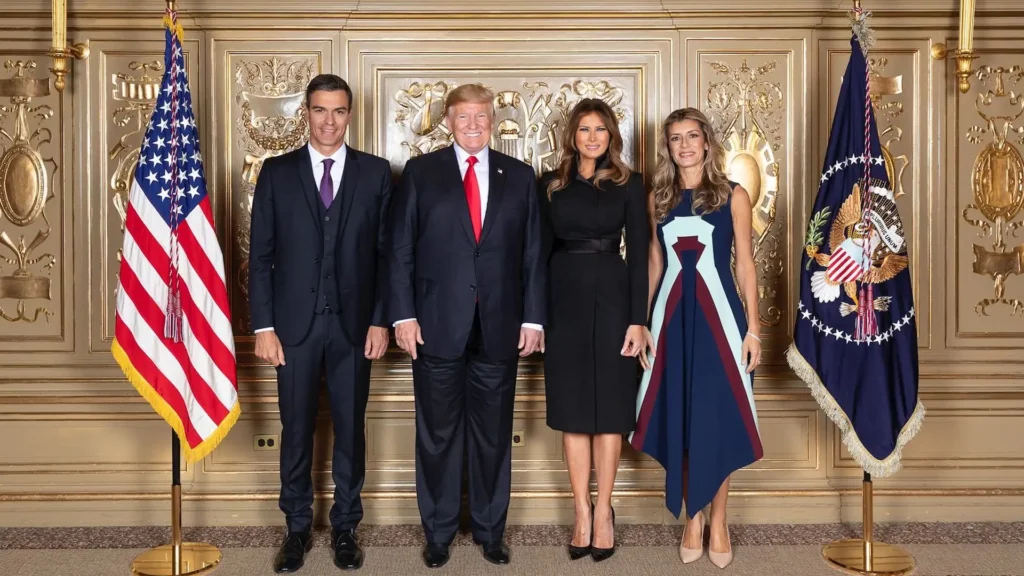
Photo credit: Official White House photo by Andrea Hanks, showing Presidents Donald J. Trump and Pedro Sánchez at the United Nations General Assembly, 25 September 2018. Public domain. Source: Wikimedia Commons (file President_Donald_Trump_and_Pedro_Sánchez.jpg). https://w.wiki/J9zG
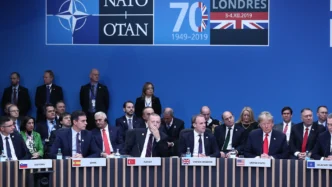
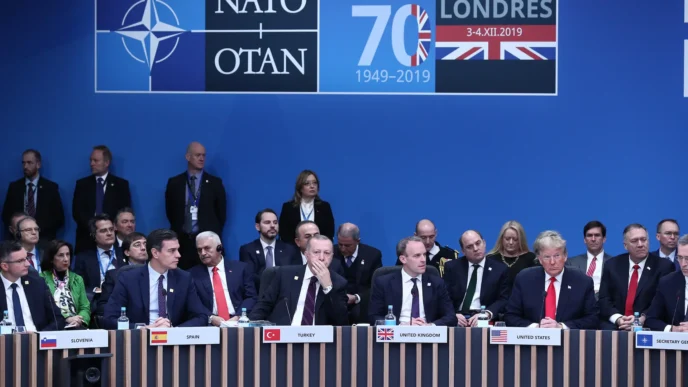
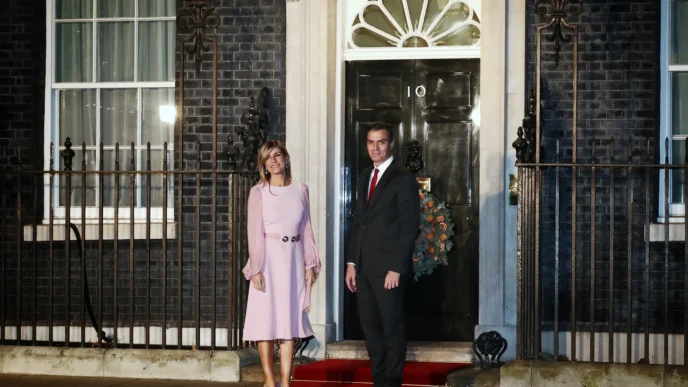
Image: Spanish Prime Minister Pedro Sánchez attending the 2019 NATO summit in London, United Kingdom, on 4 December 2019. Photo by Pool Moncloa/Fernando Calvo, published by the Ministry of the Presidency of the Government of Spain. Used under an attribution-only license; redistribution and reuse permitted with proper credit. Source: Wikimedia Commons / Ministry of the Presidency, Government of Spain. https://w.wiki/JBWu
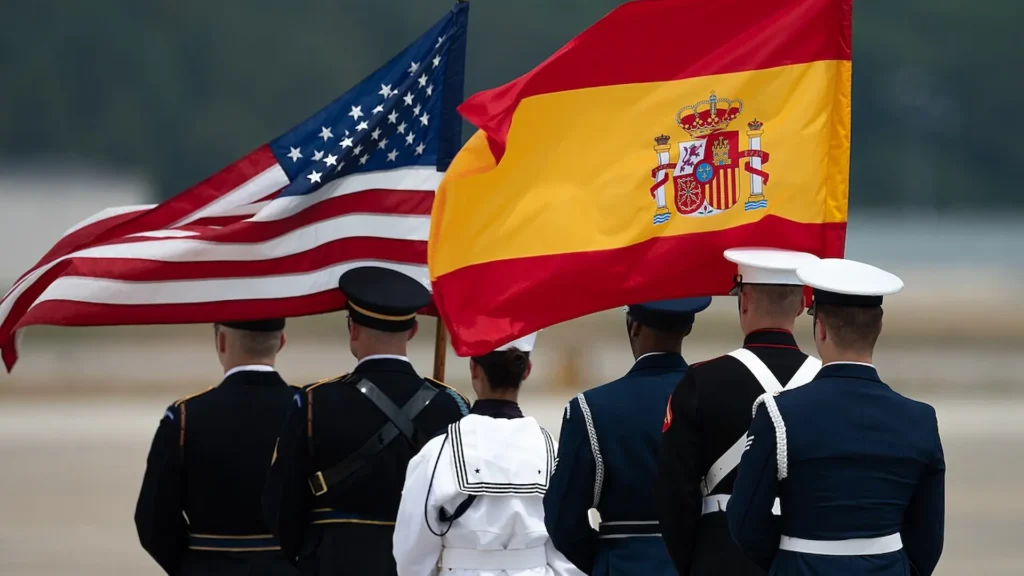
Photo: Staff Sgt. Alex Broome / U.S. Air Force, public domain, via Wikimedia Commons. https://w.wiki/JCjJ