

 English
 Español
Positive hantavirus case in Spain confirmed, live | Updated 12/05/2026 14:38 (CEST)
Health authorities confirm a positive hantavirus test in a passenger admitted to the Gómez Ulla hospital with symptoms.
The ministry confirms that the patient is experiencing some respiratory problems but remains stable and under observation.
Latest news on the hantavirus outbreak, live | Updated 12/05/2026 12:05 (CEST)
The Spaniard who tested positive for hantavirus is showing symptoms, but is “apparently stable”.
Sources at the Ministry of Health reported Tuesday morning that the Spanish man who tested “provisionally” positive for hantavirus is “apparently stable and without any evident clinical deterioration.” He experienced a low-grade fever overnight and respiratory difficulties.
🔴LIVE | PRESS CONFERENCE with Pedro Sánchez and Tedros Adhanom Ghebreyesus, Director General of the WHO
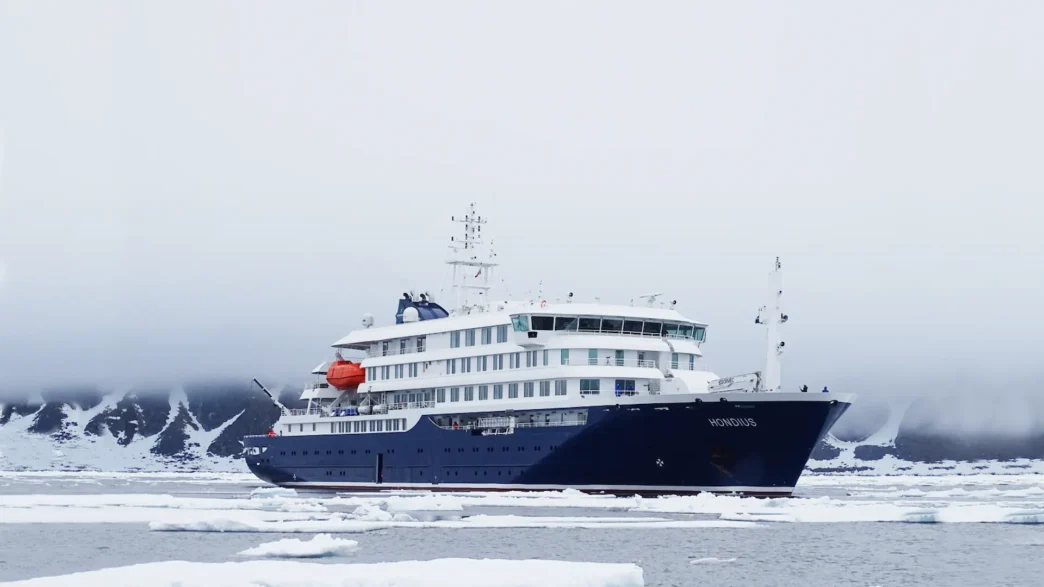
A provisional hantavirus case has been detected among Spanish passengers evacuated from the MV Hondius cruise ship outbreak, Spanish health authorities confirmed on Tuesday, as the vessel finally departed the Canary Islands following one of the largest coordinated international health operations in recent years.
The passenger, one of 14 Spanish nationals currently quarantined at Madrid’s Gomez Ulla military hospital, tested “provisionally positive” in an initial polymerase chain reaction test. Officials stressed that a second laboratory sample is still required before the infection can be officially confirmed.
According to Spain’s Ministry of Health, the passenger remains asymptomatic and in stable condition. If the result is confirmed, the patient will be transferred to a High-Level Isolation and Treatment Unit for monitoring and treatment. The remaining 13 Spanish evacuees tested provisionally negative.
The latest development comes as international health authorities continue monitoring passengers and crew linked to the MV Hondius hantavirus outbreak, which has already claimed three lives and triggered a multinational evacuation involving more than 20 countries.
International concern grows as additional hantavirus cases emerge
French authorities confirmed on Monday that one of five French passengers repatriated from the cruise ship tested positive for hantavirus after developing symptoms during a flight from Tenerife to Paris.
United States health officials also reported that one American passenger returned a mild positive result in one test for the Andes virus strain associated with hantavirus, while another passenger developed mild symptoms and remains under medical observation.
The World Health Organization warned last week that additional cases were likely because of the virus’s unusually long incubation period.
“We know that the incubation period for hantavirus and the Andes virus is very long,” said Olivier Le Polain, head of epidemiology at the World Health Organization. “On average, people develop symptoms around three weeks after exposure, but it can take up to 40 or even 45 days.”
That extended incubation period is one of the main reasons authorities in several countries have imposed lengthy quarantine measures on passengers and crew members connected to the outbreak.
Spain’s Secretary of State for Health, Javier Padilla, explained that the 14 Spanish evacuees could remain in quarantine for up to 42 days, counting from May 6, the date when symptomatic passengers were first evacuated from the ship in what authorities now consider the official starting point of the outbreak.
The World Health Organization recommended that quarantine periods begin from the moment passengers disembarked from the vessel. However, Spanish authorities said they adopted a different approach after conducting a detailed analysis of interactions aboard the ship.

MV Hondius departs Tenerife after unprecedented evacuation operation
The MV Hondius left the port of Granadilla in Tenerife on Monday evening bound for Rotterdam after completing the final stage of a massive international evacuation and repatriation effort coordinated by Spain and several global health agencies.
The vessel departed with 32 crew members still on board after more than 100 passengers from multiple countries had been evacuated by air over a two-day operation.
The emergency response involved Spanish authorities, the World Health Organization, European health agencies, military emergency units, and several foreign governments after the outbreak aboard the expedition cruise ship sparked growing international concern.
Passengers wearing protective equipment were transported in small groups from the anchored vessel to the port area before being transferred by military emergency buses to Tenerife South Airport.
Special charter flights then transported passengers back to countries including France, the Netherlands, the United Kingdom, Ireland, Turkey, Canada, and the United States.
Spanish passengers were flown to Madrid aboard a military aircraft before being placed in quarantine at Gomez Ulla hospital until at least June 17.
Two additional flights departed Tenerife on Monday for the Netherlands carrying remaining passengers and crew members, including several Australian and New Zealand nationals.

Spain praised for handling major international health emergency
Spanish Health Minister Monica Garcia declared “mission accomplished” after the final passengers left the ship and the vessel departed Tenerife waters.
Speaking at the port alongside Interior Minister Fernando Grande Marlaska and Territorial Policy Minister Angel Victor Torres, Garcia confirmed that disinfection work would continue in the coming hours.
World Health Organization Director-General Tedros Adhanom Ghebreyesus publicly praised Spain’s management of the crisis.
“Spain handled this with professionalism and according to plan,” Tedros said. “All the ministers coordinated the response and supervised the operation carefully. Thank you for your leadership.”
The Spanish government has also received praise from several international institutions, including the United Nations, the European Commission, and the World Health Organization.
European Commission President Ursula von der Leyen thanked Spanish authorities for what she described as a “rapid and efficient” emergency response.
Spanish Prime Minister Pedro Sanchez is expected to meet Tedros in Madrid before holding a joint press conference focused on the outbreak and the international response effort.
Political tensions emerge over cruise ship handling
Despite the international praise, the operation also exposed growing tensions between Spain’s central government and the Canary Islands regional administration led by Fernando Clavijo.
The regional government repeatedly opposed allowing the ship to dock in Tenerife, arguing that safety conditions were insufficient and suggesting passengers should instead be repatriated from Cape Verde after authorities there denied entry to the vessel.
Clavijo later claimed his administration had initially learned about Spain’s decision through media reports, an accusation denied by Health Minister Monica Garcia.
The dispute escalated further when Clavijo warned that rodents potentially linked to the virus could theoretically reach shore from the vessel.
The Canary Islands president even cited material generated by artificial intelligence describing rats as strong swimmers capable of surviving in water for several days.
Spanish health authorities responded by publishing a scientific report stating that the rodent species associated with the Andes hantavirus typically inhabits remote Andean forest regions and would not survive in coastal port environments.
The report also stressed that the rodents linked to the outbreak are not known for swimming long distances and that hygiene conditions aboard the vessel remained adequate.
Spanish courts ultimately backed the central government’s handling of the emergency.
Spain’s National Court rejected attempts to halt the disembarkation operation, ruling that the measures were necessary because of “an urgent public health situation” involving international cooperation and the protection of human life.
A Madrid court also approved mandatory quarantine measures for passengers repatriated to Spain.
International monitoring effort continues
Health authorities across multiple countries are continuing to monitor former passengers and crew members because of concerns that additional infections could emerge in the coming weeks.
The Andes strain of hantavirus is considered particularly concerning because, unlike many other hantavirus variants, limited human-to-human transmission has previously been documented.
Although most passengers remain asymptomatic, international health agencies continue urging caution because symptoms may appear weeks after exposure.
The outbreak aboard the MV Hondius has rapidly become one of the most closely monitored international public health incidents of the year and has tested coordination systems between governments, health agencies, and emergency services across multiple continents.
For now, Spanish authorities insist the situation remains under control, even as laboratories continue processing confirmation tests and health officials prepare for the possibility of additional cases emerging during the coming weeks.
Information Source:
https://www.rtve.es/noticias/20260511/
Photo Attribution:
MV Hondius, by Fdesroches Creative Commons Attribution-Share Alike 4.0 International license. Wikimedia Commons https://w.wiki/MmM9
Photo: Pedro Sánchez at the NATO Summit (June 29, 2022)
Source: La Moncloa (Government of Spain)
Author: Pool Moncloa / Fernando Calvo Rollán
License: Government of Spain – free use with attribution https://w.wiki/KZVv
“Checking Blood Sample” by US Army Africa, available on Wikimedia Commons, licensed under CC BY 2.0.