

 English
 Español
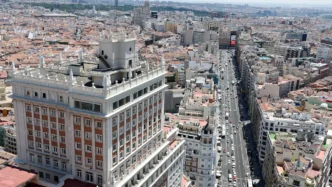
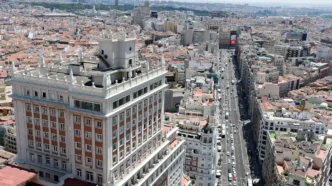
As Spain prepares to host the Ibero‑American Summit in Madrid on 4–5 November 2026, Prime Minister Pedro Sánchez has been actively cultivating diplomatic relationships across Latin America — navigating a complex landscape of political alliances, economic cooperation, and ideological differences.
Spain’s foreign policy in 2026 reflects a broader strategy of strengthening ties with regional partners, promoting multilateral cooperation, and reinforcing its historical and cultural links with Latin America, all while addressing emerging geopolitical challenges.
Sánchez’s Latin America Diplomacy: Goals and Context
Spanish Prime Minister Pedro Sánchez has outlined a foreign policy rooted in “coherence, commitment, cooperation and creativity,” emphasizing Spain’s role in supporting democracy and multilateralism. The strategy places Latin America at the forefront of Spain’s international agenda, both politically and economically.
Under this framework, Spain aims to enhance political dialogue, finalize economic agreements, and support shared interests across the region. This includes progress toward the EU‑Mercosur free trade agreement and deepening cooperation with major partners like Brazil, Argentina, Mexico, and Colombia.
Engagements with Key Latin American Leaders
Nayib Bukele (El Salvador)
El Salvador’s President Nayib Bukele has emerged as a notable figure in regional politics. Known for his advocacy of security and economic modernisation, Bukele’s government has taken independent stances on several issues, including its diplomatic posture toward U.S. and regional matters.
Spanish diplomats have publicly encouraged strengthened ties with El Salvador, and commentators have suggested official visits could bolster cooperation between Madrid and San Salvador ahead of the summit.
Javier Milei (Argentina)
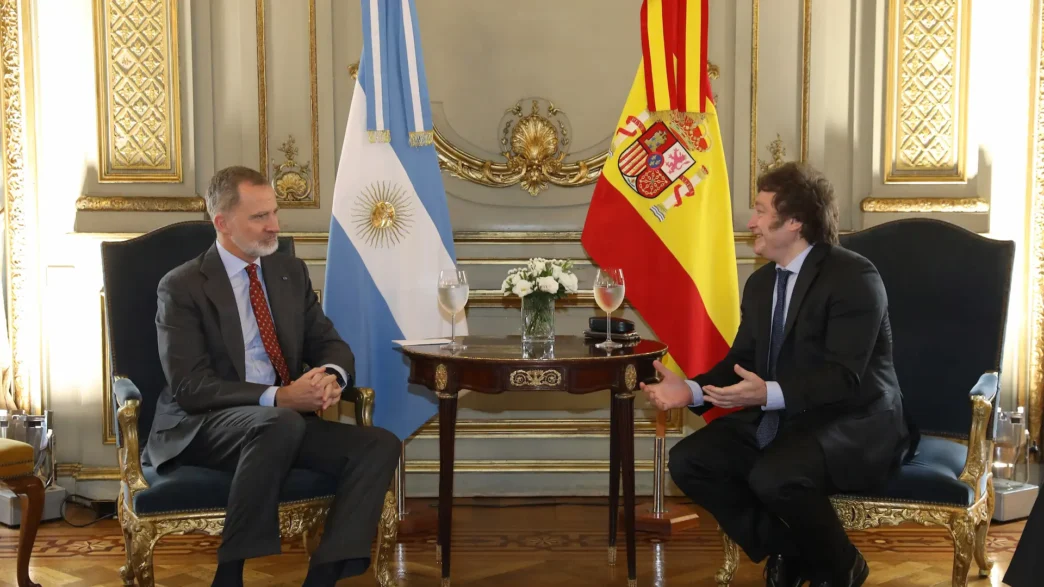
The relationship with Argentina has been more complicated. President Javier Milei was involved in a diplomatic dispute with Spain in 2024 after making critical remarks about Prime Minister Sánchez and his family, prompting the temporary withdrawal of Spain’s ambassador to Buenos Aires.
Despite earlier tensions, Milei’s foreign policy has seen engagement with a range of international actors, including European leaders. The fact that both Milei and Spanish officials plan to attend the Madrid summit suggests that pragmatic diplomacy could override past disagreements as the event approaches.
Beyond Bilateral Frictions: Regional Cooperation
Spain’s diplomatic outreach extends beyond individual leaders to broader regional frameworks. At events such as the IV CELAC‑EU Summit, Spanish leadership has emphasised cooperation on sustainability, democracy, and human rights — key themes that align with Spain’s foreign policy priorities and its vision for the upcoming Ibero‑American Summit 2026.
These efforts aim to foster a shared political and economic agenda between Europe and Latin America, building momentum toward the November 2026 summit in Madrid, where leaders from across the region will converge.
Economic and Strategic Dimensions
Spain is one of Latin America’s most significant European partners. Spanish investments in the region — particularly under the EU’s Global Gateway initiative — reflect a commitment to connectivity, sustainable infrastructure, digital transition, and green technology.
At the EU‑CELAC Summit in Santa Marta, Colombia, Sánchez highlighted Spain’s position as a key investor in the region and reaffirmed support for aligning economic strategies with democratic and environmental goals.
Such initiatives not only strengthen bilateral ties but also reinforce Spain’s role as a bridge between European and Latin American markets, helping to secure Spain’s influence ahead of the major diplomatic gathering in Madrid.
Political Challenges and Diverse Alliances
Spain’s outreach has to balance differing political currents in Latin America. While coordination with left‑leaning governments aligns with historically close ties, engagement with leaders like Bukele and Milei — each with distinct political agendas — demonstrates Madrid’s willingness to pursue pragmatic diplomacy across ideological divides.
This approach reflects Spain’s broader foreign policy goals: supporting democratic institutions, promoting economic cooperation, and enhancing Spain’s role in multilateral forums beyond Europe.
However, political rhetoric — particularly around populism or criticism of European leadership — continues to influence relations, requiring careful diplomatic navigation ahead of the summit.
The Road to the Ibero American Summit 2026
Spain’s efforts in Latin America are intertwined with preparations for the Ibero‑American Summit scheduled for 4–5 November 2026 in Madrid, a key event where leaders from nearly two dozen countries will discuss political, economic, and cultural cooperation.
The summit’s agenda is expected to cover topics such as artificial intelligence, economic integration, sustainability, and multilateral dialogue, further reinforcing Spain’s role in shaping regional priorities.
For Spain, securing active participation from Latin American nations — including those with complex diplomatic histories like Argentina and El Salvador — will be critical to the summit’s success and to strengthening Spain’s leadership within the Ibero‑American community.
A Strategic Pivot Toward Latin America
Spain’s diplomacy in 2026 reflects a concerted effort to strengthen relations with Latin American partners, combining economic engagement, political dialogue, and cultural cooperation.
From efforts to resolve past frictions with Argentina to initiatives promoting broader regional collaboration with leaders such as Bukele, Spain’s foreign policy underscores its ambition to play a central role in transatlantic relations.
As Madrid prepares for the Ibero‑American Summit 2026, Spain’s diplomatic engagement with Latin America will be tested not only by political differences, but by the shared challenge of building mutual trust and advancing a common agenda for cooperation in an increasingly multipolar world.
Information Source:
https://www.latimes.com/world-nation
https://english.elpais.com/international/
Photo Attribution:
Visita de SM el rey Felipe VI a la Argentina en ocasión de la jura de Javier Milei, by Cancillería Argentina, Creative Commons Attribution 2.0 Generic license. Wikimedia Commons: https://w.wiki/LHgG
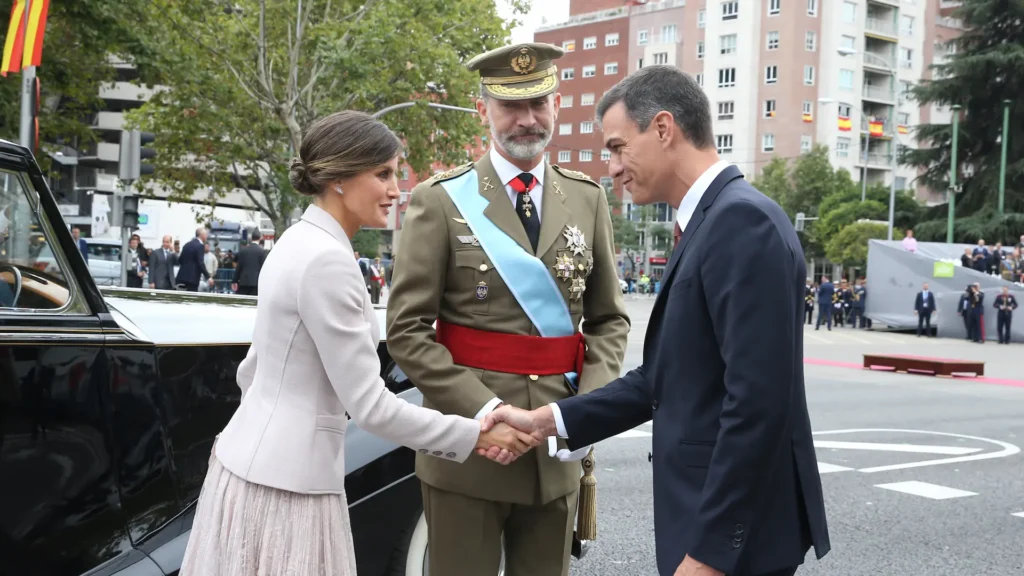
President Pedro Sánchez greets King Felipe VI and Queen Letizia of Spain at the National Day celebrations in Madrid (12 October 2018). © Ministry of the Presidency, Government of Spain / Fernando Calvo, licensed for reuse with attribution via Wikimedia Commons. https://w.wiki/J5PV
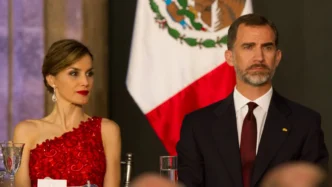
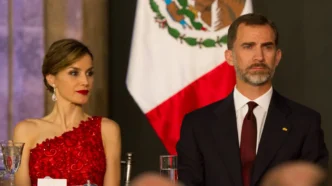
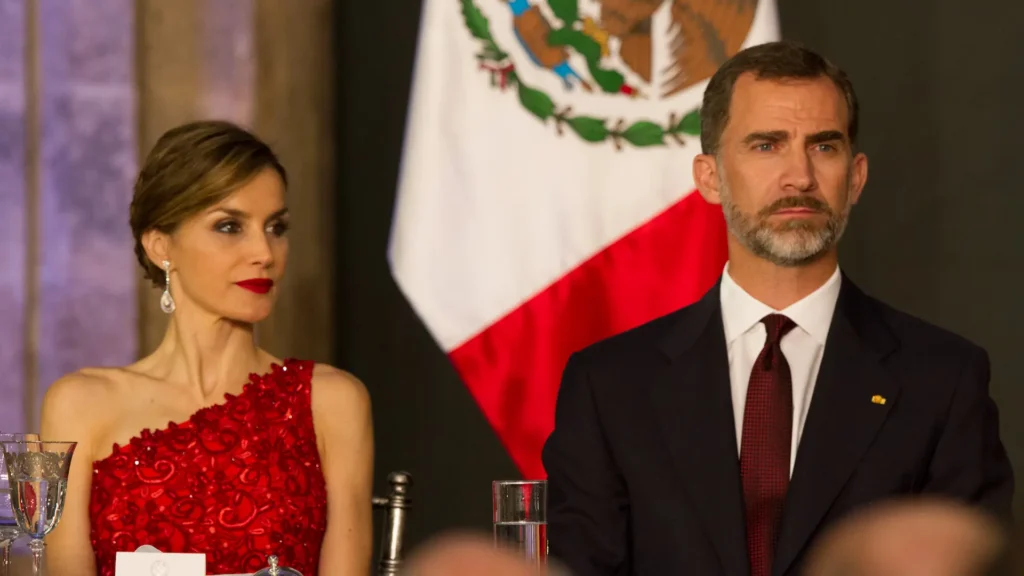
The King and the Queen of Spain (2015), by Presidencia de la República Mexicana, Creative Commons Attribution 2.0 Generic license. Wikimedia Commons https://w.wiki/KQyh
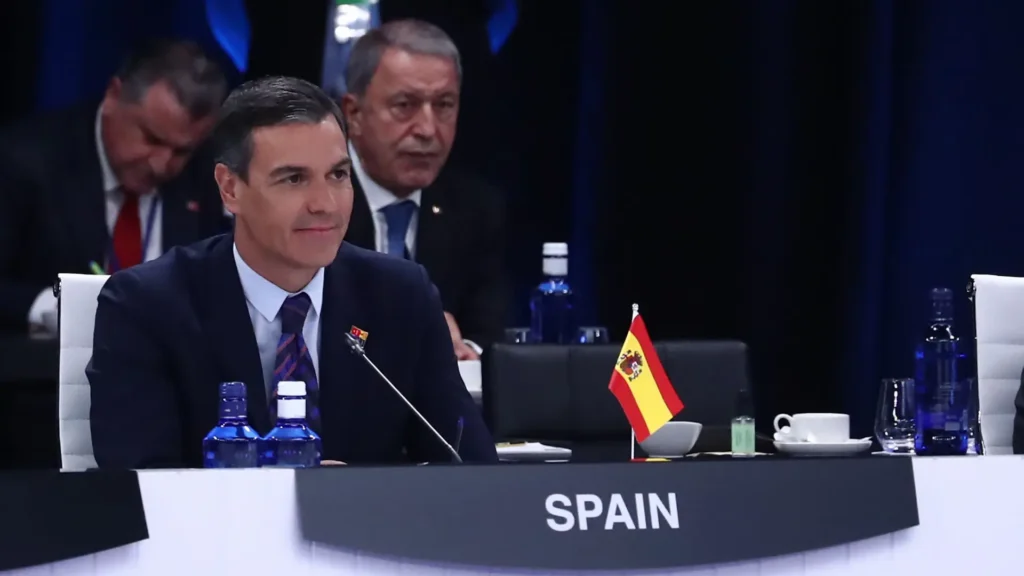
Photo: Pedro Sánchez at the NATO Summit (June 29, 2022)
Source: La Moncloa (Government of Spain)
Author: Pool Moncloa / Fernando Calvo Rollán
License: Government of Spain – free use with attribution https://w.wiki/KZVv